From 1912 to 1915, the Chicago Police Department swept the city’s West and South Side red light districts for women deemed “immoral,” arresting those believed to be engaged in sex work in an effort to eliminate what officials called the city’s “social evil.”
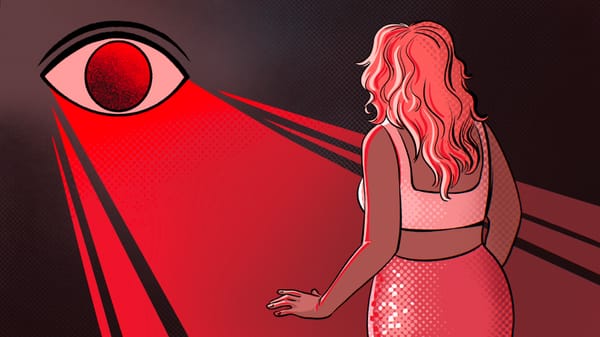
More than a century later, the city has reintroduced a similar approach: policing based not on actions, but on perceived intent.
In 2018, the city passed Municipal Code 8-4-016. This statute (or law) criminalized “Loitering for the Purpose of Prostitution”(LPP). In practice, the ordinance allows officers to determine who appears to be engaging in prostitution-related activity, effectively policing intent rather than conduct.
“These laws are another way to surveil people,” said Nikki, a Chicago-based activist for sex worker rights, housing, and labor issues. “Loitering laws have popped up during the wars on drugs and sex as a way to criminalize people. These [Anti-Loitering Statutes] are another way to overpolice people".
Origins of moral policing
Chicago’s history with the sex trade stretches back more than a century. In the 1860s, downtown streets were lined with saloons, brothels, and dance halls clustered in areas known as vice districts. These spaces operated openly, often with tacit protection tied to relationships with police. The most well-known “vice district” was The Levee, a stretch of four blocks within the Loop; however, there were also smaller districts within the West and South Sides. Sex as commerce boomed within Chicago's vice districts until the rise of the White Slavery hysteria.
The term “White Slavery” originated in 1847 when abolitionist Charles Sumner described the Barbary slave trade, painting a vivid picture of women kidnapped and forced into the sex trade. Sumner’s narrative, combined with rapid social changes—including urbanization, women entering the workforce, immigration, and industrialization—helped fuel a broader myth that the average white American woman was being violated, drugged, and trafficked by a faceless foreign cabal. Chicago became a central hub for this moral panic, as politicians seized on the fear for personal and political gain.
The origins of the efforts to criminalize sex trades lie in the White Slave Traffic Act—later renamed the Mann Act–of 1910. Authored by Illinois Congressman James Robert Mann, The Mann Act criminalized the transport of women across state lines for "immoral purposes". Though the Mann Act was aimed at combatting human trafficking, the vagueness of the law allowed for its use to criminalize consensual sexual activity. The Mann Act quickly became a carceral tool for the racialized political persecution of Jack Johnson, the first Black Heavyweight Boxing Champion, and legitimized the fear-mongering surrounding the White Slavery Hysteria.
Progressive era panic spreads
The moral panic caused by the progressive era White Slavery hysteria not only caused racialized arrests to protect racial purity but also led to the creation of a 400-page report, termed The Social Evil in Chicago, by the Chicago Vice Commission. Historian Mark Thomas Connelly later described the report as initiating a “collective act of ritual humiliation by urban America.” The report investigated the origins, causes, and current state of sex work within Chicago, stating that economic desperation, lack of education, and exploitation trapped women in the sex trade. The Social Evil was widely read and influenced multiple cities to conduct their own analyses, leading the moral panic surrounding sex work to spread and the dismantling of red light districts around the United States.
Response to The Social Evil was swift. The city shuttered the most famous saloons and brothels in the main red light districts, later issuing warrants for many of the Levee's brothel owners. Chicago's commercialized sex districts disappeared by 1915, with authorities displacing sex workers, clients, and owners.
Connections to current policy
The effects of The Social Evil and the subsequent breakdown of the red light districts are apparent today. The collapse of the official red light districts caused the decentralization of sex work in Chicago, triggering yet another moral panic. Hot spots for street-based sex work emerged on the South and West sides, including Cicero, West Garfield Park, and Midway, well-known hubs for street-based sex work. In response, West Side residents quickly complained that a "Prostitution Crisis" was flooding their neighborhoods. In 2001, CPD began arresting sex workers and collaborated with the Cook County State's Attorney's office to ensure that individuals with more than two sex work-related convictions would face a felony charge rather than a misdemeanor.
In 2006, the Chicago Intersystem Assessment Work Group released a study assessing the state of the sex trades in Chicago. Similar to The Social Evil, this study cited the same reasons that individuals entered the sex trades: economic desperation, education, and exploitation. It recommended reducing the arrests of people involved in the sex trades, instead focusing on the demand side—a strategy termed the Partial Decriminalization or End Demand Model. This strategy documented negative outcomes, including increased stigma and violence against sex workers. Despite this study, CPD would continue to arrest thousands of sex workers until a drastic drop in arrests in 2014. The Chicago Municipal government would pass Ordinance 8-4-016 in 2018, a loitering statute allowing the Chicago Police Department to profile individuals as sex workers.
Loitering statutes emerge
Under ordinance 8-4-016, officers must first warn people they are in a prohibited loitering area and order them to disperse, informing them that they “will be subject to arrest if they fail to obey the order promptly or engage in further prostitution-related loitering … during the next eight hours.”
Ordinance 8-4-016 is an arm of sexual policing called Loitering for the Purpose of Prostitution (LPP) Laws, which are also termed “Walking While Trans” and “Gendered Stop and Frisk” laws due to their disproportionate effect on transgender women, BIPOC, and individuals previously arrested under these statutes. Similar laws passed in New York, Washington, D.C., and California were repealed after activists, nonprofits, and legal advocates found that loitering statutes led to discriminatory practices.
Task Force Program Director, Chicago LGBT Hall of Fame member, and former sex worker, Reyna Ortiz, witnessed the systemic oppression first-hand. "Police are the biggest fear of sex workers", Ortiz said. “They have the power to arrest, molest, and attest.”
LPP Laws are a form of gendered surveillance stemming from moral panics of the late 19th/early 20th centuries. Laws policing existence encourage Chicago police to surveil, harass, and profile individuals in the name of reducing and eventually eliminating the "prostitution crisis". In a 2019 incident, a Black transgender woman reported being threatened with arrest and sexually assaulted by Chicago police sergeant James Sajdak, who profiled her as a sex worker. Sajdak was later convicted and sentenced to one year in prison.
Despite being passed in 2018, there is no evidence that MCC 8-4-016 has been enforced. According to a Freedom of Information Act request to the Chicago Police Department, there are no records of Administrative Notices of Violation (ANOVs), arrests, or any system to track the verbal warnings officers are required to issue to those suspected of prostitution-related loitering. However, the same request identified ANOVs issued under related statutes, totaling more than $1,408,400 in fines since 2018.
In 2023, the City of Chicago reached a class action settlement requiring reforms to how police conduct investigatory stops and enforce loitering ordinances, mandating changes to oversight, data collection, and accountability.
Without clear records, there’s little way to know how a law based on perceived intent is actually being used, or who is most likely to be targeted by it.
Republish This Story
This story is available for republication under a Creative Commons Attribution-NoDerivatives 4.0 International License. You may republish this article with attribution to the author and 15 West, but you cannot modify the text.
Request Republishing Guidelines