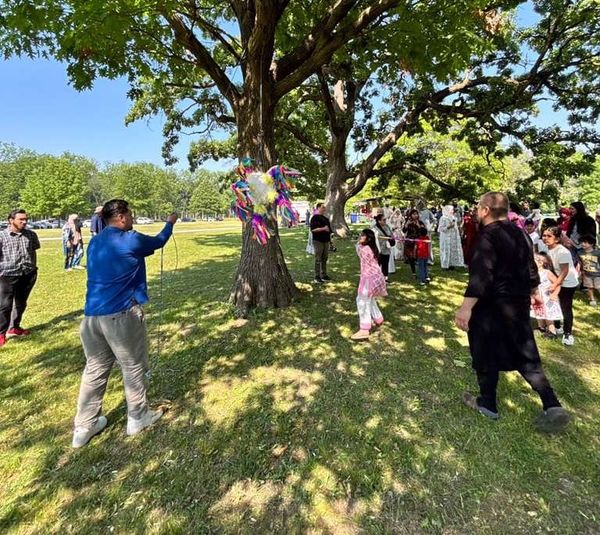
Community members take turns at a piñata during Ojala's Eid celebration. | Provided by Jordan Esparza-Kelley
Every Friday evening on Chicago's West Side, volunteers from Ojala Foundation hand out food and winter care packages. But before they leave, they pass along something else: word of where ICE has been spotted. “They are not reading the news every day and are not necessarily informed. As we're dropping stuff off, we are letting them know they are looking for people … being one of the first groups that reach these people just helped keep them informed,” said Jordan Esparza-Kelley, Ojala member and Communications Coordinator at CAIR-Chicago.
For Ojala, that's just a Friday. The faith-based organization has spent years quietly building something rare in Berwyn: a home for Latino Muslims, and a neighbor to everyone else.
“It is important for us to be able to get resources to people that need them. Some people lost their jobs, some people didn't have an income coming in, some people were scared to leave their homes,” said Alma Campos, co-founder of Ojala Foundation.
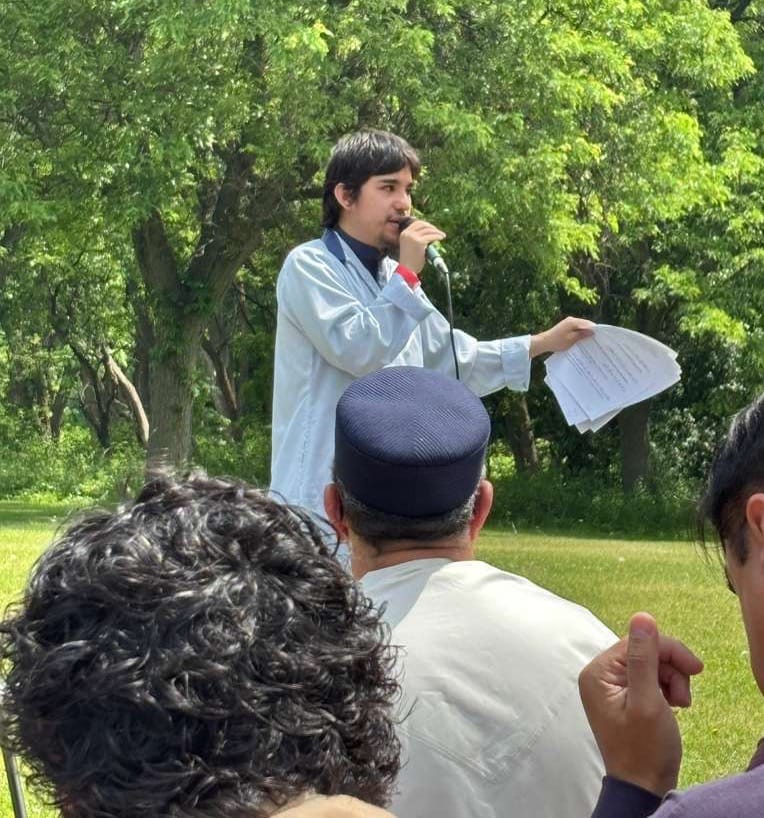
An Ojala community leader addresses attendees. | Provided by Jordan Esparza-Kelley
As part of an initiative to aid the unhoused population, Ojala has consistently served the West Side of Chicago for the past eight years. More than a dozen volunteers meet weekly near the intersection of Western Avenue and 19th Street. “In doing this program, they've been able to provide food and clothing supplies for so many people in this predominantly Latino area, but also are often the first people to interact with these people for long periods of time,” said Esparza-Kelley.
While Ojala is based in Berwyn, the faith-based group is building a safe space for the Latino Muslim population across Chicagoland. “As we were trying to build ourselves and our families, we decided we're going to build up the whole community and everybody else that comes along the way,” said Campos. Their reach goes far beyond this specific demographic. “There's actually a group of students that meet on the stairs of Ojala every morning before they go to school, and they're actually not Muslim. However, we've established a relationship with them, and now they know us, and they know about the work that we do,” said Esparza-Kelley. From the Muhammad Ali Justice Film Festival at the American Muslim College to the Annual MAS Convention, there are many ways in which Ojala is serving various communities within the city.
For many Latino Muslim reverts, Ojala was one of the first places to experience representation.
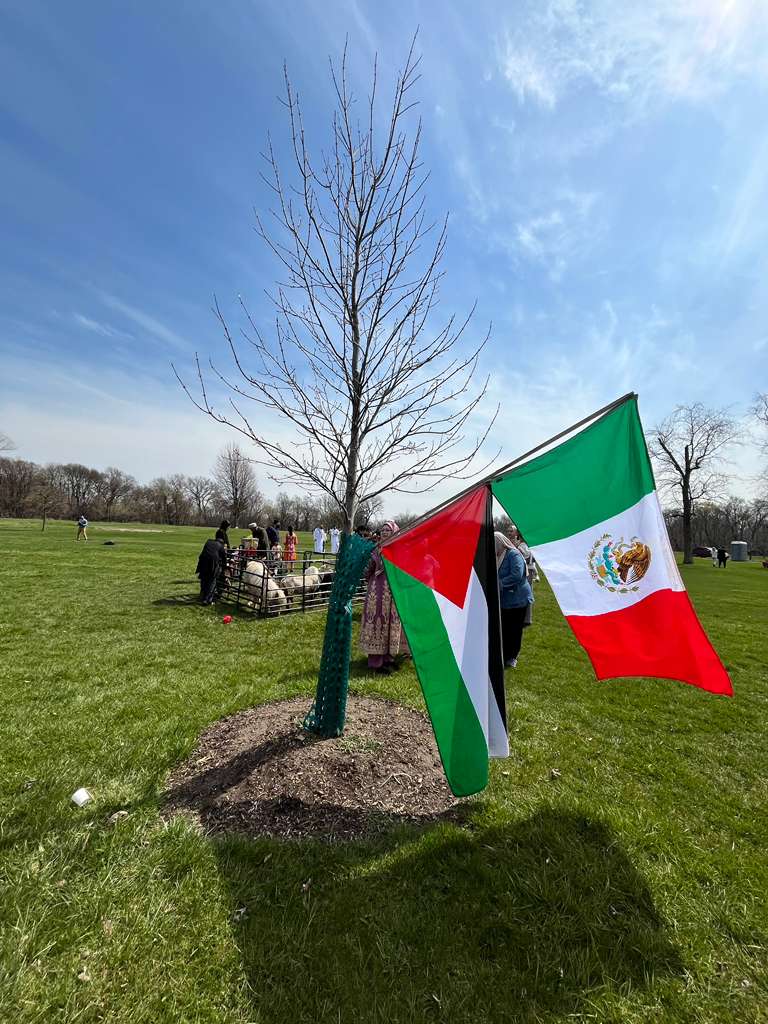
Palestinian and Mexican flags at Ojala's Eid celebration. | Provided by Jordan Esparza-Kelley
Although mainstream media attempts to group and label communities, there is diversity to be found in people who identify as Latino. “I knew that I could be Mexican and I could be Muslim, and those things are never in conflict with each other,” said Esparza-Kelley, “No culture has a monolithic identity … the Chicago Mexican community has never really had a national media representation, and because of that, we created our own culture.”
While holidays can be lonesome at times, Ojala creates opportunity for connection among Muslim reverts. “I think that anyone born into Islam is very blessed because for a revert, things like holding ourselves accountable, having someone to eat suhoor and iftar with are most things that we have to do alone,” said revert Ismary Monterosso.
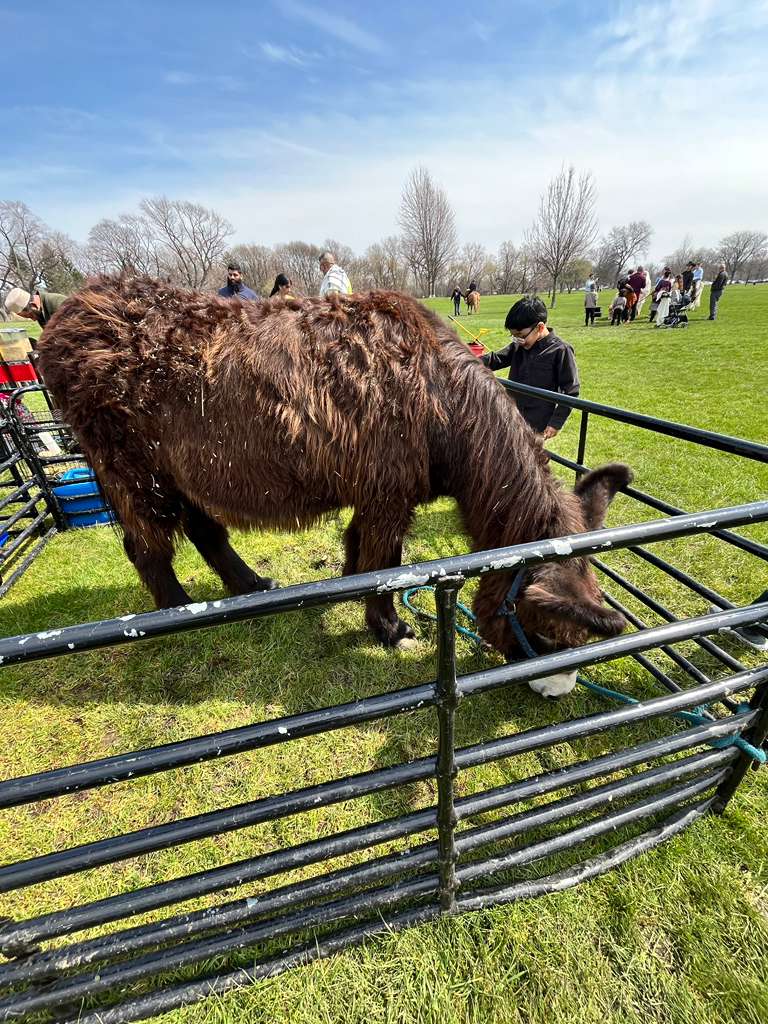
A child reaches out to pet a donkey. | Provided by Jordan Esparza-Kelley
The Ojala Foundation is currently in the process of opening the first Latino-led mosque in Berwyn. They acquired a property a few blocks down from the North Berwyn Park District in May 2025. The Ojala Islamic Center is in Phase 3 of becoming a fully functioning mosque and community center to serve community members and neighbors alike. This Ramadan, the mosque has opened its doors to the community for the five daily prayers.
As the non-profit organization continues to grow, it creates opportunities for connection and service for people of all backgrounds. Esparza-Kelley said, “Ojala’s Eid celebration is one of the most diverse celebrations … this is how we're supposed to be, we're all supposed to be together, enjoying each other and enjoying the beauty of everyone's culture, traditions and customs.” Having attended Ojala’s Eid celebration in 2025, Monterosso said “Being able to celebrate with others for Eid with similar experiences is very comforting.” For Campos, the mosque is an extension of that same vision. “Islam is not just meant for one group of people, it crosses cultures, and it is for everyone.”
Republish This Story
This story is available for republication under a Creative Commons Attribution-NoDerivatives 4.0 International License. You may republish this article with attribution to the author and 15 West, but you cannot modify the text.
Revert - In Islam, a revert is someone who converts to the faith, based on the belief that everyone is born Muslim and is therefore "reverting" rather than converting.
Suhoor and Iftar - Suhoor is the pre-dawn meal eaten before the daily fast begins during Ramadan; iftar is the meal eaten at sunset to break the fast.
Ramadan - Ramadan is a holy month of fasting, introspection and prayer for Muslims, the followers of Islam. It celebrates the month during which the Prophet Muhammad received the initial revelations of the Quran, the holy book for Muslims, in the 7th century.
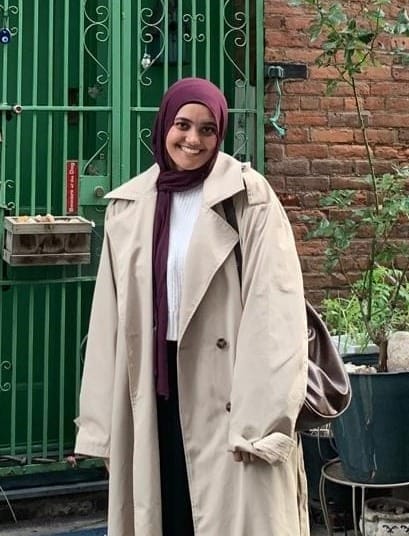
Sumaiyya is a senior at Northeastern Illinois University, where she is majoring in English and minoring in Media. She is passionate about writing and photography, and hopes to use her skills to serve the Muslim community.
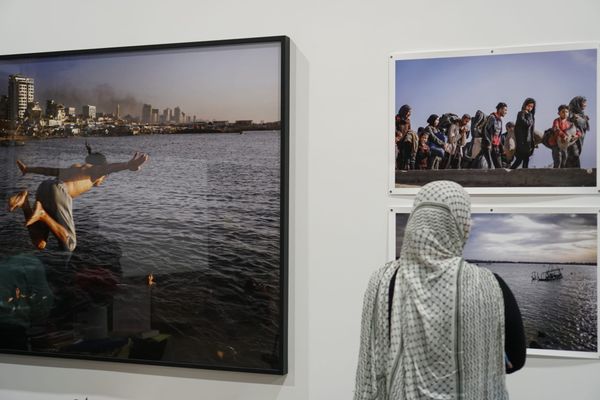
A visitor observes photographic works depicting scenes from daily life, waterfront moments, and groups of people, contemplating the human stories captured within the frames. | Provided by Bobby Vanecko