Viva la Vida: Honoring Memory Through Dance in Chicago
At CICA’s Brighton Park studio, young dancers spent weeks rehearsing Veracruz-style folklórico for the Día de Muertos showcase on Nov. 2, learning the music and traditions behind the performance.
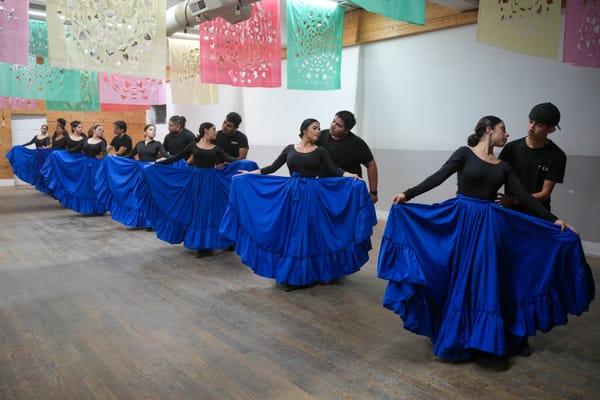
CICA’s main company dance ensemble rehearses their final number at the Collaborative Institute of Cultural Arts in Brighton Park on Oct. 21, 2025. | Araceli Ramirez/15 West
Under green and pink papel picado, the room fills with the stomp of leather heels and skirts that flare with every turn. Music drowns out every voice as dancers trade smiles and corrections, their steps sharpening for Día de Muertos.
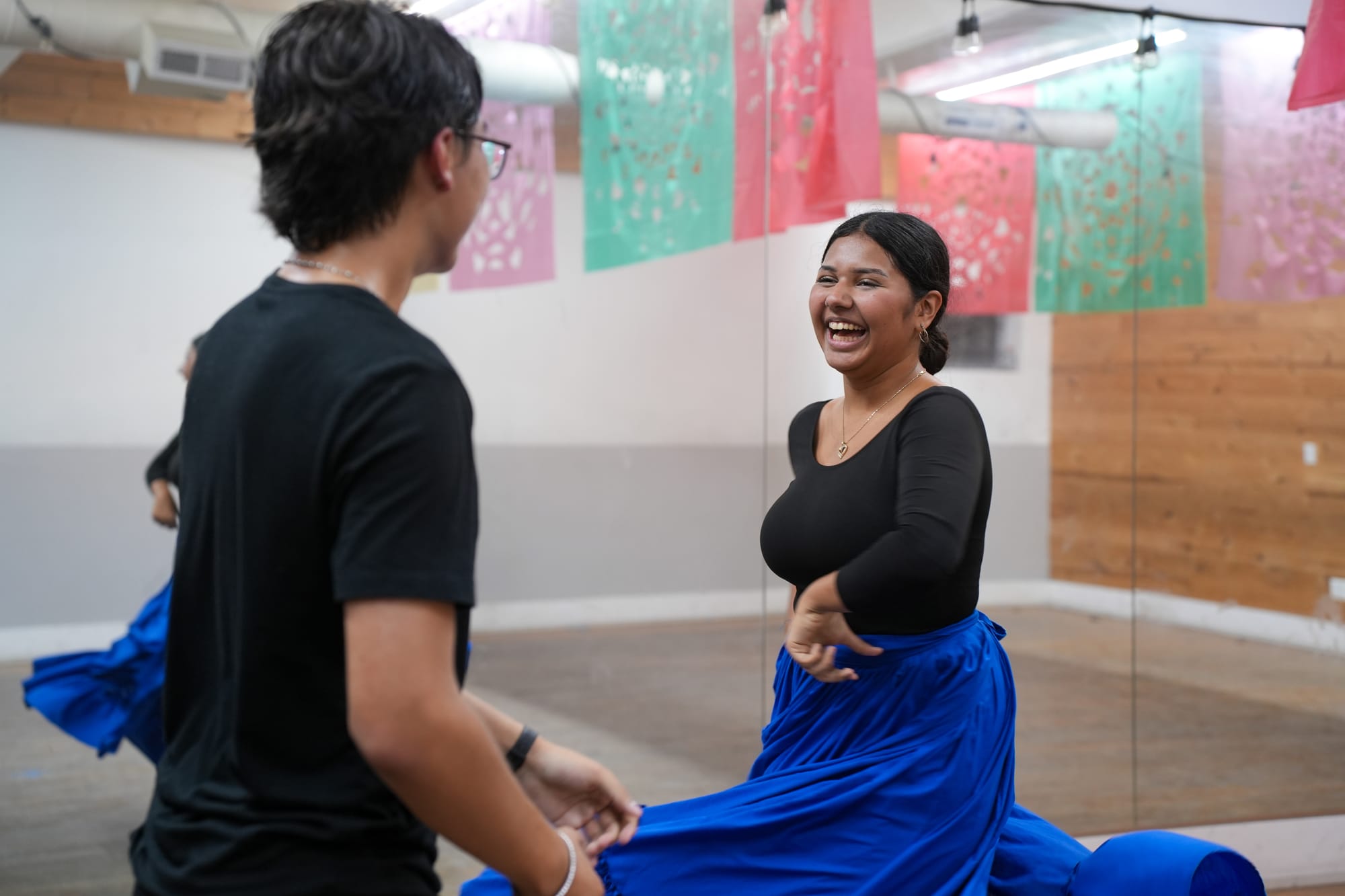
Main company dancers Lesley Chavez and Valente Maldonado share a laugh during rehearsal breaks at the Collaborative Institute of Cultural Arts in Brighton Park on Oct. 21, 2025. | Araceli Ramirez/15 West
The holiday, rooted in Indigenous Mexican traditions, is celebrated annually on Nov. 1 and 2. People mark the day with ofrendas and gatherings that honor those who have died.
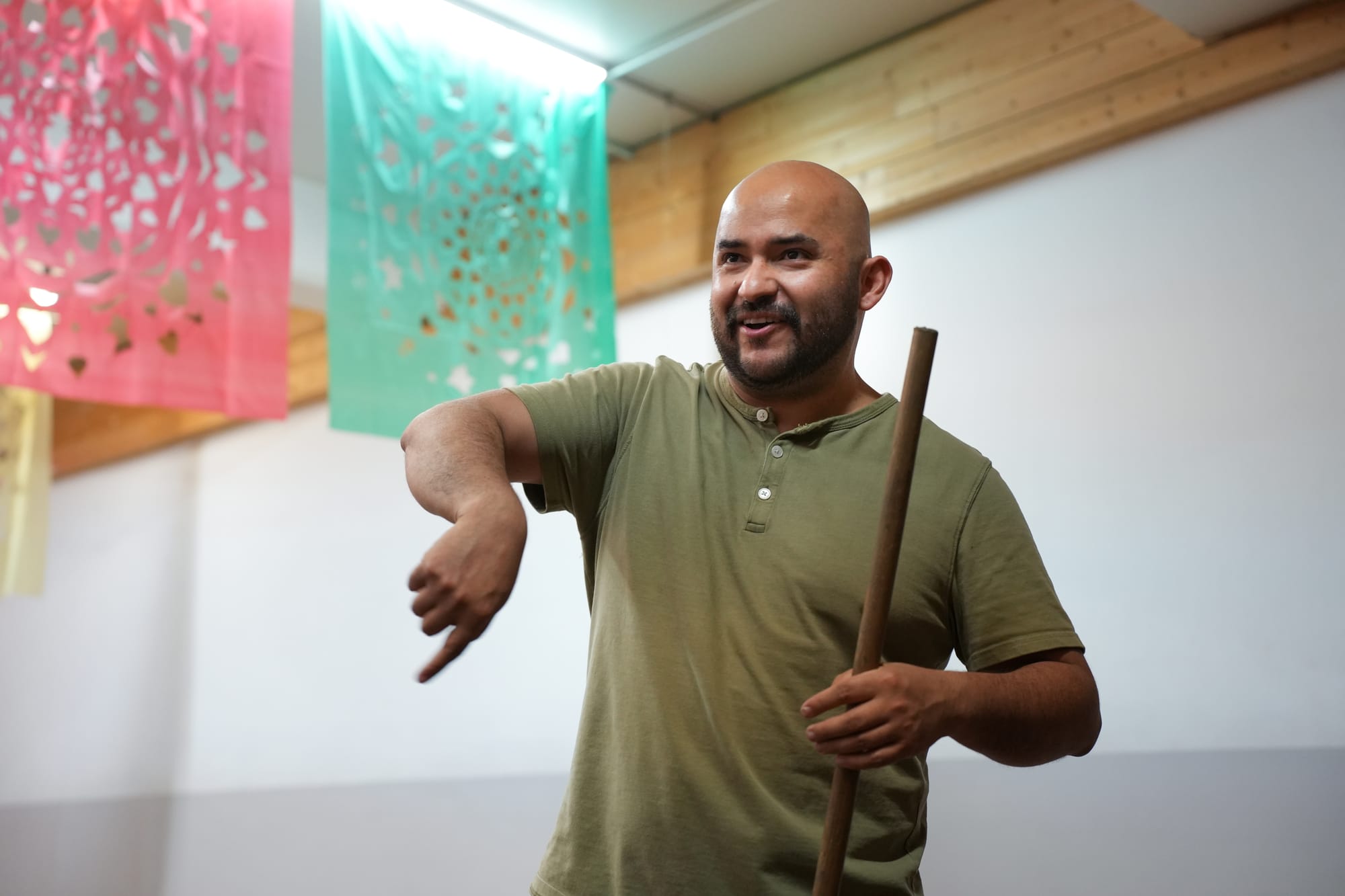
In the corner of the dance floor, Collaborative Institute of Cultural Arts (CICA) founder Samuel Barriga watches closely, tapping his wooden staff against the floor to bring the motion to a halt.
The pause was brief. On Nov. 2, the dancers performed Viva la Vida, CICA’s Día de Muertos showcase honoring loved ones through dance, music, and storytelling.
CICA’s main company ensemble rehearses on the Historic Main Stage on Nov. 2, 2025, at The Athenaeum Center for Thought & Culture in Chicago. | Araceli Ramirez/15 West
The show gave families who cannot return to Mexico a way to relive those memories here in Chicago. This year’s program highlighted the coastal state of Veracruz, home to son jarocho, a folk tradition shaped by Afro-Indigenous and Spanish influences.
Barriga, who immigrated from Michoacán at six, started the Collaborative Institute of Cultural Arts in 2017 after years of teaching with the Mexican Dance Ensemble. He wanted CICA to be an incubator for young artists, offering training, scholarships, and community programs that connect discipline with cultural pride.
CICA founder Samuel Barriga instructs dancers during rehearsal at the Collaborative Institute of Cultural Arts in Brighton Park on Oct. 28, 2025. | Araceli Ramirez/15 West
“It’s part of your culture, part of your folklore,” Barriga said. “Like food your mom makes that you’ve never had anywhere else. You might not have been back to where it comes from, but it’s always good to know where you come from.”
Heritage is at the heart of every class inside CICA’s Brighton Park studio, where students gather weekly to rehearse ballet folklórico. Among them is Andrea Serrano, 16, who dances, plays violin, and now co-teaches younger members of the group.
“Right now, the Latino community needs to stay united more than ever,” Serrano said. “Performances like these highlight the beauty and joy within our culture. Continuing our traditions shows the strength and pride we hold when we come together to celebrate our heritage.”
During Hispanic Heritage Month, the City of Chicago’s Department of Cultural Affairs and Special Events awarded CICA a $10,000 community grant for its work promoting cultural awareness. Barriga said the funds will be used to upgrade the studio’s flooring.
For many families, the value of the space goes far beyond the walls and floors. The studio has become one of the few places where children can stay connected to their roots. With increased ICE activity in Chicago, Barriga said some parents came to rehearsals less often, and students made sure their classmates still got there.
Nora Quintana, who enrolled her two daughters after hearing about the program from a relative, said she struggled to find anything similar in her neighborhood.
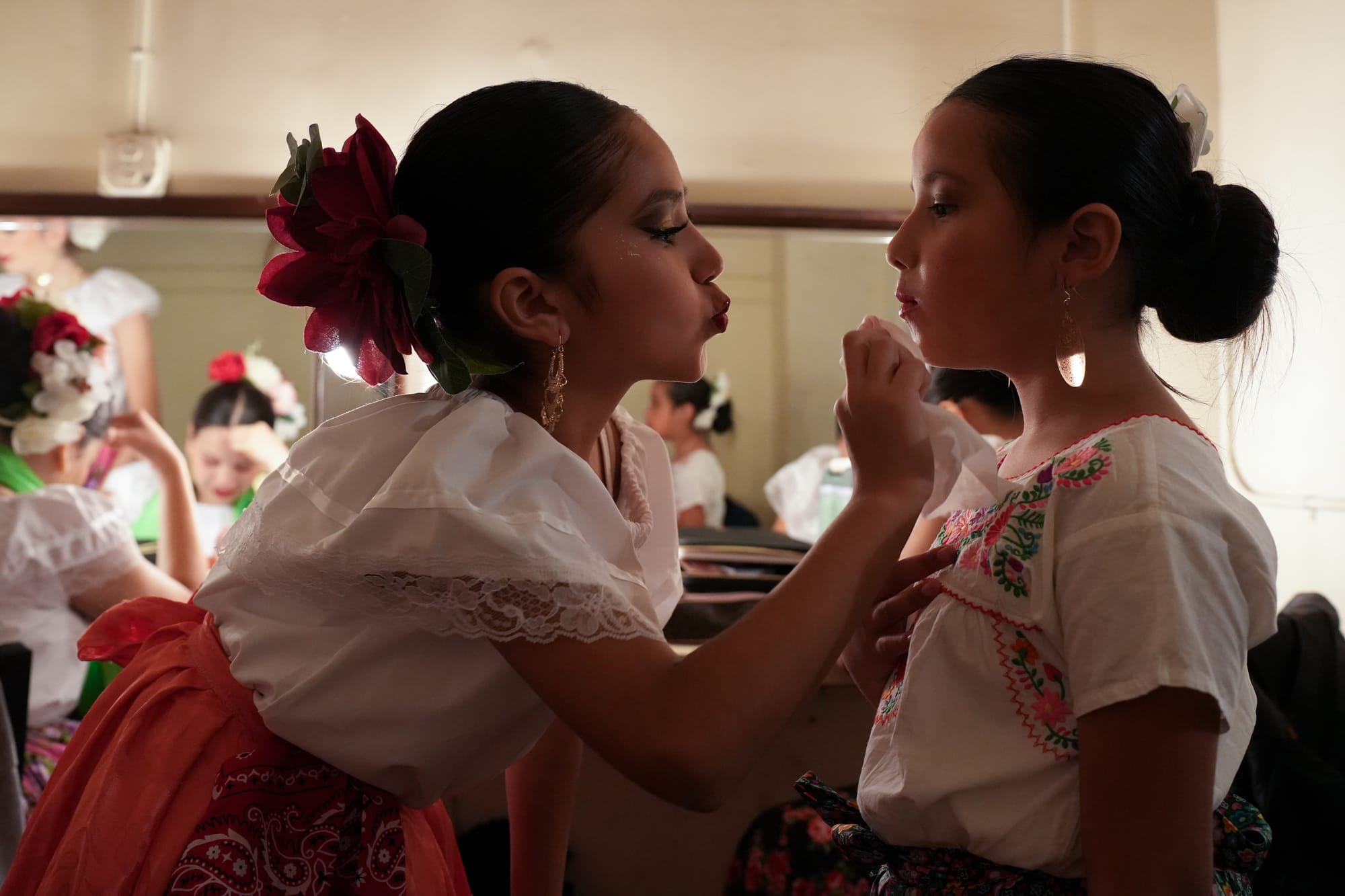
Dancers apply makeup backstage before the start of CICA’s “Viva la Vida” performance on Nov. 2, 2025, at The Athenaeum Center for Thought & Culture in Chicago. | Araceli Ramirez/15 West
“It’s nice to see the younger generations learning the dances and where they come from,” Quintana said. “The teachers are very dedicated. They even bring instructors and materials from Mexico. It feels authentic.”
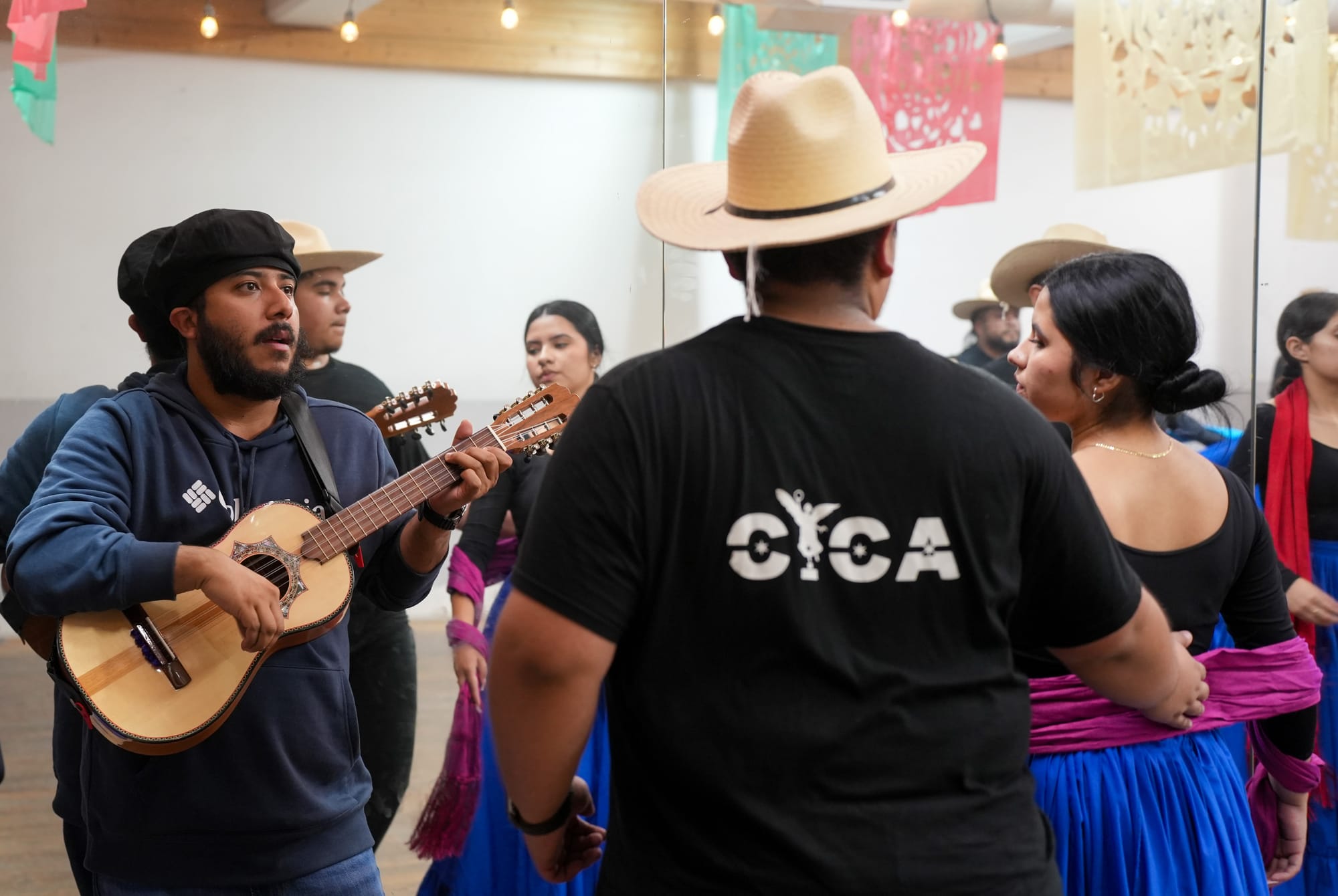
One of those instructors is Ari Cervantes, CICA’s music director from Xalapa, Veracruz, Mexico. During rehearsal, he guided dancers through their turns with the quick strum of his jarana jarocha, a small guitar-like instrument from his home state. Cervantes, who has worked with CICA for seven years, said music can serve as a guide.
Ari Cervantes, CICA’s music director, rehearses with student dancers at the Collaborative Institute of Cultural Arts in Brighton Park on Oct. 29, 2025. | Araceli Ramirez/15 West
“Music builds a steady foundation for performers,” he said. “It helps them feel and understand the rhythm, not just dance to it.”
Among those following Cervantes’s rhythm was Naim Pérez, 17, who has been dancing with CICA for eight years
From the back of the studio, Naim Pérez watched Cervantes set the tempo, his feet hitting the floor in time before he joined the men’s chants.
“I used to be really shy,” Pérez said. “CICA helped me come out of my shell. Seeing people smile when we dance makes it all worth it.”
After years of training, some dancers now balance performing with teaching. Joselyn Vargas, a longtime member of CICA, spent this season both instructing the beginner class and performing with the main company.
“It’s surreal,” Vargas said. “For a lot of these kids, I was their first teacher. Now I get to share a stage with them. It feels like closing a circle.”
She said preparing for Viva la Vida meant long nights and missed family time, but the commitment was shared by everyone in the group. “We’re all sacrificing something,” Vargas said. “If we’re going to be here, it’s because we want to be here. Let’s enjoy it to the fullest.”
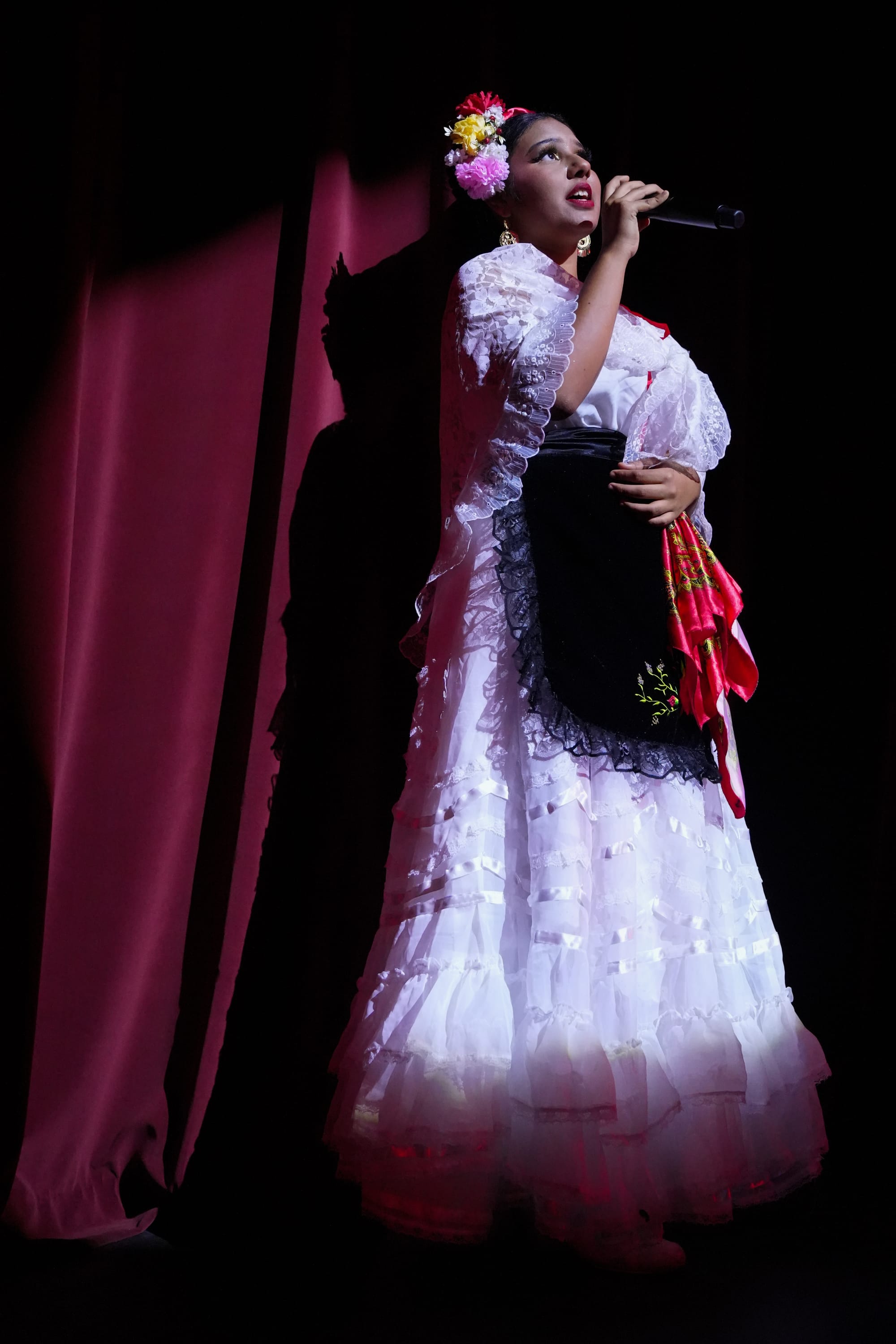
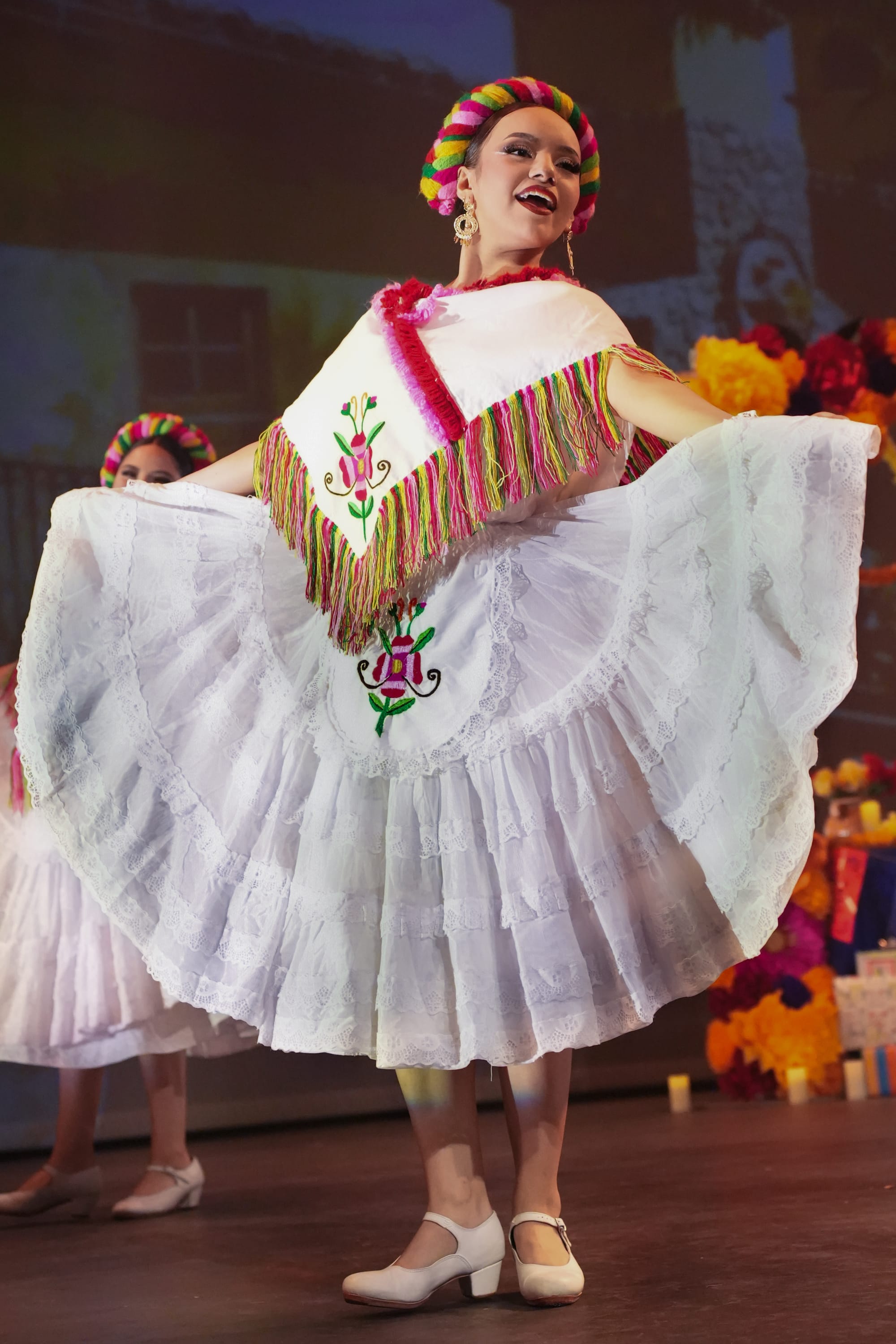
[LEFT] Lesley Chavez, a dancer and singer with CICA, performs “La Llorona” live for the audience on Nov. 2, 2025, at The Athenaeum Center for Thought & Culture in Chicago. [RIGHT] Regina Maldonado, a main company dancer with CICA, performs during the “Viva la Vida” show on Nov. 2, 2025, at The Athenaeum Center for Thought & Culture in Chicago. | Araceli Ramirez/15 West
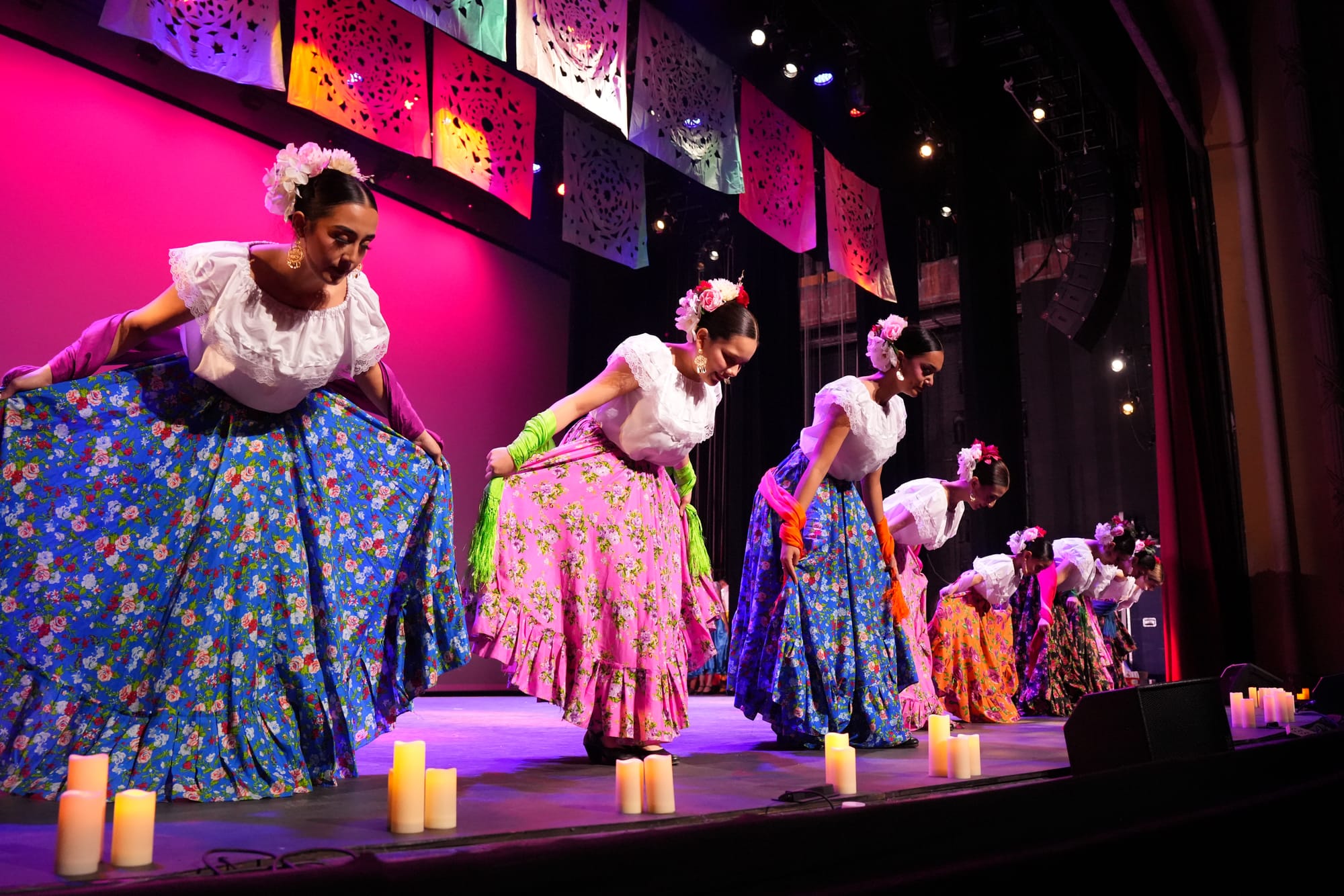
As weeks of preparation came to an end, the dancers performed beneath the same pink and green papel picado, now hanging inside the Athenaeum Center.
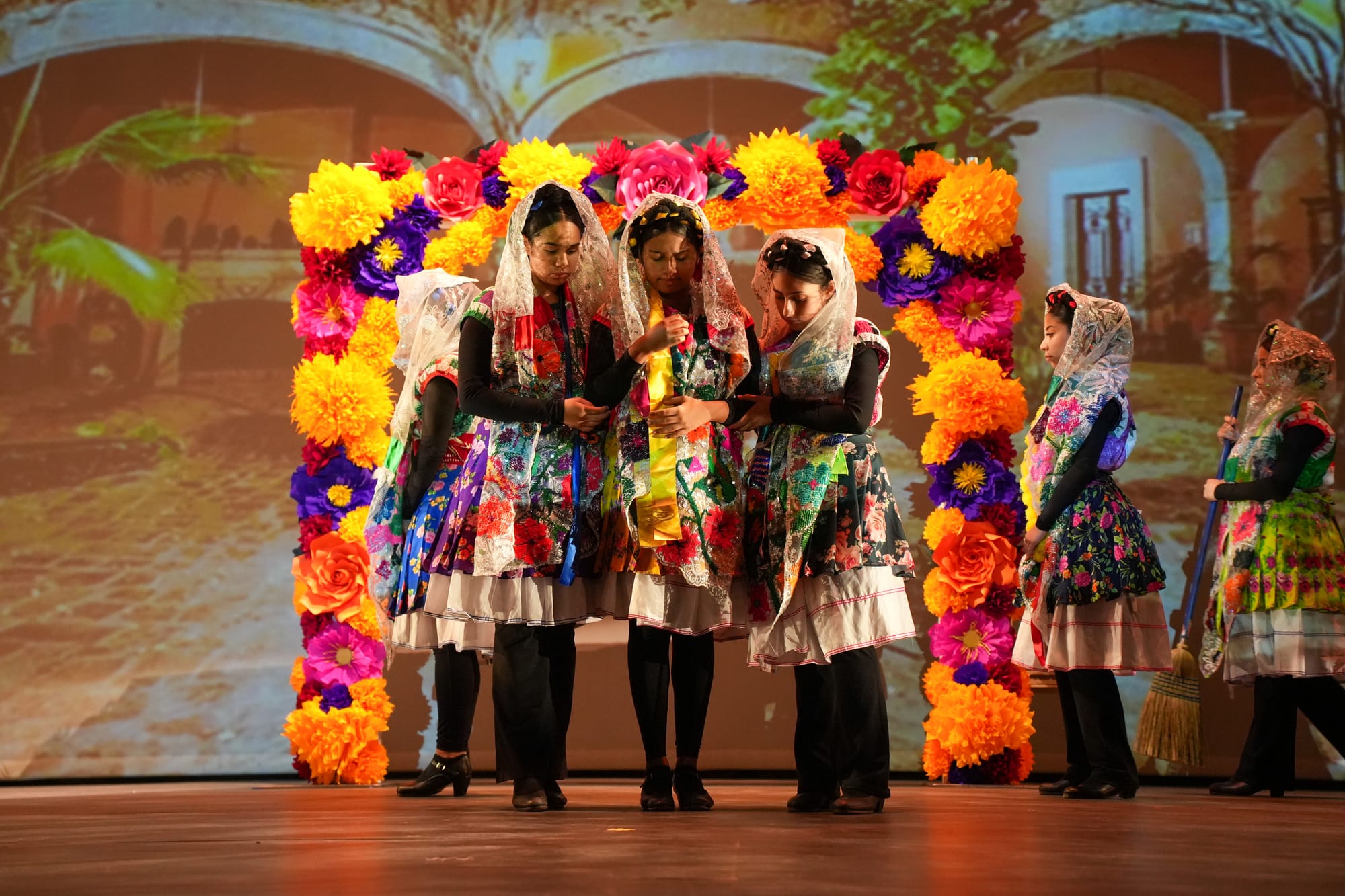
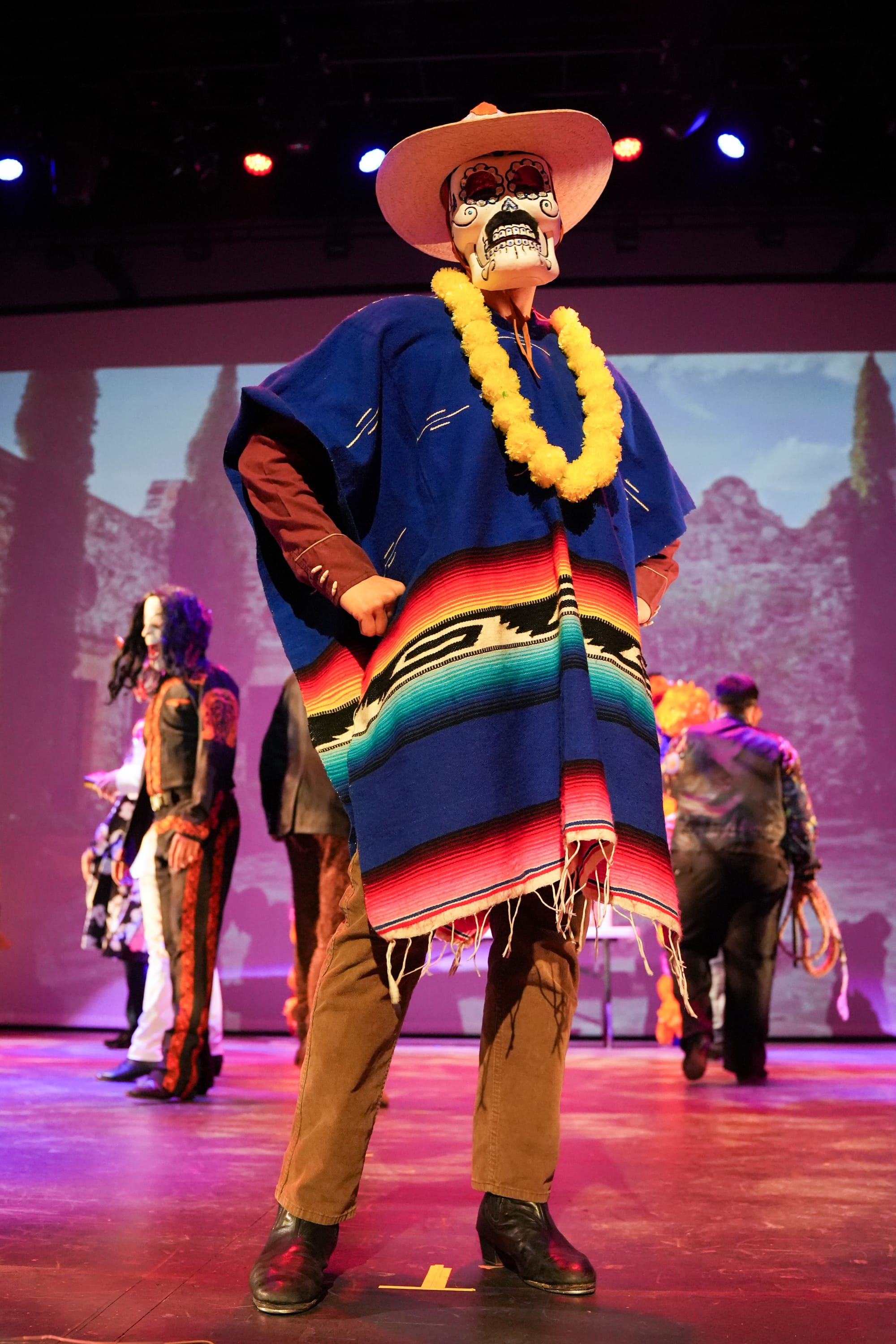
[LEFT] Performers prepare an altar honoring loved ones as part of CICA’s annual Día de los Muertos showcase, “Viva la Vida,” on Nov. 2, 2025, at The Athenaeum Center for Thought & Culture in Chicago. [RIGHT] A performer wearing a skull mask dances in a Xantolo routine, a tradition from Mexico’s Huasteca region In Veracruz, during CICA’s “Viva la Vida” performance on Nov. 2, 2025, at The Athenaeum Center for Thought & Culture in Chicago. | Araceli Ramirez/15 West
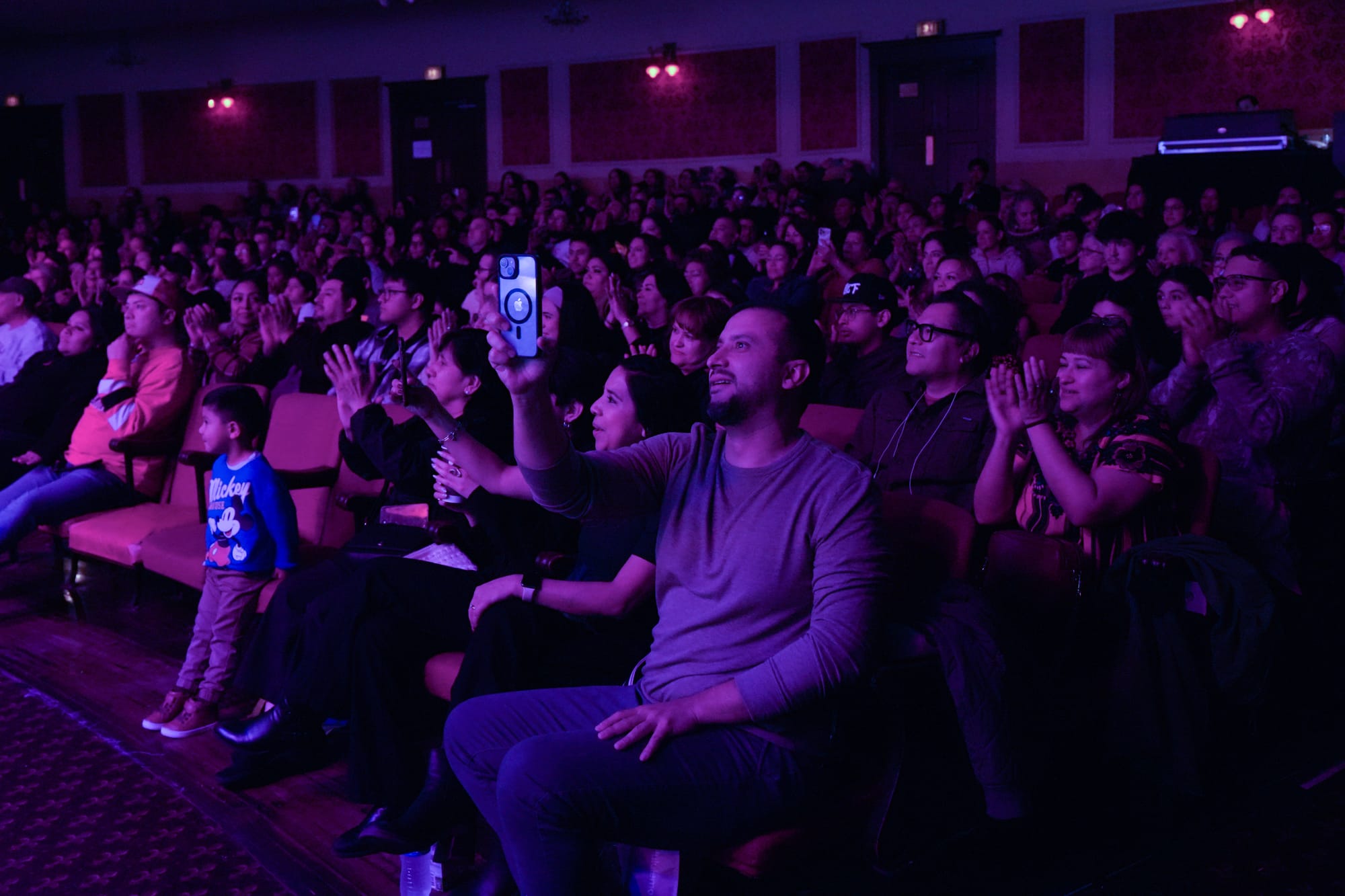
With the curtain still closed, families from across Chicagoland took their seats and silenced their phones. Backstage, dancers hurried through last-minute fixes. A girl read a book to steady her nerves. Young boys searched for their missing sombreros. A small group stood quietly before a framed photo on the altar.
Audience members watch CICA’s main company ensemble perform during “Viva la Vida” on Nov. 2, 2025, at The Athenaeum Center for Thought & Culture in Chicago. | Araceli Ramirez/15 West
For longtime ballet folklórico performer Alyssa Calderón, 23, performing during this time of year carries a deeper meaning, even amid the tensions that surround her community.
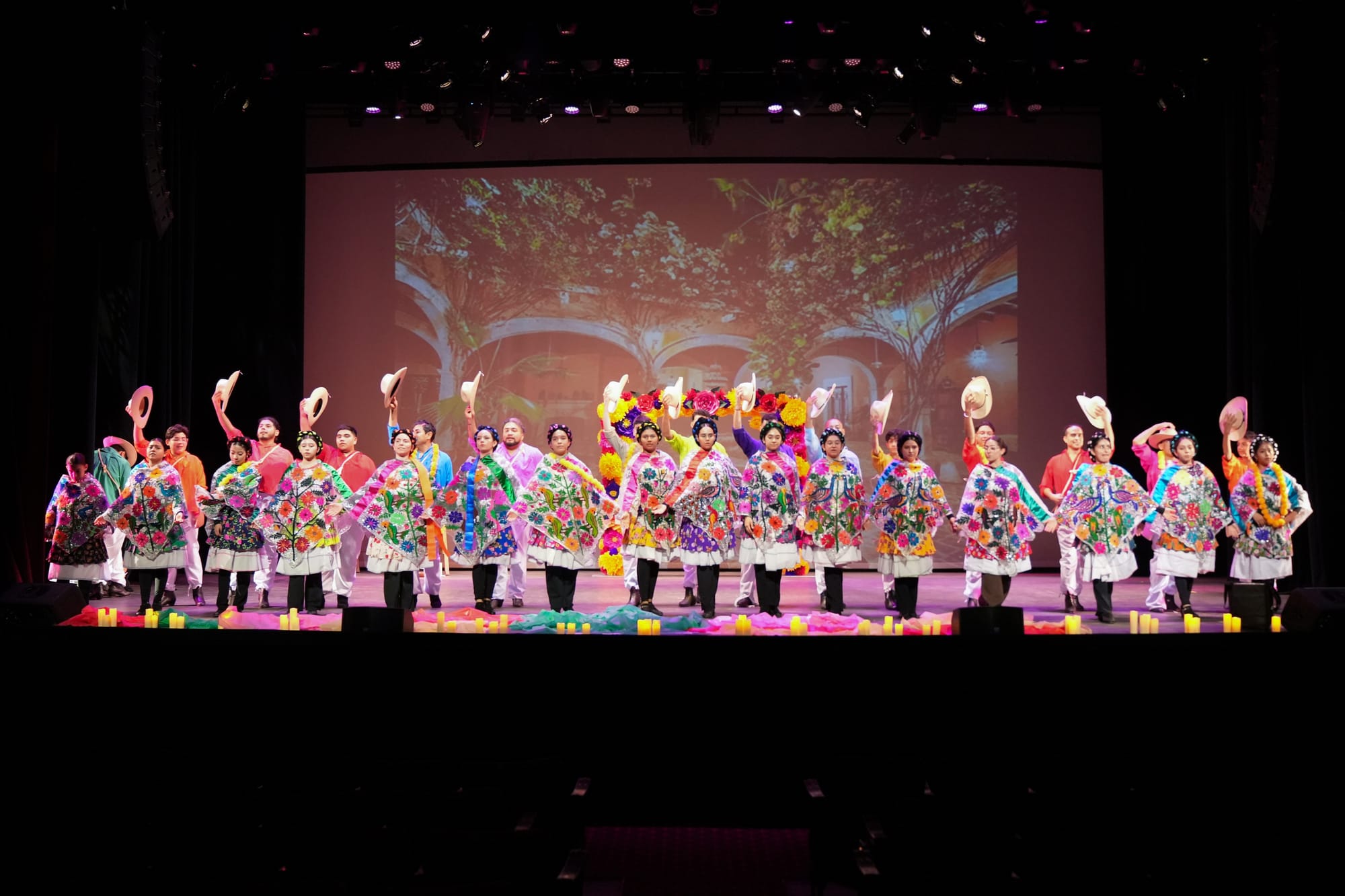
Advanced group dancers take their final bow during on Nov. 2, 2025, at The Athenaeum Center for Thought & Culture in Chicago. | Araceli Ramirez/15 West
“Something so beautiful about our culture is that we take a really hard and complex idea of life and what the end of it may look like and make it something beautiful,” Calderón said. “When performing, we continue to represent the beauty of the tradition and how we come together.”
*This piece was edited with support from Liana Ordonez and Gemma Mueller, part of 15 West’s Reporting/Editing Internship.
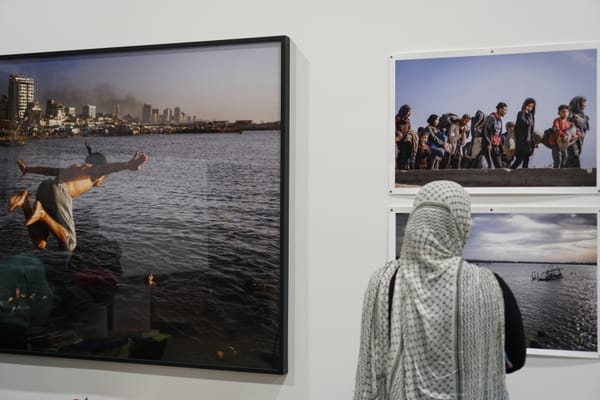
A visitor observes photographic works depicting scenes from daily life, waterfront moments, and groups of people, contemplating the human stories captured within the frames. | Provided by Bobby Vanecko