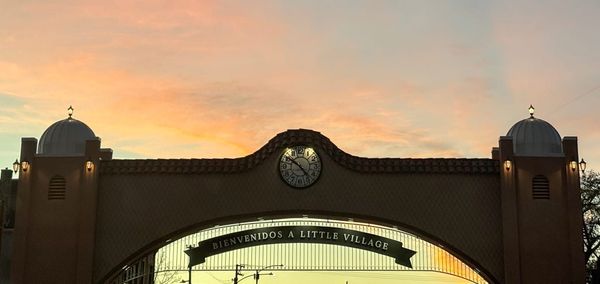
The Little Village arch on 26th Street at sunset. | NaBeela Washington/15 West
Mayra Padilla had never seen anything like it before.
“I've never seen agents in five, four SUVs driving down the Village, getting out and harassing one poor old woman,” Mayra Padilla, a long-time resident, said. “I've never seen tear gas before. I've never seen guns this close.”
From September to December 2025, federal immigration raids swept through the Southwest Side neighborhood as part of Operation Midway Blitz, an enforcement operation targeting what the Department of Homeland Security calls “the worst of the worst criminal illegal aliens.” For Little Village residents, the increased presence created fear and economic fallout.
“... Everything stops,” said Rocio Padilla, another resident. “It literally feels like everything freezes … people don't come out.” She described families retreating indoors, with some residents seen running into nearby stores to get off the street.
On July 4, 2025, President Donald Trump signed into law H.R.1, also known as “One Big Beautiful Bill” (OBBB). The bill included a $45 billion fund to build new immigration detention centers, including family detention facilities.
By September, Little Village felt the impact of OBBB. ICE presence increased, and residents of Little Village no longer felt safe in their home, in the neighborhood that had once been a haven.
Little Village — known as La Villita — is one of Chicago’s most vibrant and culturally distinct neighborhoods. Located between Western Avenue and Cicero Avenue on the Southwest Side, the community has a high concentration of Latino residents, bold murals, and family-run businesses that have served generations. The neighborhood’s bustling business corridor is Chicago’s second-highest tax-generating district, next to the Magnificent Mile.
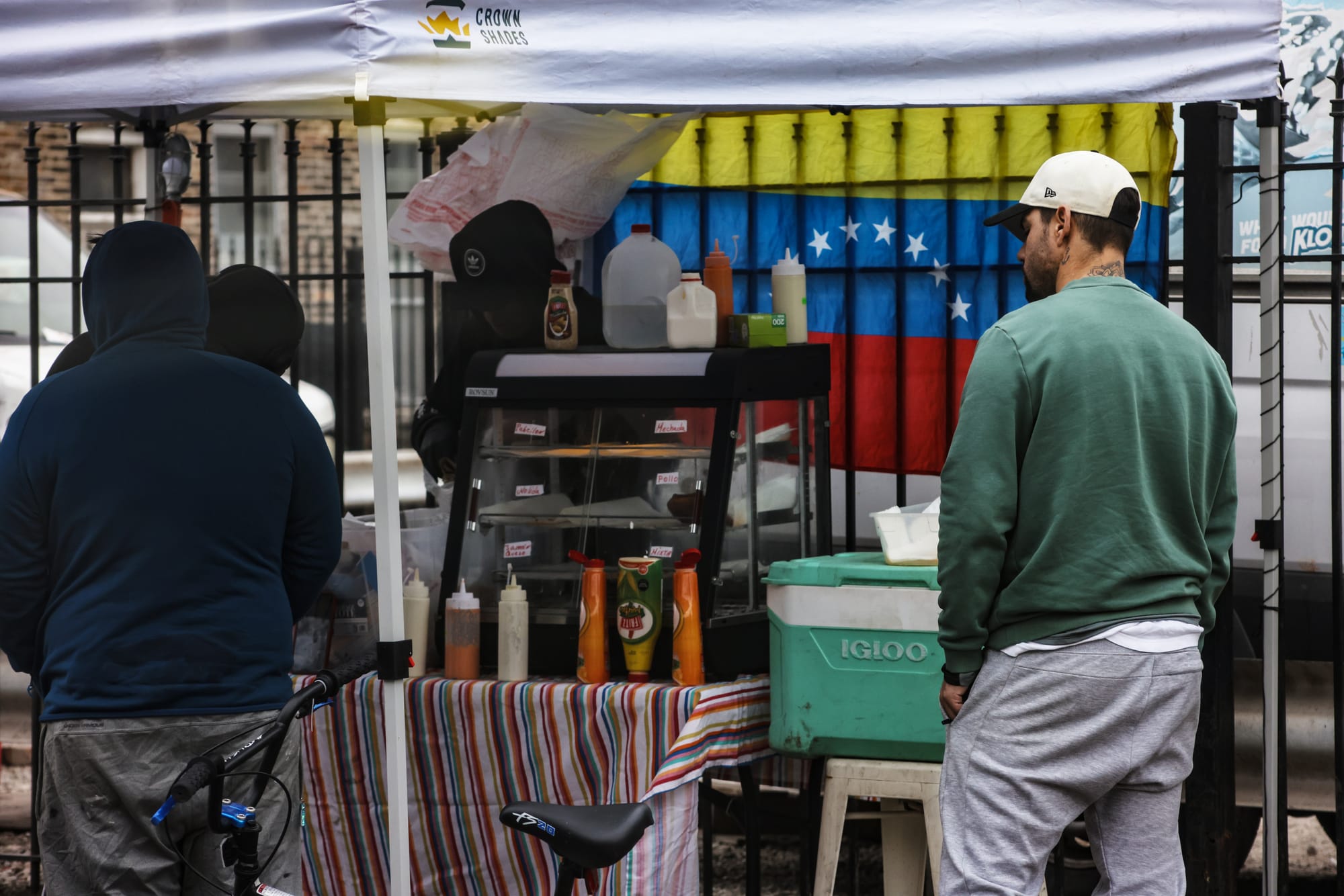
A street vendor serves customers in Little Village. | NaBeela Washington/15 West
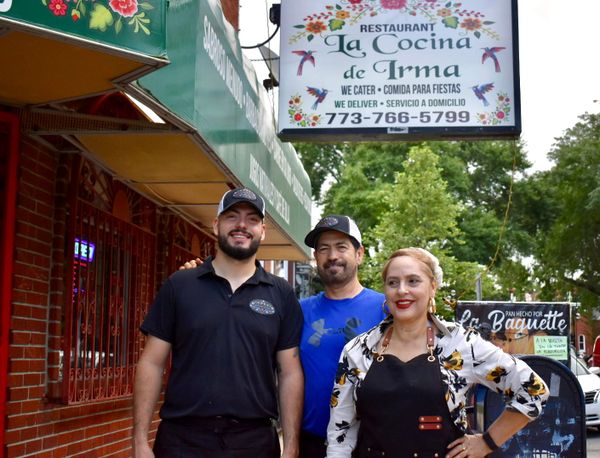
Restaurants such as El Milagro, Los Comales, and Los Mangos stand alongside iconic quinceañera dress shops and street vendors, creating a cultural heartbeat. “That’s our culture,” said Mayra Padilla. “Donde come uno, comen dos … where one person eats, two people can also eat … We will make you feel welcome.”
Increased ICE presence had a broader impact that goes beyond economics; it's the slow destruction of a community that has already had to face other obstacles.
Baltazar Enríquez, President of the Little Village Community Council, described what he sees as a deliberate strategy to undermine the community. "I would destroy their economics. I will destroy families by taking the breadmaker," he said, arguing the raids are driven by fear of Latino economic and political power.
Other community members interpret the targeting as racial profiling rather than public safety priorities. Based on data collected by the American Community Survey 2016-2020 5-year estimates, La Villita is made up of predominantly Latinx residents: 81% identifying as Latinx, 75% as Mexican/Mexican American, 13% African American, and 37% foreign born. “Little Village has a high concentration of immigrants, of Hispanics … a lot of people that don’t even speak English yet,” Rocio Padilla said. “I feel like [ICE] don’t have a real target, they’re just aiming for something, and if it hits something, then that’s it.”
Local advocates fear the increased ICE presence in the community has taken a toll on children’s mental health, with students struggling to concentrate in school amid anxiety about their families’ safety.
“Our youth are going through a complicated depression … because they're seeing violence at home … in the school … in the street,” Enríquez said. “They're afraid for [their parents] going to work and not coming back home, and not only afraid, but they're also not able to learn.”
Jocelyn Tenorio, a volunteer with the Street Vendors Association of Chicago and Little Village resident, explained how ICE presence is impacting her overall health.
“The way that we think of how our body stores that trauma, as far as like, even more mental health issues, even more anxiety that our bodies feel. So I would say those are definitely the kind of long-term effects that I see.”
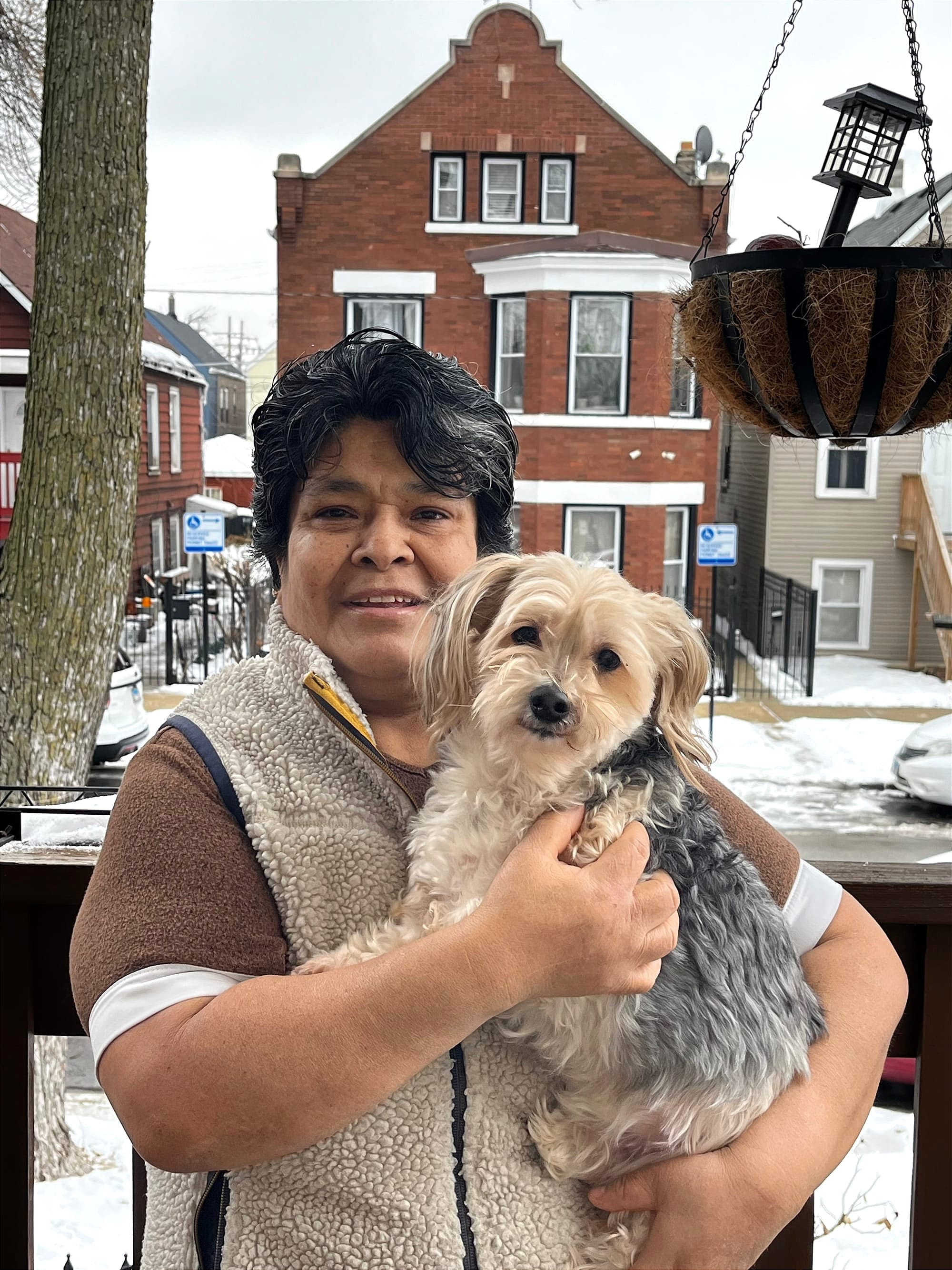
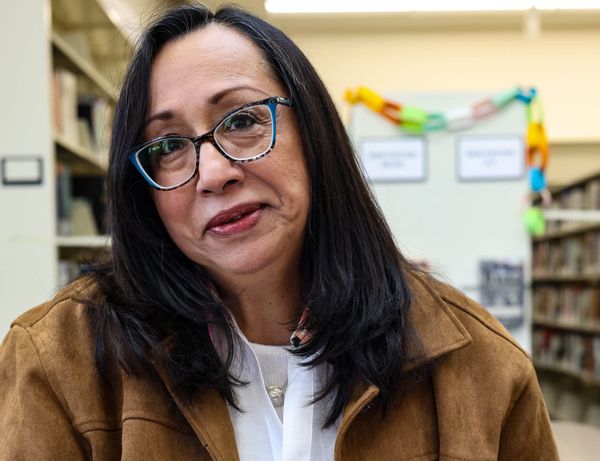
Margarita Guerrero, a 60-year resident of Little Village, outside her home. | Alondra Carmona/15 West
Residents have begun turning toward each other rather than away. “The people here, they don't feel safe, they don't feel like there's any support from the authorities,” said Margarita Guerrero, a 60-year resident of Little Village. “Our Alderman, our representative, they say a lot, but there's no action.”
That sense of abandonment has pushed residents to organize among themselves. “We should be uniting more now than never, and continue showing up for each other,” Tenorio said. She argues that ICE enforcement and policing are part of the same system, manifesting in different ways, and letting those differences pit communities against each other would be a mistake.
Locals remain hopeful, building networks and attending know-your-rights workshops, even creating financial support for local food vendors.
“Buy from the local businesses here, because I know they're going to be hurting the most,” Mayra Padilla said.
For Enríquez, the path forward is clear: “Little Village is resilient, has resilient people, and we know that after the storm, the sun's going to come out, and we just got to teach our people how to continue the fight, how to continue organizing.”
Republish This Story
This story is available for republication under a Creative Commons Attribution-NoDerivatives 4.0 International License. You may republish this article with attribution to the author and 15 West, but you cannot modify the text.