Organizers Work to Expand Disability Access on Chicago’s West Side
After a new city report highlighted stark neighborhood inequities for Chicagoans with disabilities, local advocates say the work to make the city more accessible is far from finished.
A report released Feb. 9 by the city, “Neighborhood Conditions for Adults with Disabilities in Chicago,” examines the barriers people with disabilities experience across all 77 neighborhoods.
Data collected annually through the Healthy Chicago Survey by the Chicago Department of Public Health (CDPH), in collaboration with the Mayor’s Office for People with Disabilities (MOPD), shows that one in four Chicago adults lives with a disability. The South and West sides of the city have a higher percentage of residents with disabilities than the North side, with more than 26,000 Austin residents living with a disability in 2024.
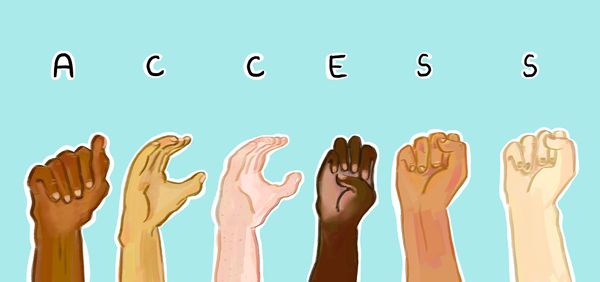
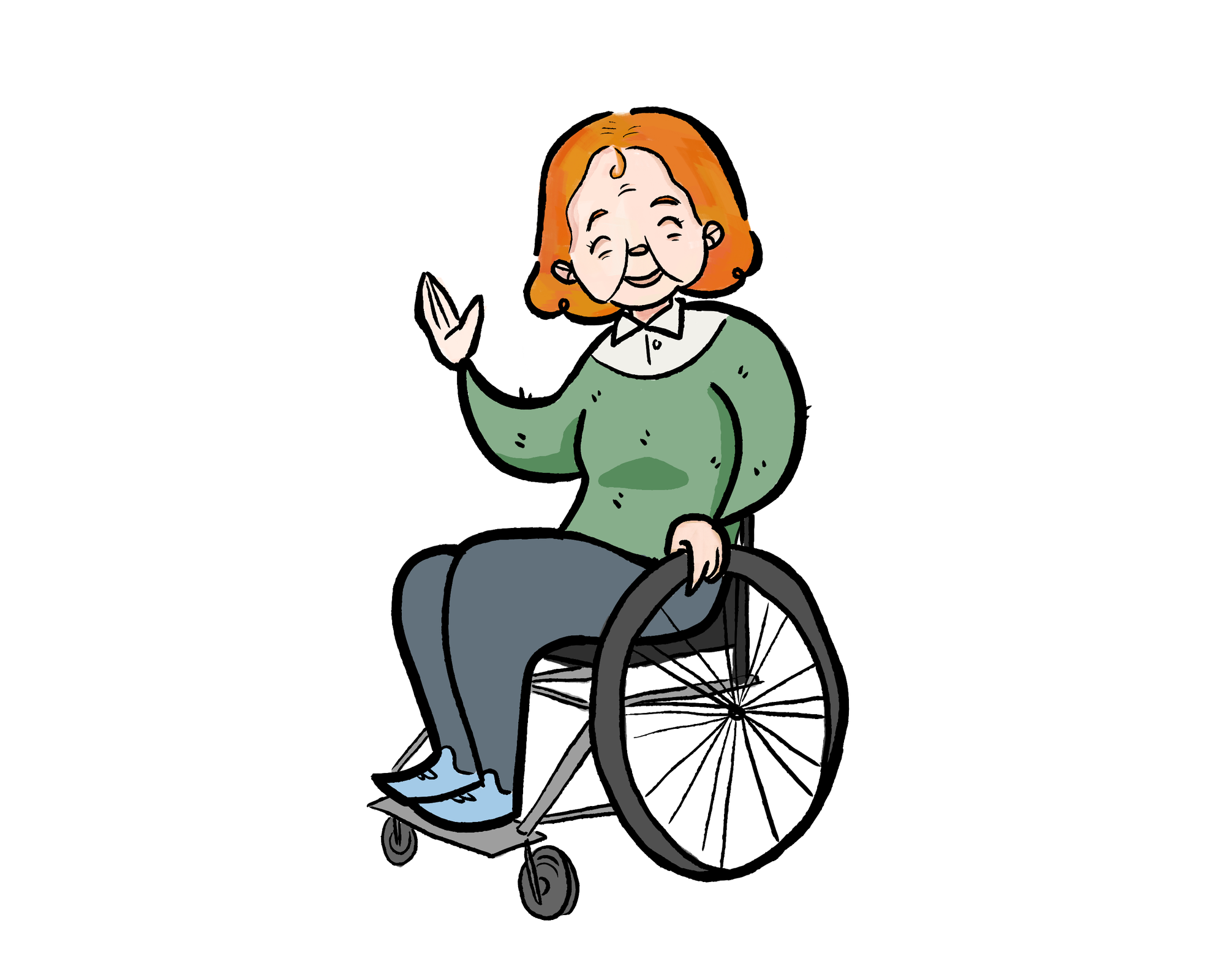
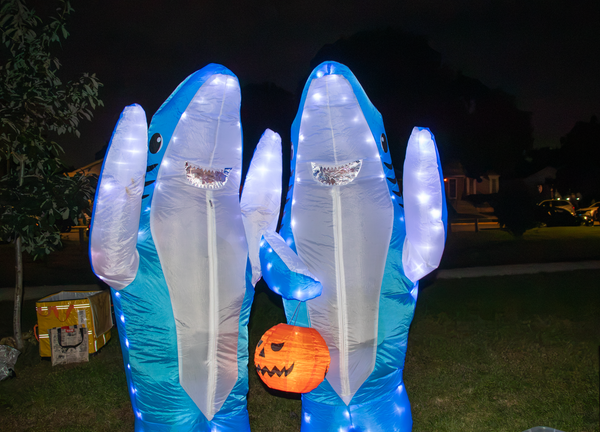
Illustration: Eleni Chapas/15 West
Across all conditions assessed, adults with disabilities reported lower levels of community belonging, safety, trust in local government and law enforcement, and access to neighborhood resources. They also reported greater infrastructure and environmental challenges compared to Chicago adults without disabilities.
MOPD Commissioner Rachel Arfa stressed the importance of the report’s findings. “I hope that people recognize, by numbers, through data, how many people with disabilities there are,” Arfa said. “I think it gives us an opportunity to continue to identify ways that we can improve and set up disability access for designing programs and services.”
The report concludes, “inequities in neighborhood conditions for people with disabilities require a cooperative effort from City departments and agencies, policymakers, and communities to foster inclusive social and built environments.”
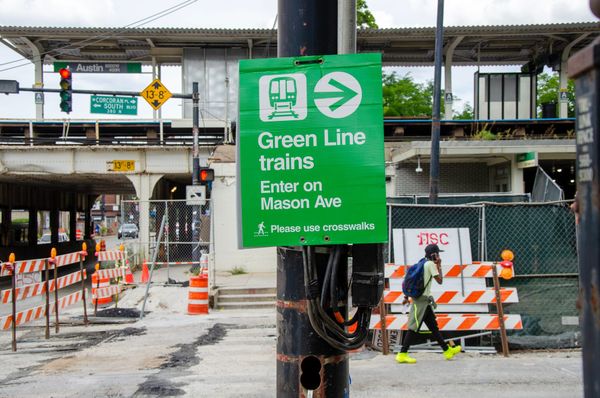
Resident-reported accessibility data and community feedback also highlight recurring barriers across West Side neighborhoods, including broken sidewalks, missing curb ramps, unreliable transit access, and unsafe crossings—making everyday travel more difficult for people with disabilities.
Outside of city initiatives, advocates and organizations are already working to address gaps.
The Chicago Neurodiverse Social Club (CNSC) is a non-profit program hosted by CAYR Connections, that organizes events for neurodivergent adults across the city, with several focused on the Northwest and West sides. Audrey Koziol, chair of the CNSC Steering Committee, formed the group three years ago while living in Oak Park.
“I used to live in Champaign, Illinois. I was part of a similar neurodivergent support group and did some disability activism in college,” Koziol said. “I got to meet, socialize, and was friends with other disabled people on campus … I had moments in college where I was struggling, and they personally made the difference between me finishing my degree and me not finishing my degree.”
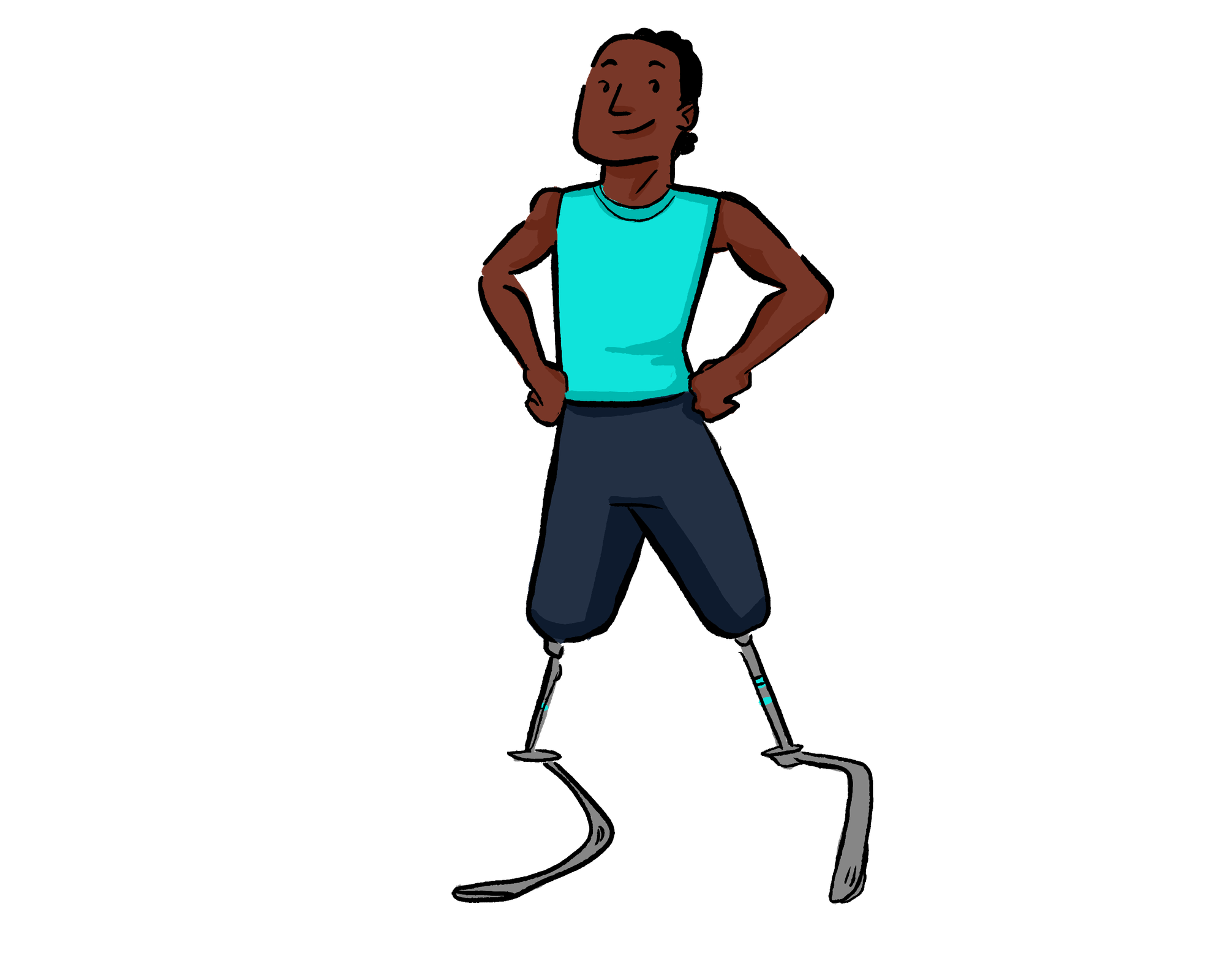
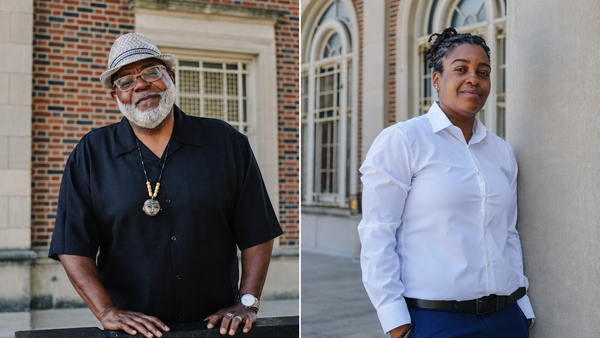
Illustration: Eleni Chapas/15 West
After moving to Oak Park, Koziol struggled to find a support group close by that was of interest, explaining that Chicago did not offer many social clubs or programs open to all neurodivergent people. Koziol planned a test event held at an Oak Park library branch in March of 2023, expecting only a few people to attend.
“I think we got over 15,” Koziol said. “It was way more than I expected. And it kind of just exploded from there.”
Support groups in both English and Spanish, trips to the Shedd Aquarium and the Christkindlmarket, board game nights, and book clubs are among the 130 events CNSC has hosted.
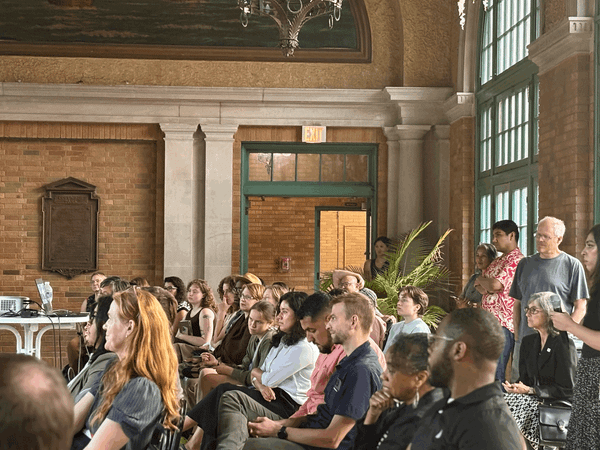
Most events are free and planned around accessibility to public transit. CNSC also prioritizes venues offering wheelchair accessibility, which Koziol notes is not always possible due to the age of many Chicago buildings. The environment of a space is also considered when selecting a venue. Typically, Koziol will book rooms with doors that can be shut, lights that can be dimmed, and the option to lower external noises.
As CNSC expands, Koziol explains the challenges the group faces when organizing larger events in the city. “A general concern is around bureaucracy and confusion around how systems and processes work,” said Koziol. “At least from my side, as someone who has been trying to organize events in Chicago, the city has justified requirements for the permitting that you need to hold events and to charge people money to attend.”
Although CNSC members have requested that the group host larger, donation-based gatherings, Koziol explains how difficult it’s been to find venues with a verified Public Place of Amusement license.
“I think a lot of neurodivergent people are frustrated with processes that have multiple steps where you need to go to a website, fill out a form, fill out another form, and then that form doesn't work,” said Koziol, “... anything the city can do to simplify processes and make sure that when people are asking for a service [it] is easily explained, that it is a simple and quick process that people can access.”
Access Living, a center for “service, advocacy, and social changes for people with disabilities,” has been organizing in Chicago for over 45 years to improve disability services.
“... for a long time, we've already been saying that we need to see better for people with disabilities in terms of the environment, public safety, education, and all these other measures,” said Amber Smock, Vice President of Advocacy.
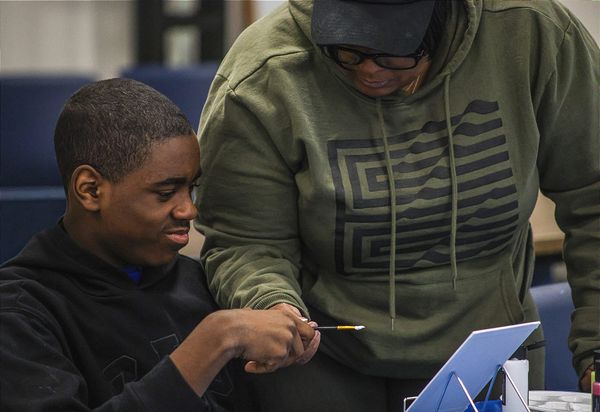
Access Living provides various services, including peer support groups that offer disabled Chicagoans a space to self-advocate and connect with resources many have difficulty finding, such as housing and employment.
Smock describes the concern among group members who struggle to find information on accessible housing and reliable transportation to receive healthcare.
Housing, as Smock states, is the number one inquiry Access Living receives. The organization has developed a program that provides housing modifications to allow accessible movement and use of the home.
On the South and West Side, Smock said issues related to food became particularly exacerbated by the federal shutdown this fall. “People were coming in saying, ‘You know, I used to be able to hack it. But now I just really can't. I don't have any more money to buy food.’ ”
Despite these challenges, Smock emphasizes community members’ deep connections to their neighborhoods.
“... the answer is not to say, well, if we just make more accessible places to live on the North Side, then people with disabilities will want to live there,” said Smock, “So it's important to make sure that the money to make life more accessible goes to that neighborhood.”
The reporter contacted multiple West Side residents and community organizations in the course of reporting this story.
Republish This Story
This story is available for republication under a Creative Commons Attribution-NoDerivatives 4.0 International License. You may republish this article with attribution to the author and 15 West, but you cannot modify the text.
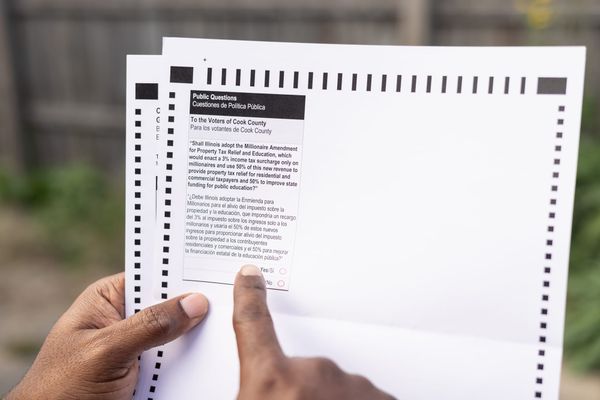
A voter reviews the Cook County public question asking whether Illinois should impose a 3% surcharge on income above $1 million and divide the revenue between property-tax relief and public education. | NaBeela Washington/15 West