One Austin Mom Couldn't Find Support for Her Autistic Son. So She's Building It.
Asia Bee spent years navigating a system that offered Black families like hers little more than a diagnosis. Now she's creating the community she never had through Darrin’s Voice, one Saturday at a time.
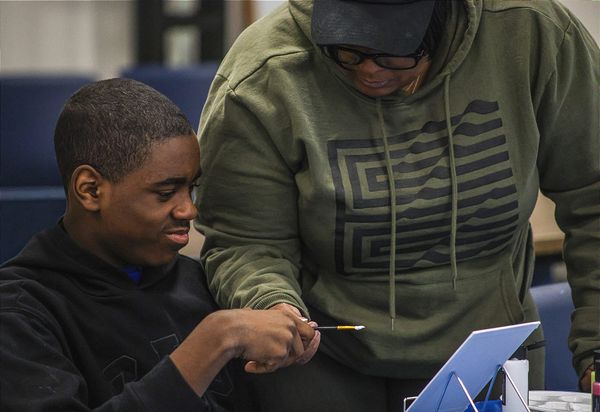
Asia Bee and Darrin painting together. | NaBeela Washington/15 West
Asia Bee made a decision that many parents never feel ready to make: to turn her private struggles with autism into a public commitment to other families.
Working out of borrowed community spaces in Chicago, like the Austin Public Library, Bee's striving to build the kind of practical, everyday support she couldn’t find when her son was first diagnosed. For many Black families in neighborhoods like Austin, that kind of sustained autism support remains difficult to access.
Darrin’s Voice is a place to breathe: a few hours where children can paint or listen to music and their parents or caregivers don’t have to apologize. As Bee and other mothers trade stories across Austin, the project also becomes a record of what’s missing—the long-term autism support that fully reaches Black families, and the ways parents have taught themselves to fill those gaps.
Named after her 14-year-old autistic son, Darrin, the nonprofit grew out of the years when Bee was improvising alone—playing music, dancing through meltdowns, and using art to structure their days—because she couldn’t find steady guidance or programs in her own neighborhood.
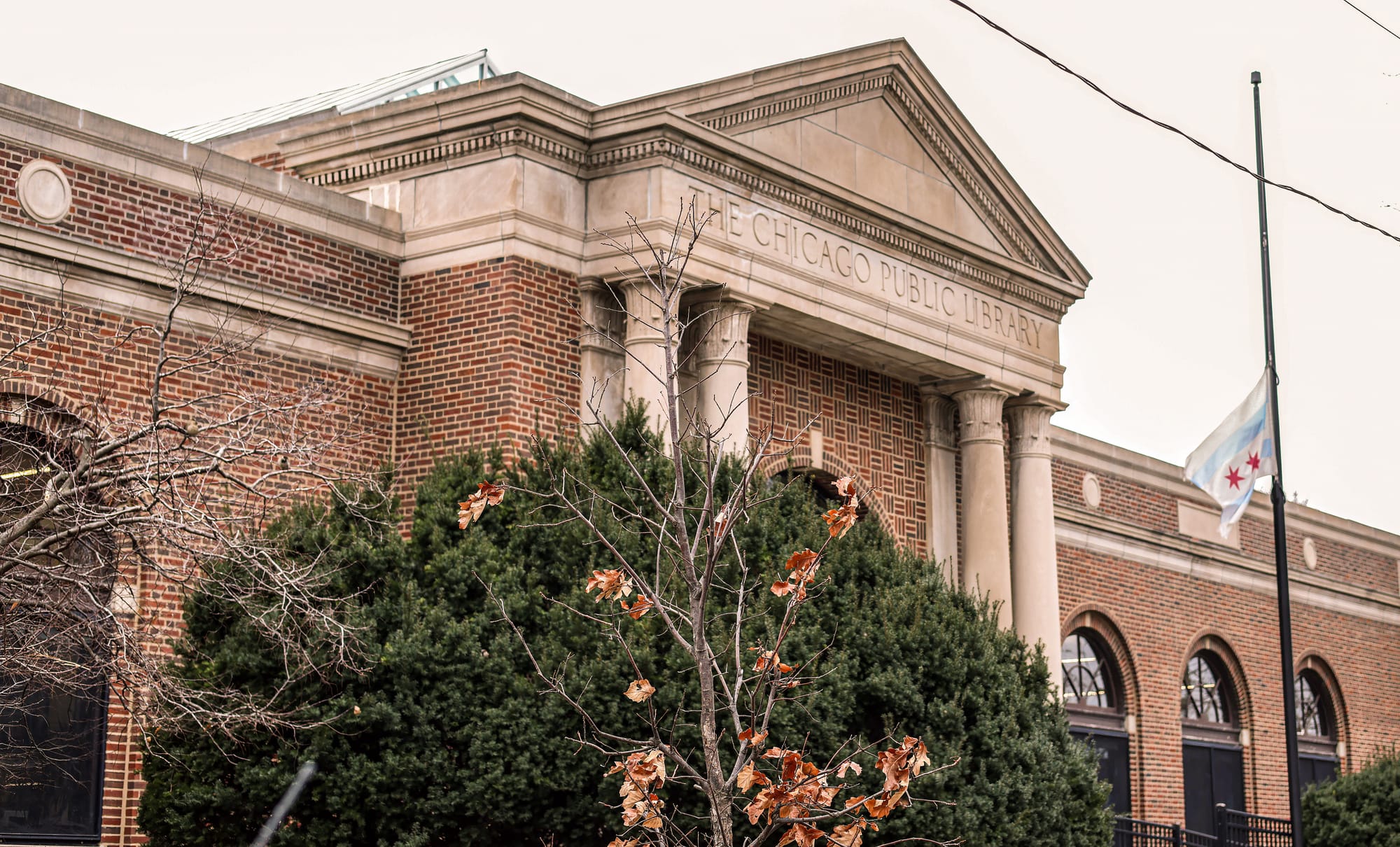
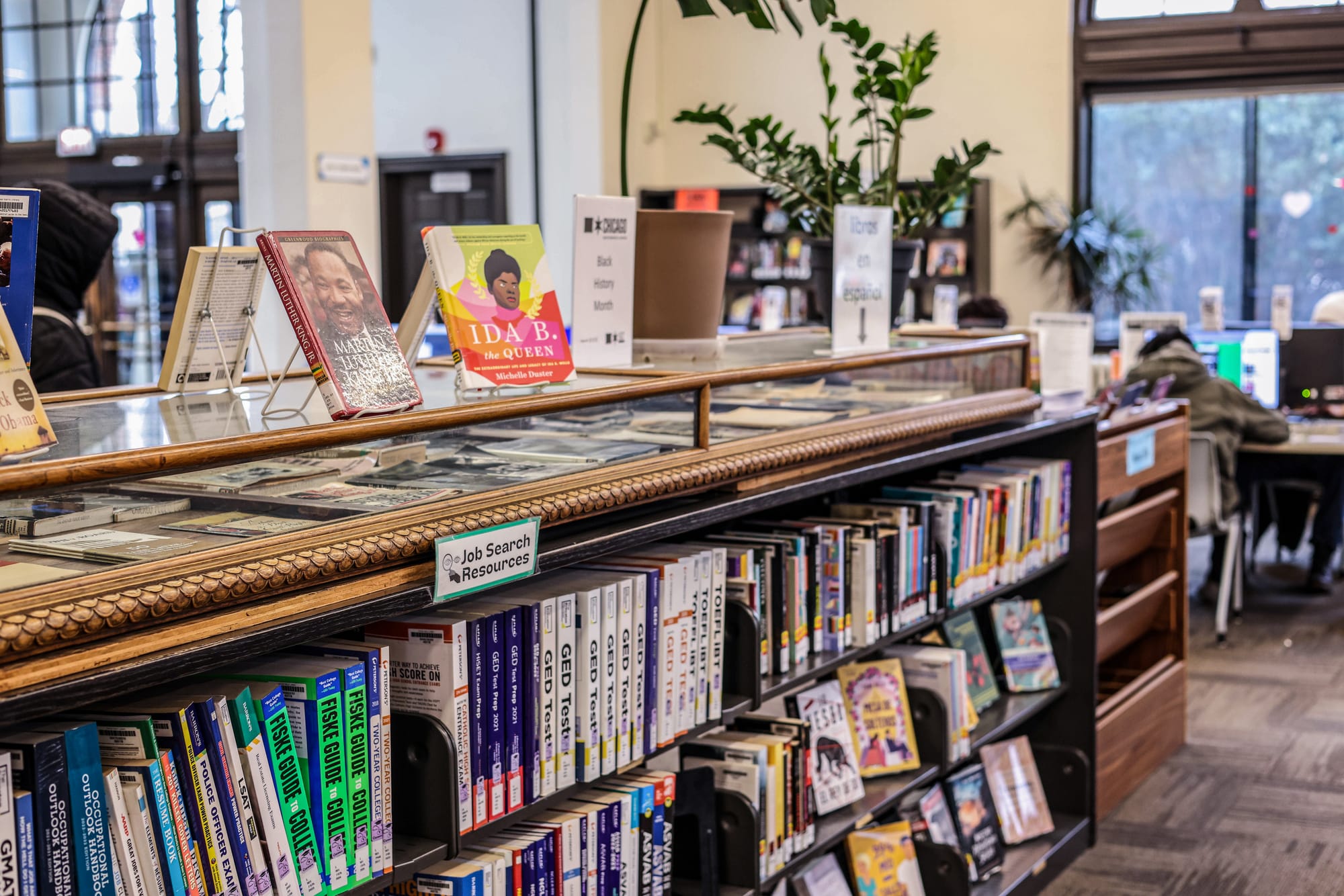
The Austin branch of the Chicago Public Library where Darrin’s Voice holds programming for autistic youth and their families. | NaBeela Washington/15 West
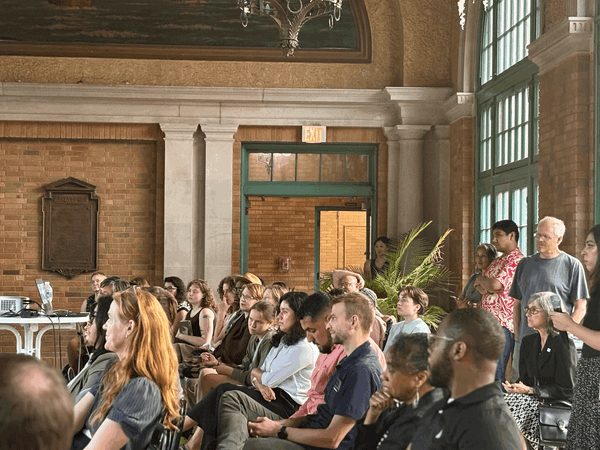
Now, that improvisation has taken on a formal shape. Darrin’s Voice recently launched a recurring two-hour Saturday program that gives autistic kids space to regulate through art while parents and caregivers connect in the next room. In February, Bee brought together a small group of women, most of them mothers, for one of the organization’s early informational sessions.
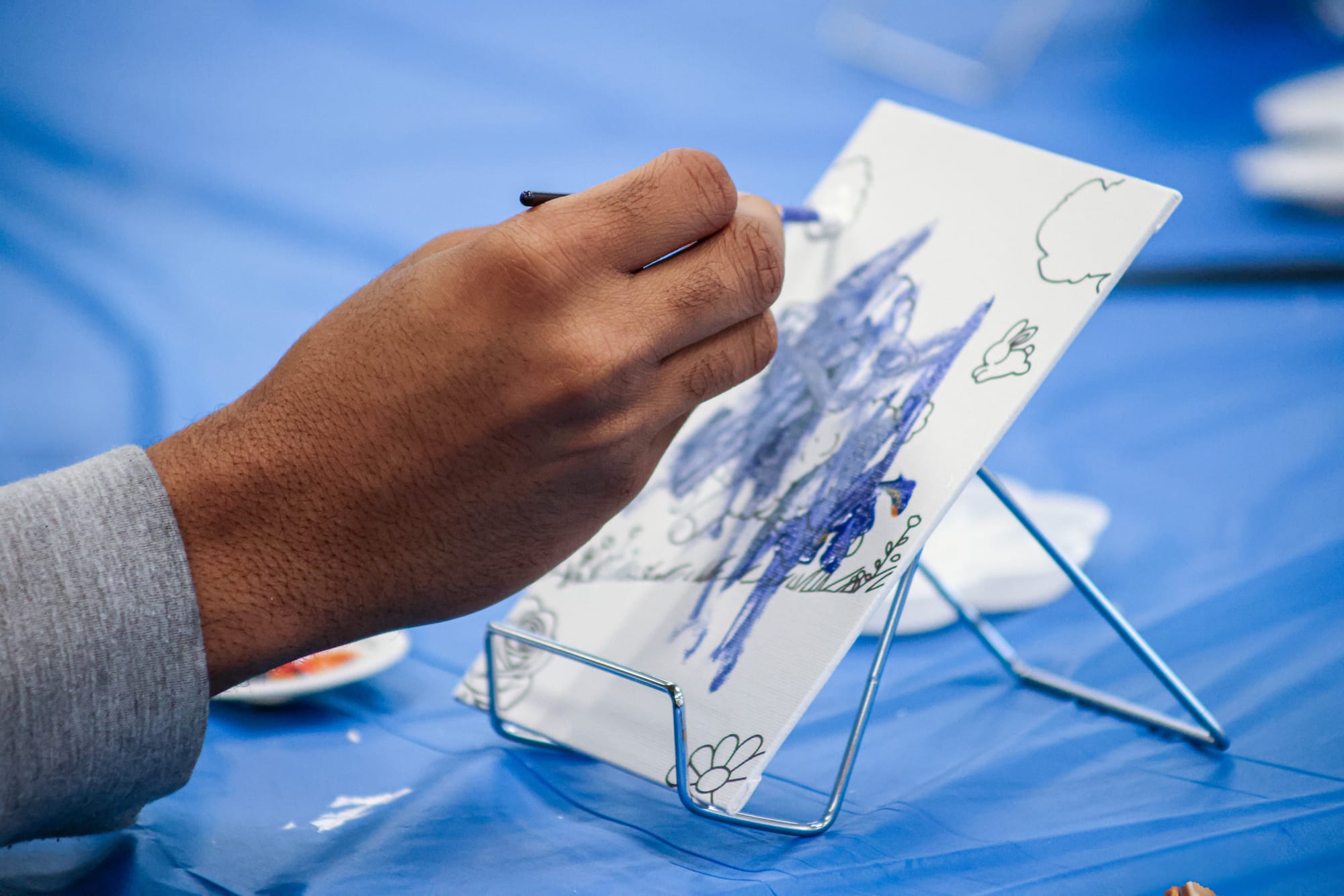
Darrin painting during a "Community Canvas" event. | NaBeela Washington/15 West
“From three till … about eight, it was just turmoil, for lack of a better word … inconsistent sleeping patterns, eating, not eating. Meltdowns, crying … I don't know what to do. Depressed. Lost my husband. I've lost my mother. I really don't have a strong support system … I was really like drowning,” Bee said.
The session was a preview of what Bee hopes to address in communities struggling to find care for children with autism. “... Everybody like, just go to the doctor,” Bee said. “But the doctors … don’t have any information for you. They don’t give you any direction [on] how to [support or navigate] your child’s behavior, any support groups for parents, how to help them when they’re sleeping, when they’re not sleeping, when they’re not eating. There’s nothing there to teach you how to communicate with your child.”
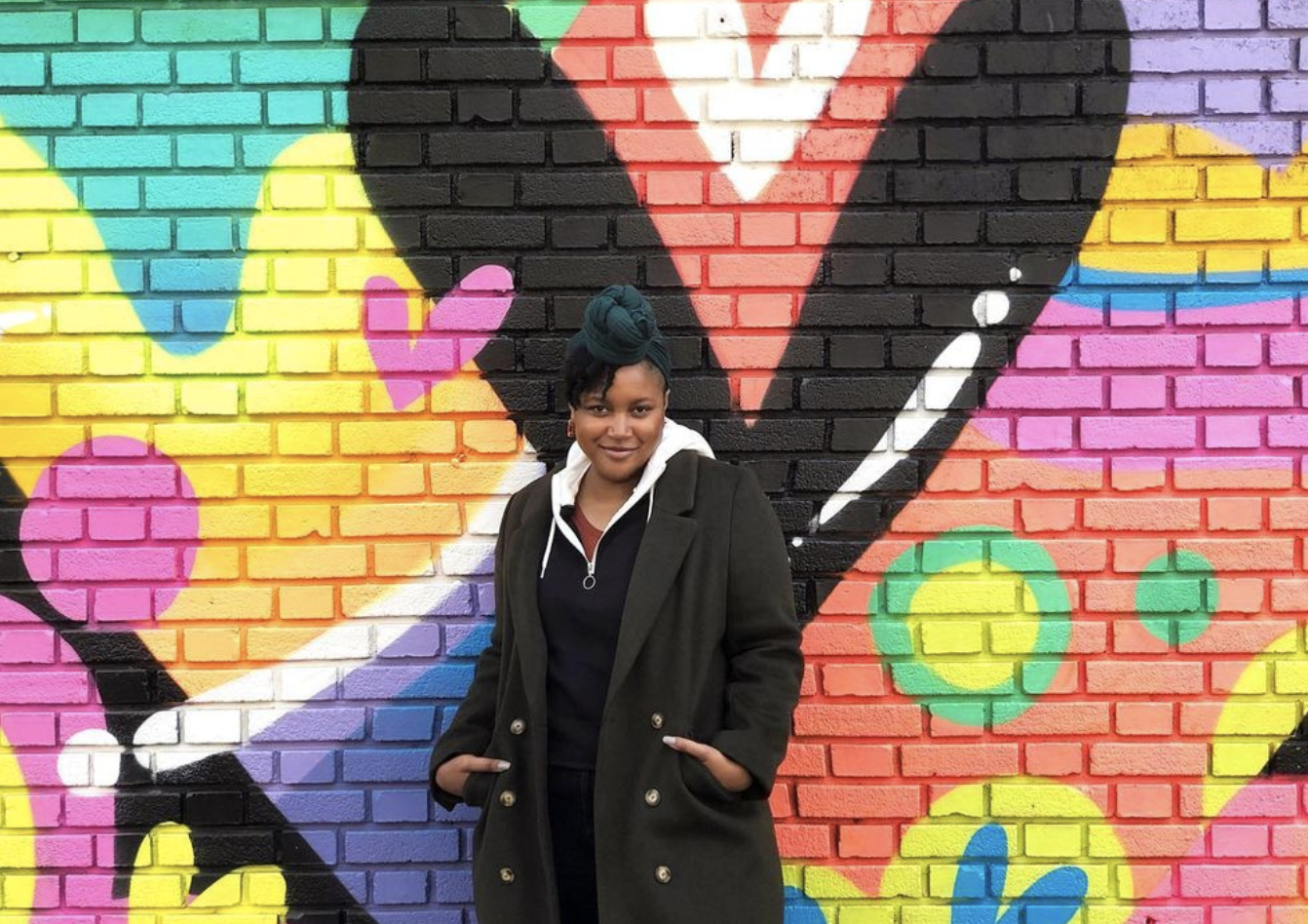
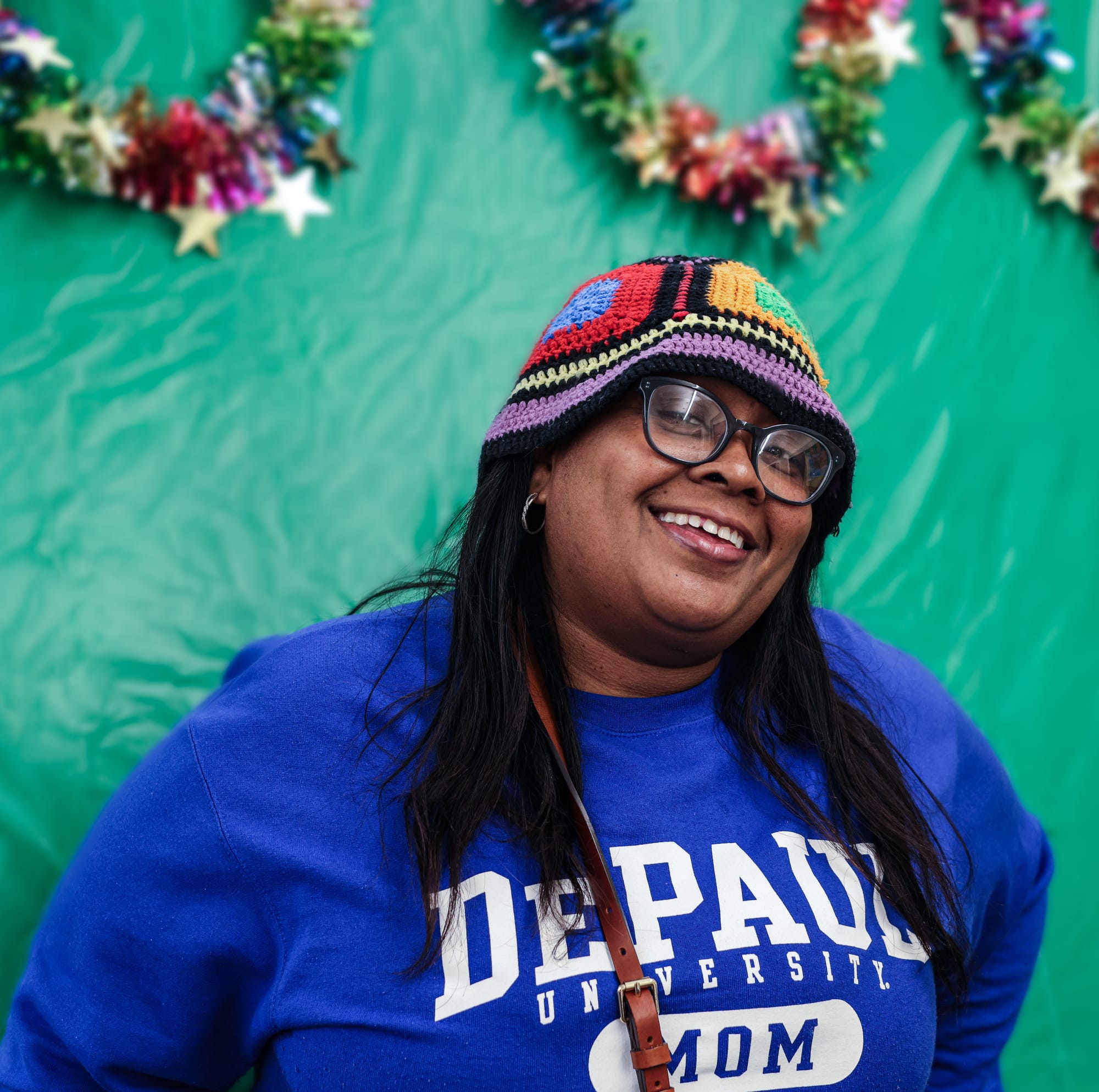
Asia Bee, founder of Darrin’s Voice, created the organization after struggling to find sustained autism support for her son and other families in Austin. | NaBeela Washington/15 West
She shared that many programs end at ages 20–22 and that “there are no programs” truly designed for their ongoing needs, especially in predominantly Black communities. In response to that vacuum, she’s built her own communication pathway through art, using painting, collage, and sensory materials to help children express emotions and needs nonverbally and to give parents a shared language when traditional systems fail them.
“... this is a continuous thing that I’m going to work diligently to make sure that parents, children, everybody can [get] what they need,” she said on stage in front of the group.
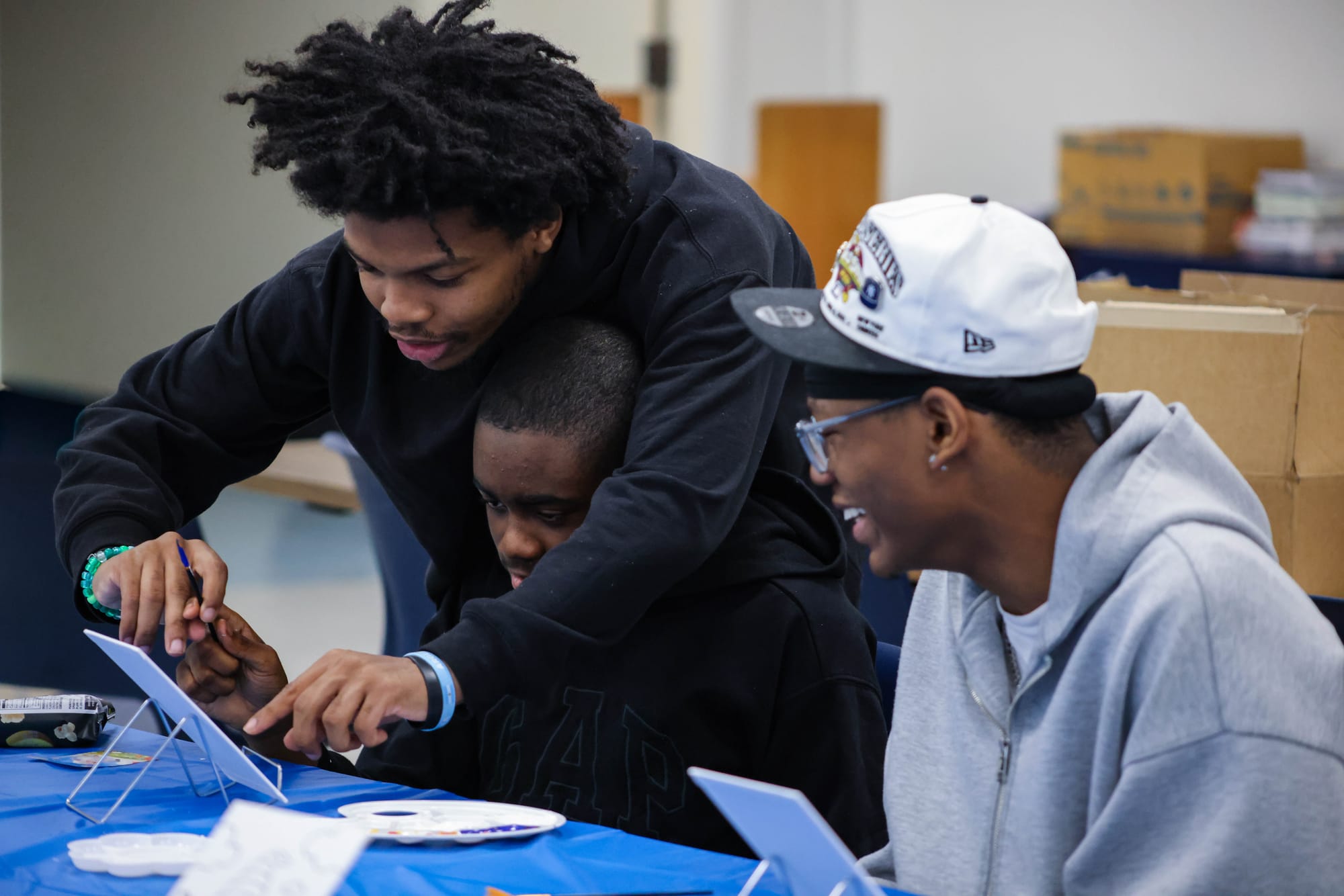
Darrin paints during a Darrin’s Voice activity as his brother Daraun laughs beside him and Bee’s nephew helps guide him. | NaBeela Washington/15 West
Loreal, Bee’s cousin and the mother of a 25-year-old child with autism, was also in attendance and shared that her own experiences mimicked Bee’s. “I think the most help, unfortunately, that you’re going to get is when they’re in grade school,” she said. “If there’s any time that you need to advocate for your child, advocate for resources… because you have to think about the long run. They’re only going to be a kid for so long, and then the rest of the time they’re going to be an adult,” she said.
Families seeking more substantial support can enroll in PUNS, the Illinois Department of Human Services' statewide database for individuals with developmental disabilities. But enrollment doesn't guarantee services, and selections are based on funding availability, meaning families can wait years before hearing back.
Loreal shared, “They do have respite care, but it’s 75 hours a year. That’s it,” she said. “Seventy-five hours. I could blow through that just like six hours going to the grocery store and back … if you need to just go out and take a break, or you just want a date with yourself.”
At Darrin’s Voice’s April 24 gathering, Siju, a parent and nurse, explained why services seem to vanish as children age: Medicaid will fund supports for life if a child is diagnosed before age two, but many Black families don’t receive a timely diagnosis. “There are programs for older children,” she said, “but they would have had to have been diagnosed before two … so they can’t get into them.” When that window closes, the help “really stops after six, especially after ten,” leaving an almost complete void between 18 and 24.
After failing to find care in their own backyards, both Loreal and Bee pointed to the abundance of resources not afforded to Black neighborhoods like Austin. “[I] got him integrated in a school system that is not in my area … in a north side area which is predominantly Hispanic, and they have a plethora of resources. They have [a] speech therapist, occupational therapist, etc, etc, so I take him out of [the] neighborhood to get what he needed as far as education,” Bee said.
It was in these schools that these mothers learned to advocate for themselves, how to craft an IEP for their child, and how to bridge the gap between care at home and in school. “That school taught me what I needed to do to help my child,” Bee said.
A Darrin’s Voice parent and caregiver form asks families about their child’s diagnosis, challenges and support needs, helping the organization tailor programming beyond a one-size-fits-all model. | NaBeela Washington/15 West
For the women in the room, autism isn’t a personality or a hashtag; it’s paperwork, meetings, and a constant fight to secure basic services.
“Don’t nobody want to be just a normal human being anymore. Everybody want it … autism is like the hot button now … they don’t understand what really goes into it,” said Loreal.
Darrin’s Voice is offering companionship rather than therapy, checking in with mothers who need support, a break, or help finding time for themselves. The organization also gives parents a space where they don’t have to feel “ashamed” of chasing their kids or apologizing for their behavior in front of strangers.
“Black people need services too. We need real working programs … We shouldn't have to go out to Naperville to get services for our children … We shouldn't have to go to schools outside of our neighborhoods for our children to get the needs that they need,” Bee said.
NaBeela is a Chicago-based journalist writing about what's possible. She's a fierce advocate of the arts and brings people together around literature and culture. Read more: nabeelawashington.com
A voter reviews the Cook County public question asking whether Illinois should impose a 3% surcharge on income above $1 million and divide the revenue between property-tax relief and public education. | NaBeela Washington/15 West