Pilsen Has Lived Through One Bad Demolition. Residents Are Fighting to Make Sure Fisk Is Different.
Residents say the Fisk site is full of heavy metals and coal ash that haven't been properly tested. They halted the demolition once. Now they're fighting to make sure it stays halted until the city does it right.
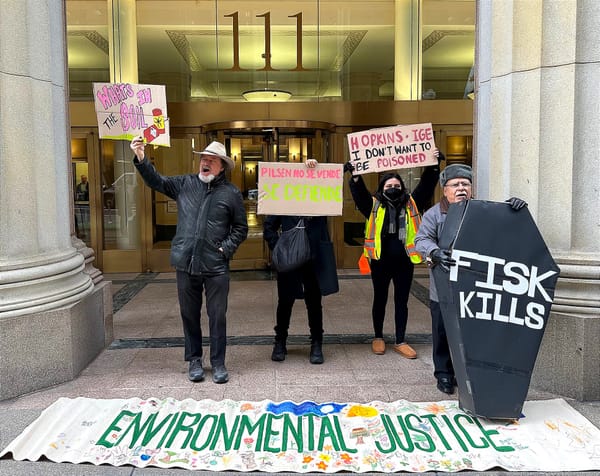
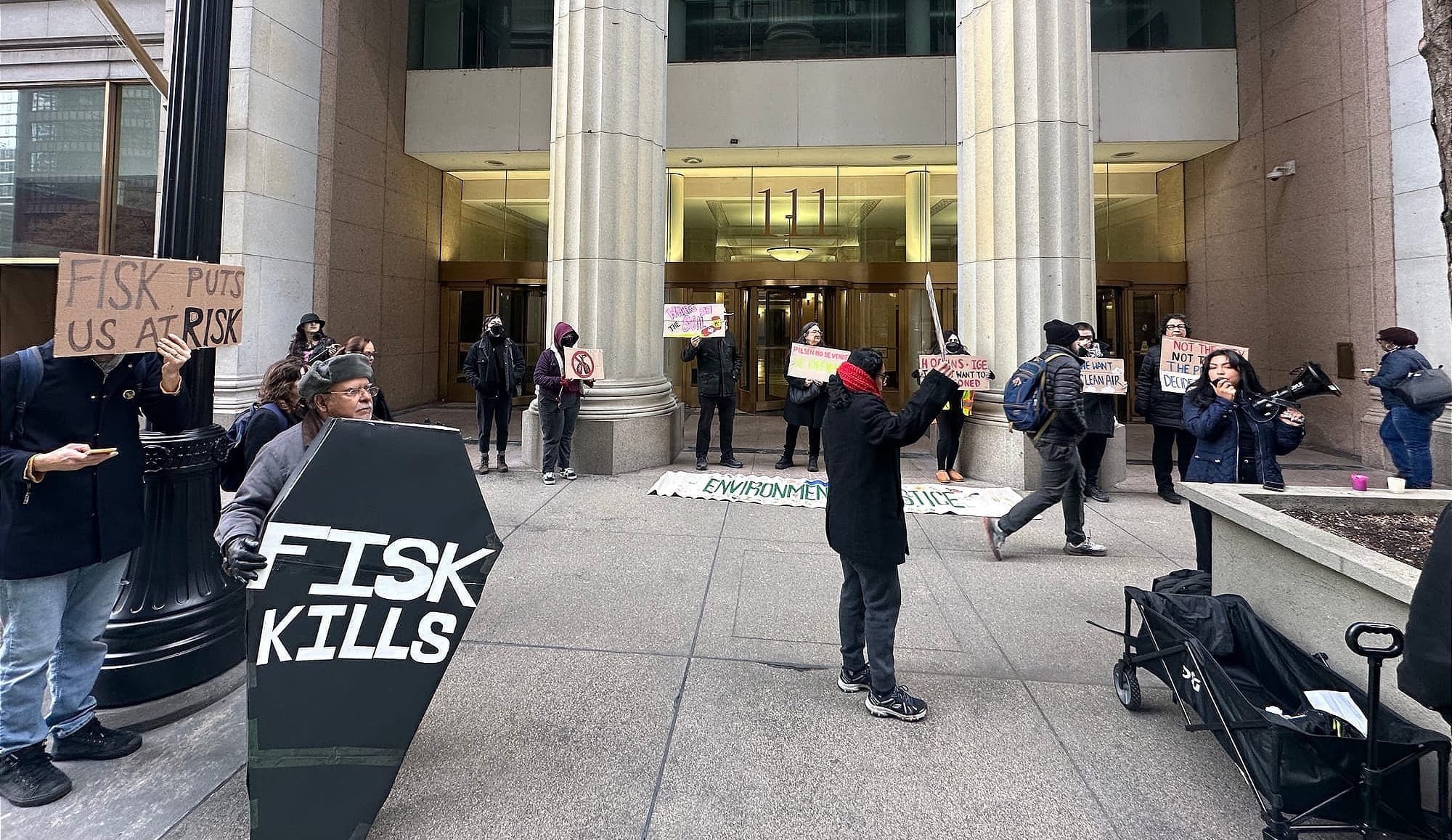
P.E.R.R.O. members rally outside City Hall. | Provided by Zitlalli Paez
Filiberto Ramirez grew up in Pilsen just blocks from the Fisk site, and later spent years working at the Crawford coal power station in the 1980s. As a young worker, he shoveled coal in constant clouds of dust that settled on clothing, food, and in workers' lungs—especially during breaks. “The companies knew how dangerous this stuff is,” Ramirez said. No one else in his family has a history of respiratory illness.
He does.
Today, Ramirez lives with asthma, a condition he says developed after years inside the plant. Several of his former coworkers now suffer from chronic respiratory diseases as well.
Leila Mendez has lived across the street from the Fisk plant her entire life. Mendez moved to the neighborhood from Puerto Rico in 1967 at age nine, when her father purchased an apartment building across from the Fisk coal plant—the same building her and her siblings were raised in. In 1998, she was diagnosed with cancer despite no family history of the disease, and this year she was diagnosed with breast cancer and emphysema, a chronic lung condition most commonly associated with smoking.
Yet, neither Mendez nor her family members have ever smoked. “The look the doctor gave me when she confirmed that this was because I grew up next to the coal plant, it shocked me,” she recalled. Illness has shaped her family history as well: her sister died at 21 after years of neurological decline, and her father, who never smoked, died of lung cancer at the age of 94. Now 67, she has spent the past decade working with P.E.R.R.O., speaking at public meetings and press conferences.
❓Who is P.E.R.R.O.?
Since 2004, the Pilsen Environmental Rights and Reform Organization, a.k.a. P.E.R.R.O., has organized around the principles of environmental justice—the belief that communities facing economic and racial inequities deserve equal protection from environmental harm.
The organization began with just five community members and has since grown into a space grounded in collective care and multicultural practice. Meetings (often bilingual) begin with shared food and personal check-ins before turning to strategy.
In the final months of the year, after weeks of unanswered emails, P.E.R.R.O. organizers marched to City Hall to demand justice and accountability for Pilsen residents. This time, City Hall listened.
P.E.R.R.O. organizers and residents demand accountability from the city. | Provided by Zitlalli Paez
That organizing led to a major victory when the group successfully halted the Fisk demolition until proper toxic chemical testing could be conducted. Members say their work extends beyond stopping demolition: they are also advocating for the adaptive reuse of the site, arguing it could be transformed into a community-centered space. Still, organizers say the fight is far from over.
❓What is adaptive reuse?
Adaptive reuse means repurposing an existing building or site for a new use rather than demolishing it.
For communities like Pilsen, it offers an alternative to demolition that could reduce environmental risk while preserving a site's cultural and historical significance.
Built in the early 1900s and decommissioned in 2012, the Fisk coal plant has long posed serious environmental and health risks to surrounding neighborhoods. In the years following its closure, studies began linking plant emissions to increased rates of asthma and cancer within the community.
The history of environmental damage in this community is far too familiar. On April 11, 2020, at the height of the COVID-19 pandemic, a contractor for Hilco Redevelopment Partners (now HRP Group) imploded the smokestack of the former Crawford coal plant, releasing a massive cloud of hazardous dust that blanketed homes, streets, and yards across Little Village.
The incident resulted in a $12.25 million settlement and exposed serious failures in required environmental control measures for hazardous demolitions. The dust contained fine particulate matter, including coal residue and other potentially toxic materials. In the aftermath, residents reported breathing difficulties and other respiratory symptoms, with many pointing to increased cases of asthma and cancer.
Both the Crawford and Fisk power plants rank among the largest contributors to particulate air pollution in Chicago. The facilities are owned by Midwest Generation, an offshoot of California-based Edison International, a corporation that supplies electricity to Commonwealth Edison. Yet none of the power generated at either plant is sold to Illinois utilities. As a result, Chicago residents absorb the environmental and health impacts of coal plants built without proper pollution controls, even as the energy produced is exported beyond the state.
Midwest Generation and Hilco Redevelopment Partners (HRP Group) did not respond to multiple requests for comment sent in January.
Ald. Byron Sigcho-Lopez, who represents Chicago’s 25th Ward encompassing Pilsen and parts of Little Village, has been a vocal advocate for protecting communities most directly impacted by the legacy of coal plant pollution. “My children and I live in close proximity to the site,” he said. “We take all the costs, and they reap all the benefits. They treat our communities like dumping grounds,” he added.
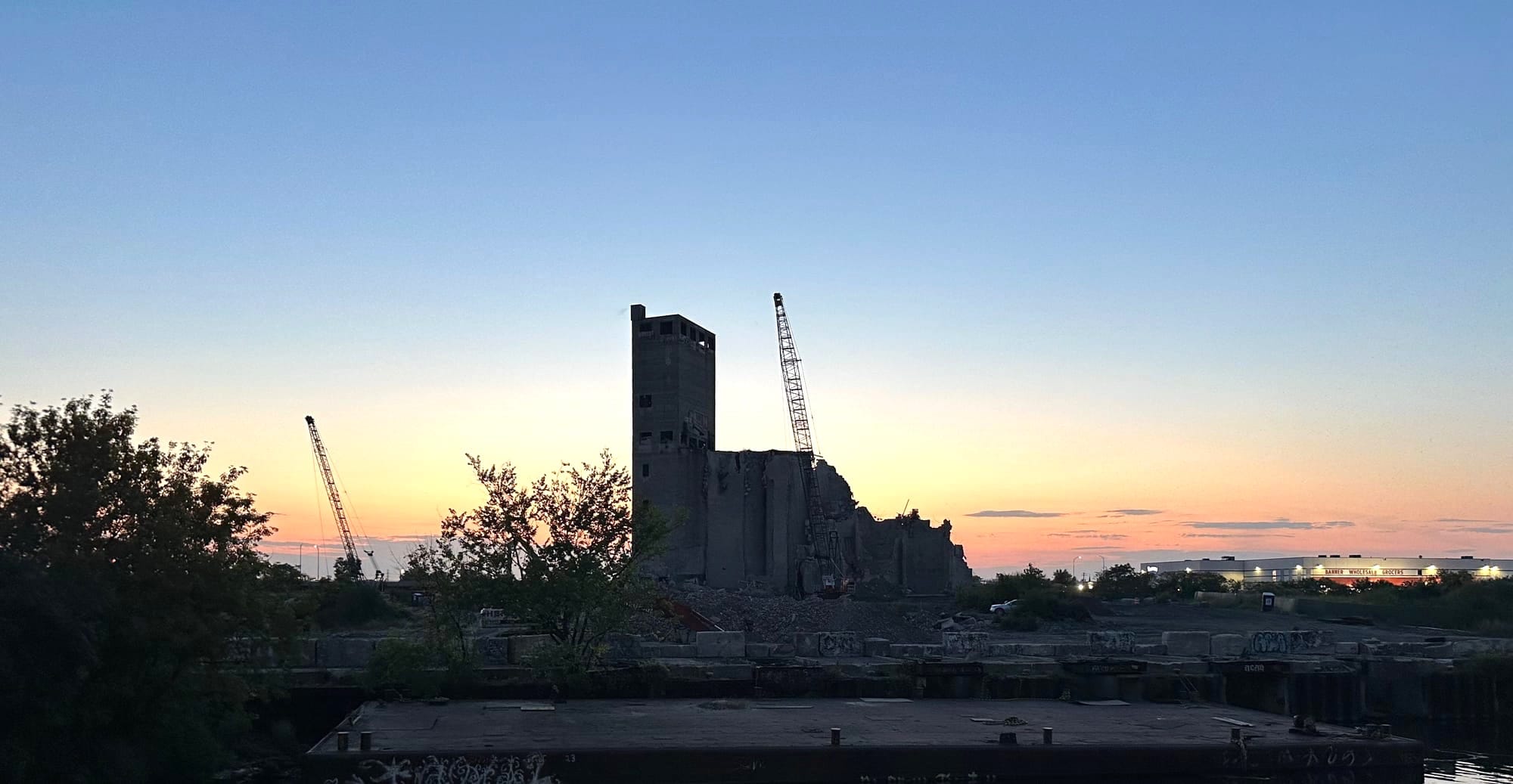
A former coal plant at dusk. | Provided by Zitlalli Paez
Sigcho-Lopez noted that in the past year, the city succeeded in reopening the Department of Environment, but stressed that holding polluters accountable remains an ongoing struggle. After multiple requests for a meeting, he said they were granted just 30 minutes with company representatives earlier this year—a discussion that focused largely on projected economic gains and job creation, with little attention to long-term health impacts or environmental safeguards. “All we want is to sit down with representatives of the company and have an honest conversation,” he said.
Organizers and residents point to specific chemicals on the site that they say have not been adequately tested, underscoring the potential risks of the Fisk demolition. P.E.R.R.O. members are particularly concerned about coal combustion residuals.
❓What are coal combustion residuals?
Coal combustion residuals are the byproducts left behind when coal is burned for energy.
They include coal ash, fly ash, bottom ash, slag, and chemicals used in coal cleaning. These materials can contain heavy metals such as mercury, arsenic, cadmium, chromium, selenium, nickel, and antimony, which are toxic even at low levels.
When disturbed during demolition, they can spread through airborne dust, contaminated soil, or water runoff.
Those concerns were echoed by physicians at the Environmental Toxins & Your Health Conference hosted by Stand Up for Science Chicago on February 19, 2026. Dr. Sharmilee M. Nyenhuis of the University of Chicago and Dr. Robert M. Sargis of the University of Illinois Chicago emphasized that air pollution’s effects are cumulative and now rank among the leading global causes of death.
Sargis described methylene chloride as “one of the main chemicals released by industry and registered by the EPA,” warning that it can trigger chest pain, damage the central nervous system, and, at high levels, cause unconsciousness or death. Nyenhuis added that asphalt and diesel exhaust—a “mixture of gas and fine soot particles” from industrial activity—increases pulmonary inflammation, raises blood pressure, and adversely affects brain activity.
“When the federal government is in the pockets of corporations and denies the facts of science and climate change, we must turn to local governments and demand that they hold the line,” Sigcho-Lopez said. For Zitlalli Paez, a President at P.E.R.R.O., the struggle over Fisk cannot be separated from the broader pressures facing Pilsen residents.
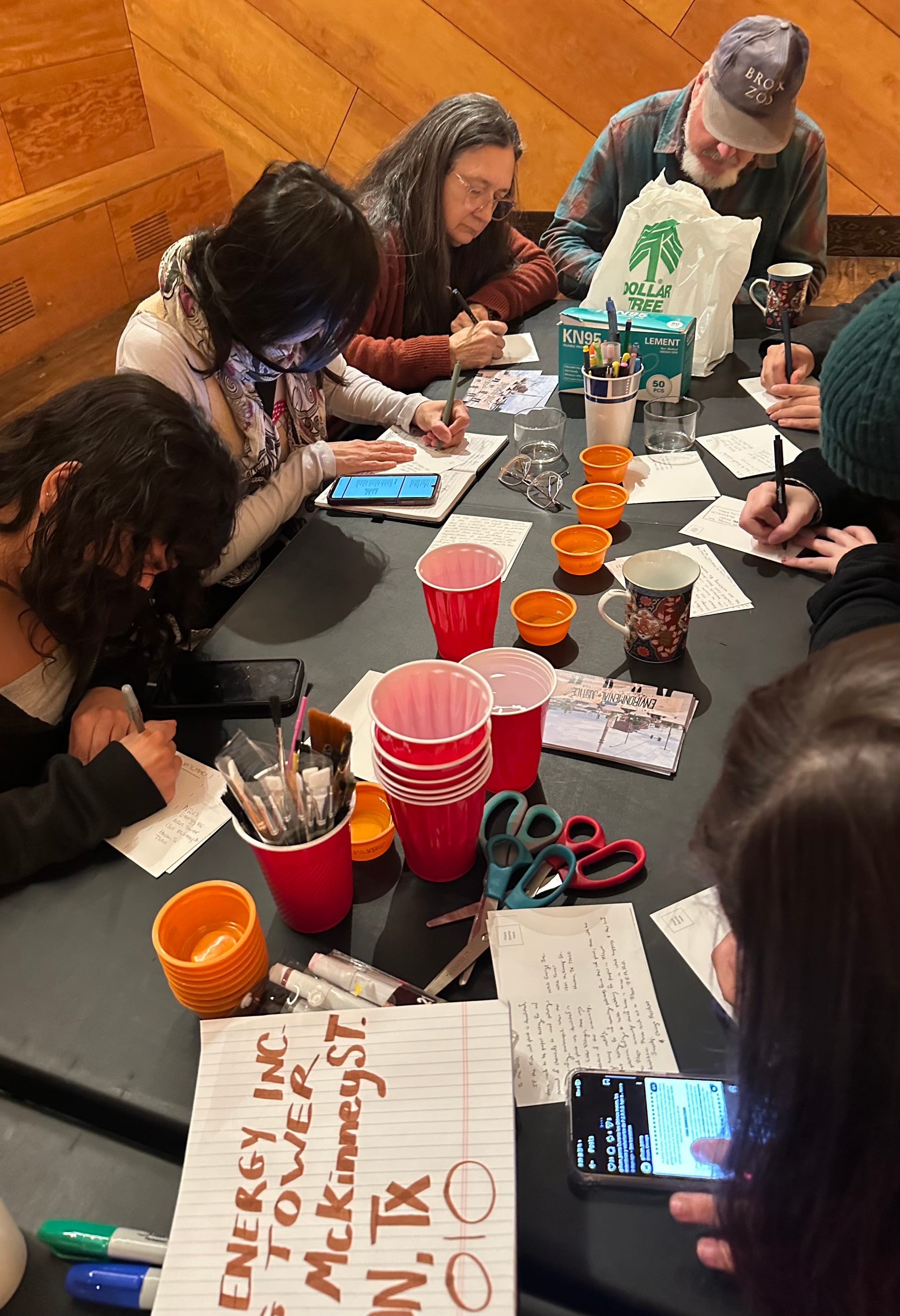
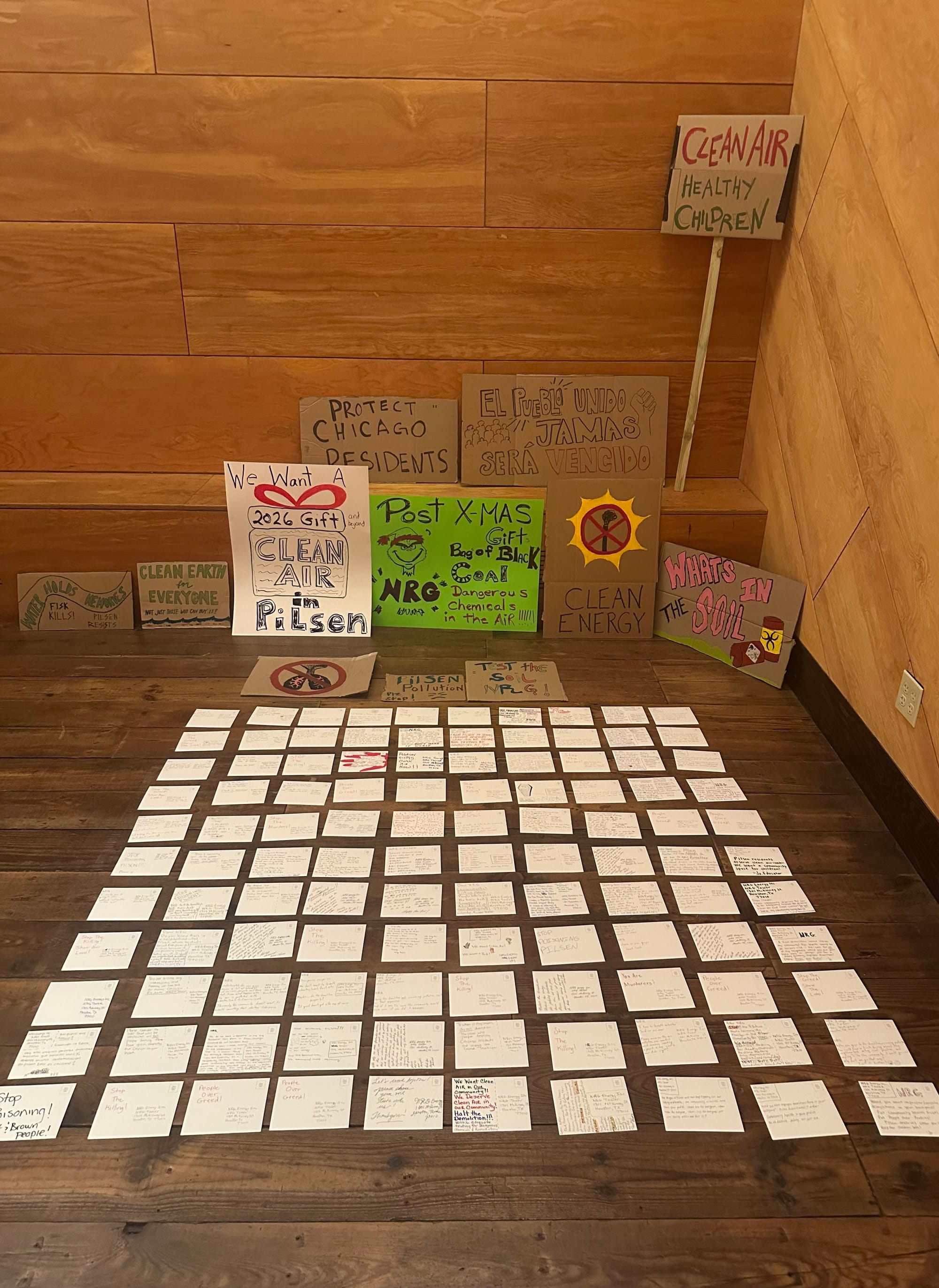
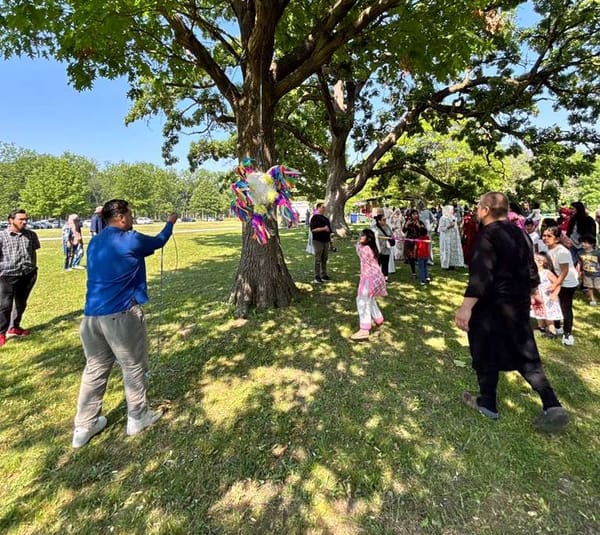
In preparation for the Fisk rally, one gathering became an art build, blending protest-making with reflection. Paez said these rituals are essential for “transforming grief, fear, and exhaustion into sustained action.”
[LEFT] Members write postcards to city officials. [RIGHT] Handwritten postcards and protest signs from P.E.R.R.O.'s art build ahead of the City Hall rally. | Provided by Zitlalli Paez
Paez emphasized that “the stakes are higher than before,” arguing that decisions about the site must be led by those who live with the consequences. She said demolition is too often treated as inevitable despite its documented health risks. “These places become part of the community historically and culturally,” she added, suggesting the site could be repurposed in ways that honor that history rather than risk further environmental harm.
In September 2012, the City of Chicago created a Fisk and Crawford Reuse Task Force to explore redevelopment possibilities. Although the plans were never finalized, the task force reflected a broader effort to consider alternatives to demolition, a practice that continues nationwide and often carries significant environmental consequences.
When Crawford was operating, coal was stored outdoors in massive mounds and sprayed with chemical solutions to suppress dust, largely before strong environmental regulations existed. Today, the land beneath the former plant is known to be contaminated, yet it has since been redeveloped into a Target distribution warehouse.
That history shapes Ramirez’s fear about Fisk. Coal plants like Fisk operated for decades, allowing toxic materials to accumulate in walls, smokestacks, and surrounding soil. Demolishing them without strict safeguards risks releasing generations of pollution back into the community.
“I don’t want to see history repeated in our community,” Ramirez said. “This stuff is essentially poison.”
Republish This Story
This story is available for republication under a Creative Commons Attribution-NoDerivatives 4.0 International License. You may republish this article with attribution to the author and 15 West, but you cannot modify the text.
Liana Ordoñez is an aspiring bilingual journalist whose work nationally and internationally has an emphasis on social justice. She continues to grow her experience highlighting the stories and voices of the marginalized.
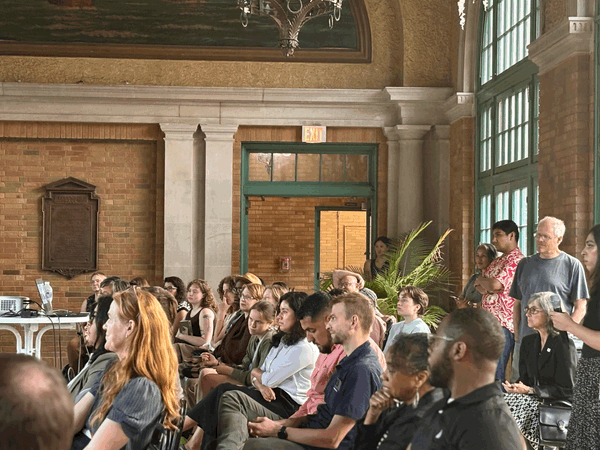
A visitor observes photographic works depicting scenes from daily life, waterfront moments, and groups of people, contemplating the human stories captured within the frames. | Provided by Bobby Vanecko