At Garfield Park Conservatory, artist Cody Norman uses coral-like sculptures and plastic to explore how communities might adapt to a material that isn’t going away.
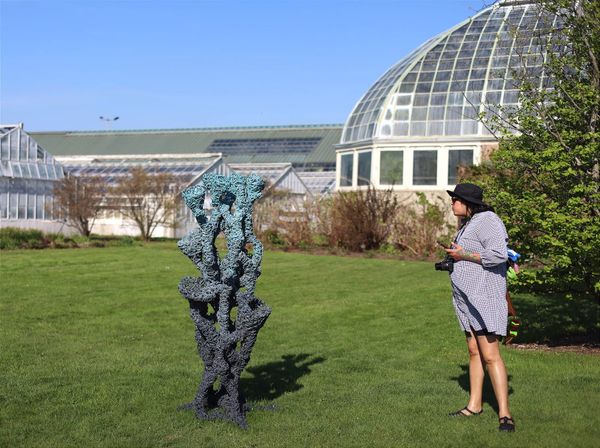
A woman with Plasticus canistraria, 2023. | NaBeela Washington/15 West
The plastic forms nestled among towering cacti and desert blooms at Garfield Park Conservatory are not made from coral at all.
Instead, the sculptures in Becoming: Where Plastic Meets Nature are built from discarded toys, detergent bottles, flower pots, and other plastic waste that has been shredded, melted, and reshaped into forms inspired by marine ecosystems.
Cody Norman. | NaBeela Washington/15 West
Created by Chicago-based artist Cody Norman, the exhibition asks a question that sits at the center of many environmental conversations: if plastic has become a permanent feature of modern life, how do communities adapt to it? Rather than imagining a world without plastic, Norman's work explores how people, nature, and public spaces might respond to a material that is likely to remain part of the landscape for generations.
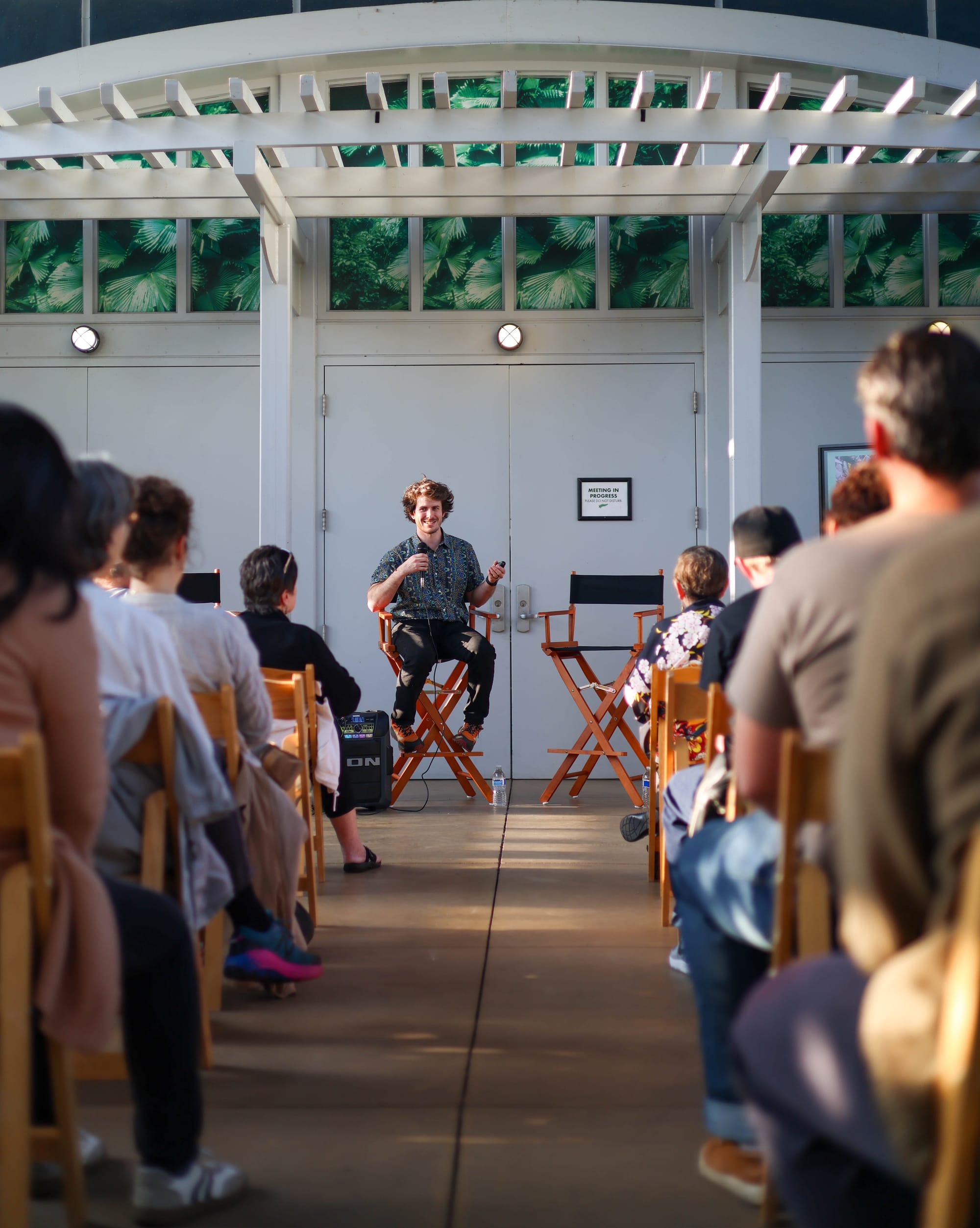
During an Earth Day artist talk on April 22, Norman said a childhood spent surfing in Florida and years of learning about microplastics pushed him to rethink both his artistic practice and the materials he uses.
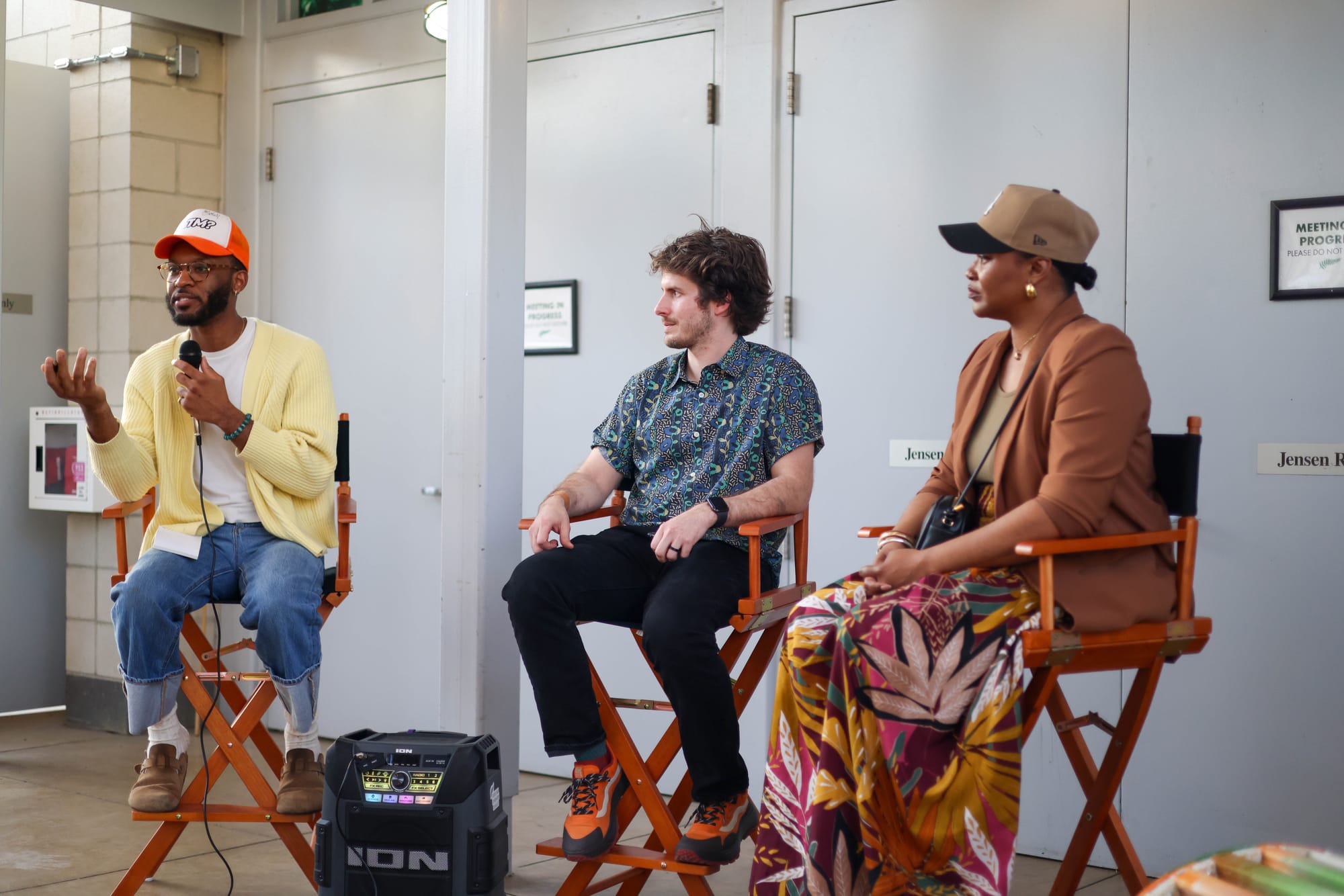
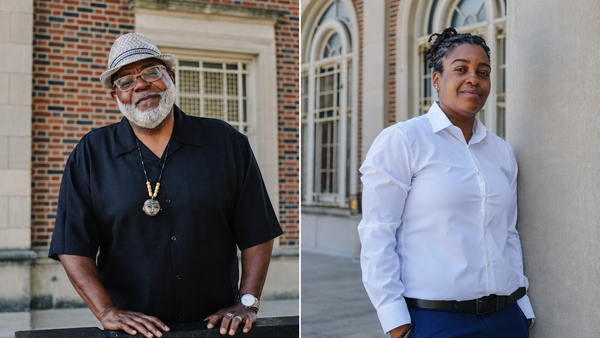
[LEFT] Cody Norman and Artist Talk attendees. [RIGHT] Jordan Campbell, Cody Norman at Artist Talk. | NaBeela Washington/15 West
Rather than treating plastic as waste, he began treating it as a medium in its own right.
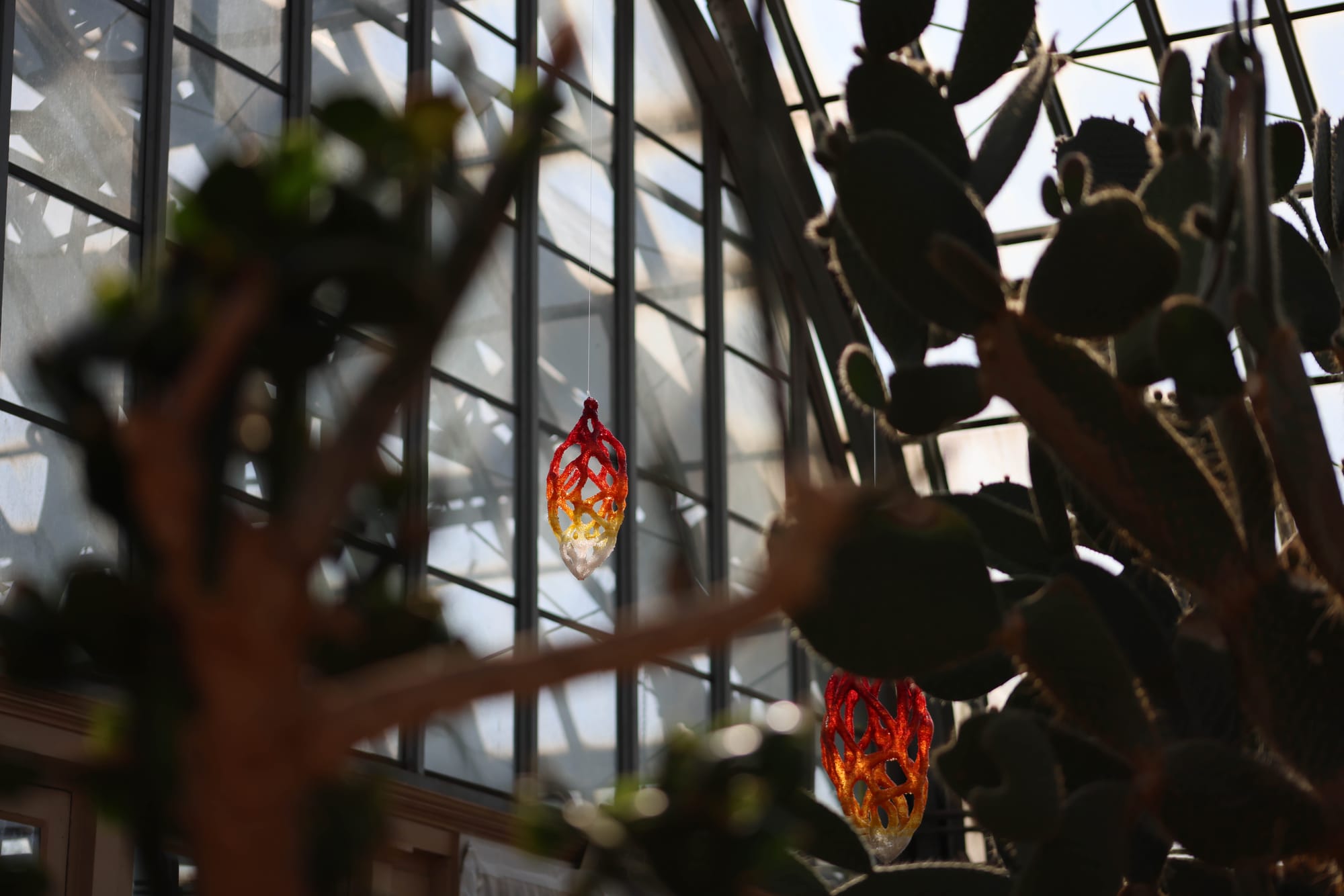
Many of the coral- and mangrove-inspired works in the exhibition were created using recycled consumer plastics processed through equipment Norman built or modified himself. Toy plastics become fan-like coral structures. Detergent caps are transformed into lamp-like forms that echo mangrove roots. Plastic lumber created through Redemptive Plastics, the community initiative he co-founded with Jordan Campbell, becomes public seating.
Based out of Alt Space at 5645 W. Lake Street in the Austin neighborhood, Redemptive Plastics works with households and partners on Chicago’s West Side to collect and rework local plastic, tying Norman’s studio practice directly to the communities surrounding Garfield Park. Norman’s process is highly improvisational. As he dyes and builds with plastic using a custom tool mounted on a robot arm, he thinks of the work like a live performance:
“It’s always gonna be different. It’ll be like if you go see the same band two nights in a row, it’s gonna be close, but always a little different.”
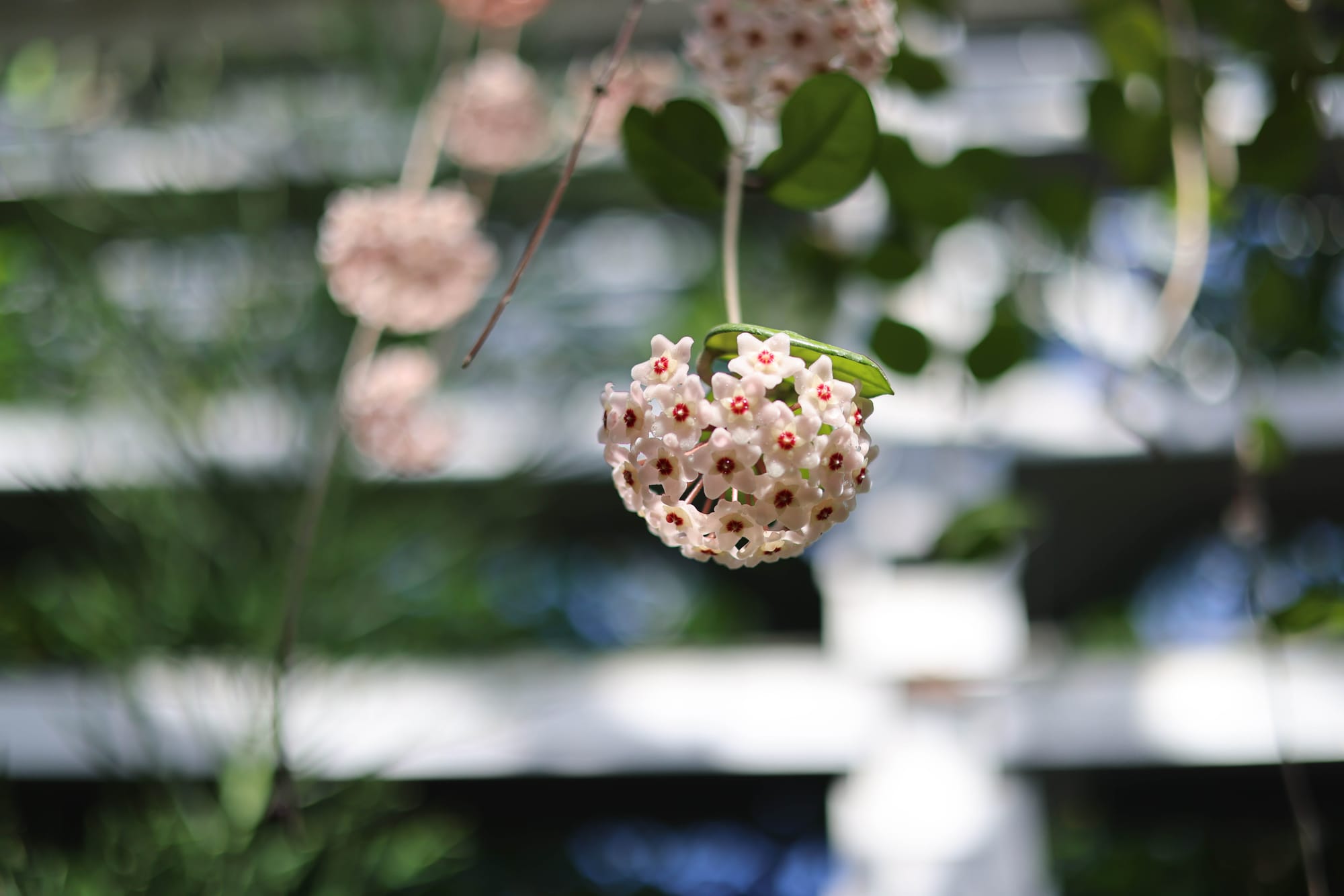
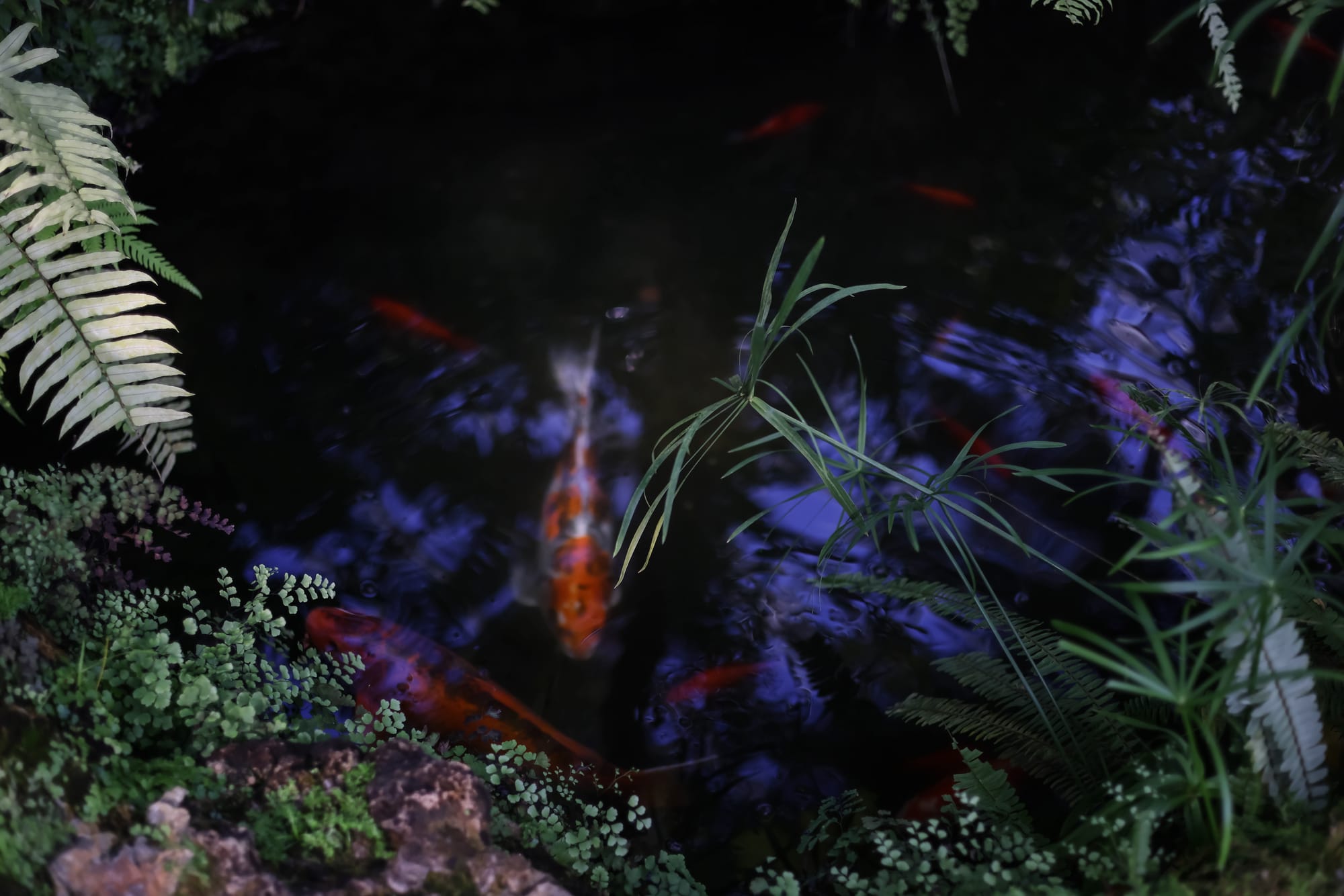
[LEFT] Dangling Hoya carnosa in bloom. [RIGHT] Koi fish swim at the heart of the Fern Room.| NaBeela Washington/15 West
Throughout the exhibition, nature serves as both subject and teacher.
Norman frequently references biomimicry, a design approach that learns from how plants and animals already solve problems. He looks at the way coral fans out and branches, how certain species “ventilate” and filter the water around them, and how plants slowly bend and reach toward light over time. Mangrove trees are another recurring influence. Norman described their root systems as natural filters that trap material moving through waterways and noted growing research into the role mangroves play in capturing microplastics while supporting complex ecosystems.
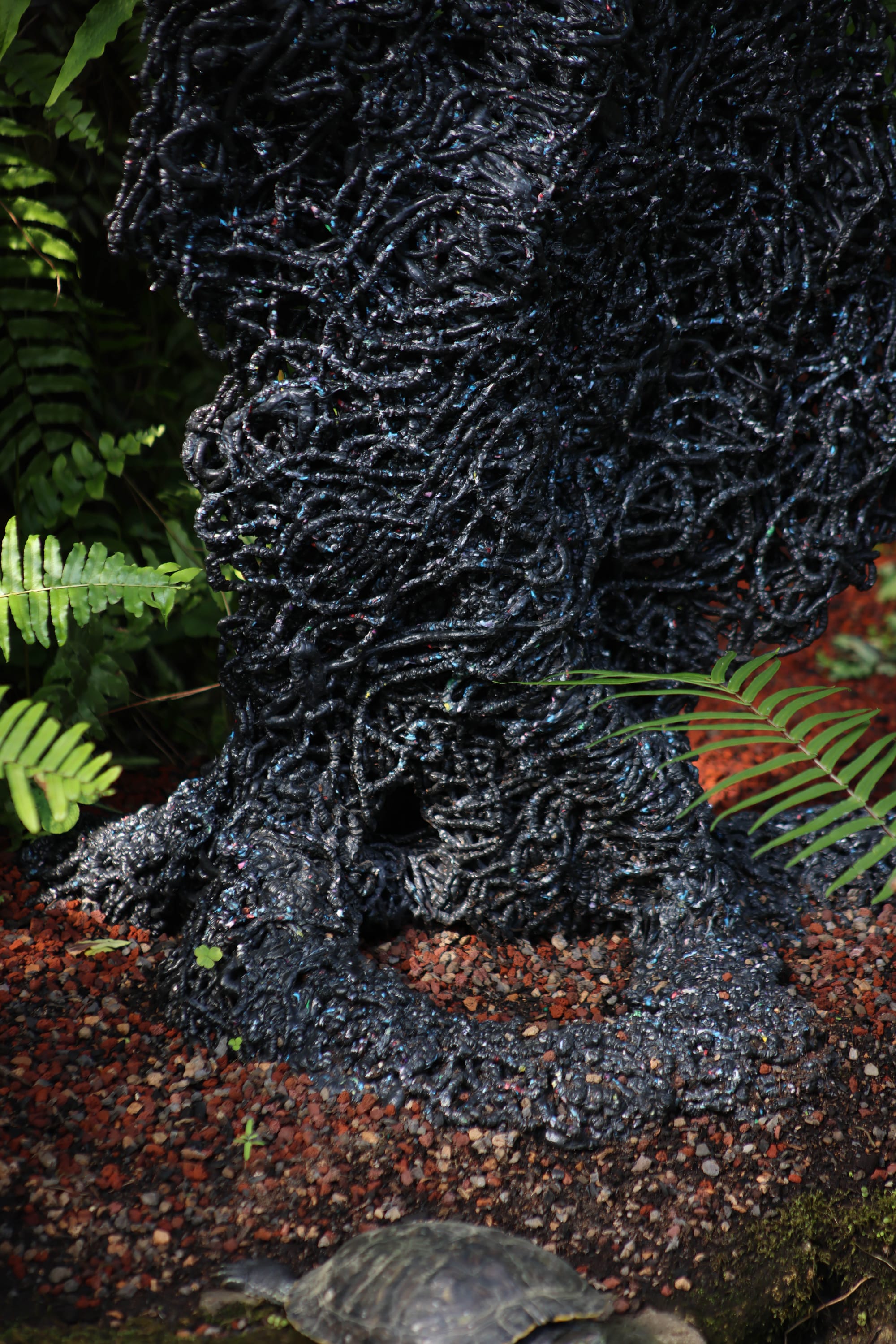
Lower half of Plasticus ventalina I, (Black) 2021. | NaBeela Washington/15 West
In the studio, those observations are translated into form. When Norman uses toy plastics to extrude long, branching shapes, he’s thinking about ventilator corals and the currents they live in. When he builds lamp-like structures from shredded detergent caps, he draws on the forms of mangrove roots that shaped his childhood experiences along the Florida coast.
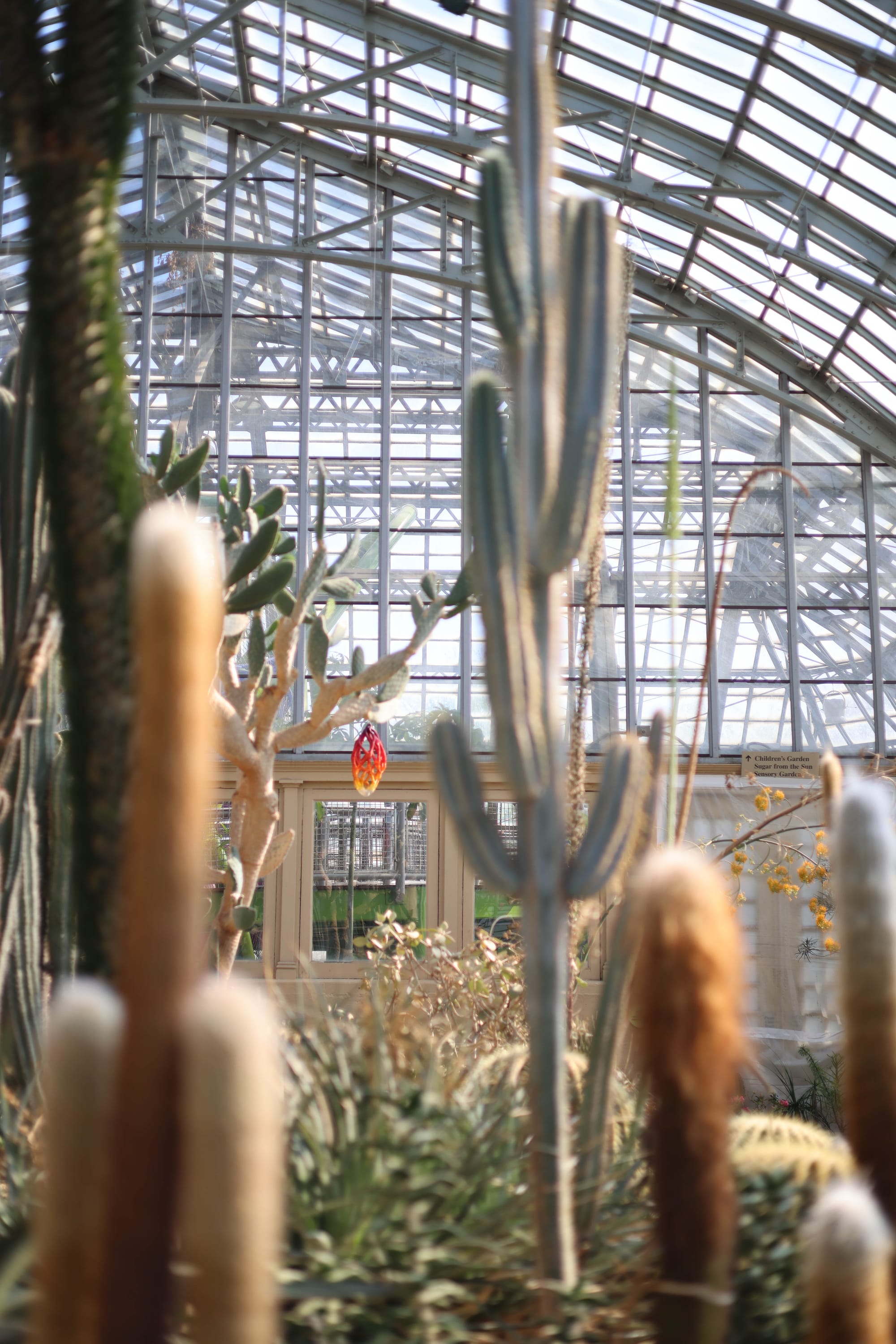
By the time visitors move through the conservatory, these lessons from coral, mangroves, and other plants show up as plastic forms that feel oddly familiar, mirroring the surrounding leaves, roots and branches. The result is an environment where the line between living organisms and synthetic ones starts to blur, asking visitors to notice how closely the plastic objects are borrowing from the plants that surround them.
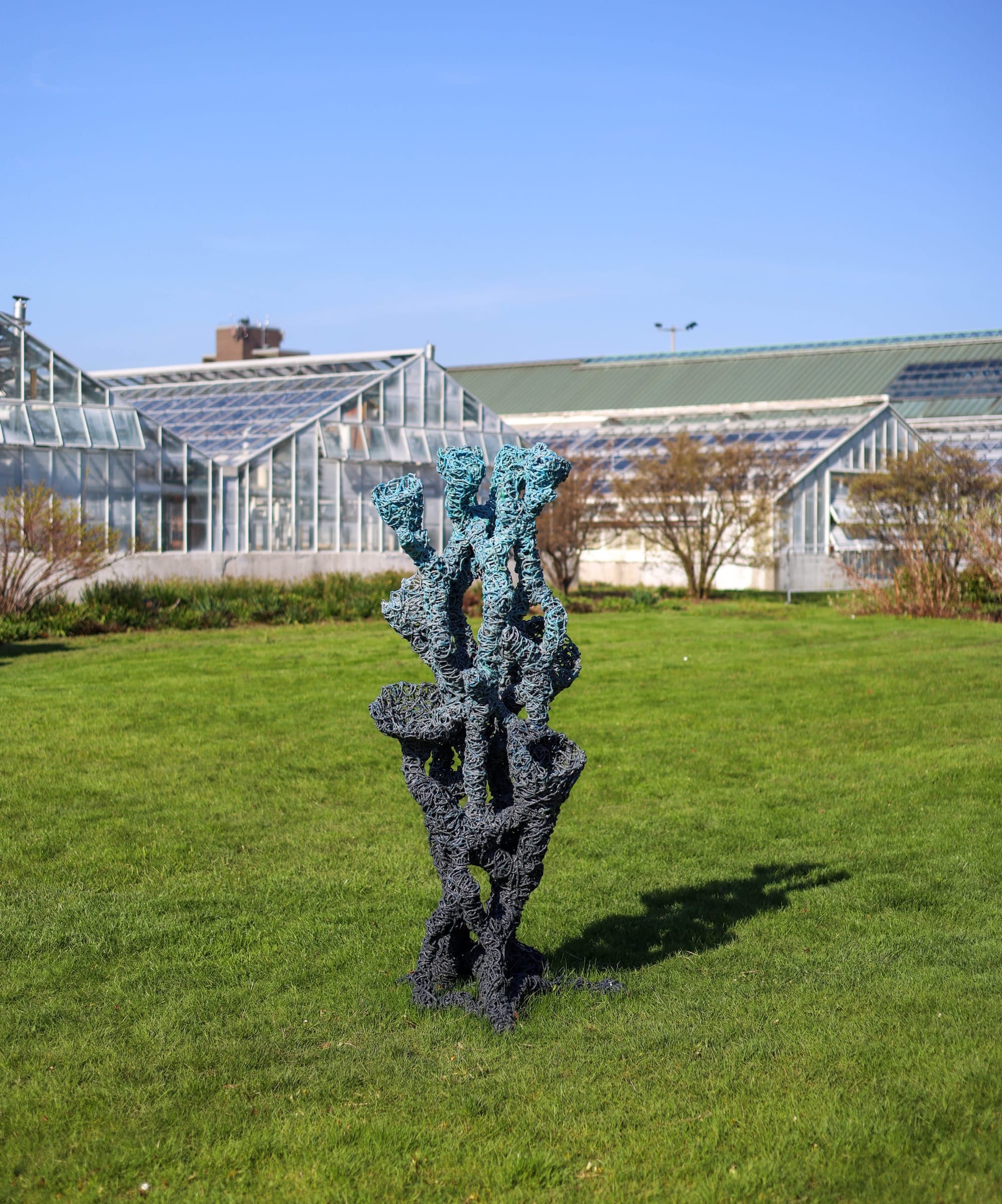
Plasticus canistraria, 2023. | NaBeela Washington/15 West
Some of his sculptures, especially the large, tree- and coral-like structures, are designed to invite touch. As he explains:
“Go give it a hug. It’s meant to be touched. I’ve been one of those people that always is in an art gallery wanting to touch the material,” he tells the audience. As someone who has always wanted to feel the material in galleries, he’s now building pieces that invite that kind of contact instead of discouraging it.
Earlier versions of similar pieces, he recalls, ended up being colonized by spiders, ants, and other insects. For him, the fact that “things really started to inhabit it” was a sign that he was doing a “decent enough job … emulating nature.”
At Garfield Park Conservatory, those references exist alongside living collections of plants from around the world.
Untitled (series in-progress), 2026. | NaBeela Washington/15 West
Mangroves, which appear throughout Norman’s research and sculptures, are increasingly being studied for their ability to trap and absorb microplastics. Coral reefs around the world are also facing growing pressures linked to pollution and climate change. By placing plastic-derived sculptures among living plants—from the arid Desert Room to the dense, humid Fern House—the exhibition invites visitors to consider the complicated relationship between human-made materials and the natural environment.
Yet, Norman’s work is not centered on catastrophe, but on what’s possible.
That philosophy extends into Redemptive Plastics, where volunteers and community members sort, process, and remake discarded materials into benches, public furniture, and educational projects. During the artist talk, Campbell described the group’s approach as adding a fourth “R” to the familiar environmental framework of “reduce, reuse, and recycle”:
“We wanted to add the fourth R, which was to redeem.”
For Campbell and Norman, redemption means restoring value to things that have been discarded—whether that is a piece of plastic, a public space, or a community member seeking new opportunities.
Norman is equally clear that individual artworks alone cannot solve the larger crisis. Policy and collective behavior still matter. Norman discussed reading so much “doom and gloom” about plastics that it feels heavy and overwhelming, even as he keeps working with the material. He argues that local, incremental shifts, from how households sort recycling to how cities treat single-use plastics, still matter.
Rather than presenting plastic solely as pollution, Becoming asks visitors to consider what responsibilities come with living alongside a material that is unlikely to disappear.
Untitled (series in-progress), 2026. | NaBeela Washington/15 West
At Garfield Park Conservatory, the answer is neither simple nor complete. Instead, it appears in the shape of coral-like forms made from toys, benches built from detergent bottles, and conversations about how communities might reimagine what has been thrown away.
As visitors walk through the exhibition, they encounter works that began as waste but now occupy the same space as living collections that have adapted and evolved over generations. Together, the living plants and plastic sculptures offer a simple reminder: humans adapt, too.
This story is available for republication under a Creative Commons Attribution-NoDerivatives 4.0 International License. You may republish this article with attribution to the author and 15 West, but you cannot modify the text.
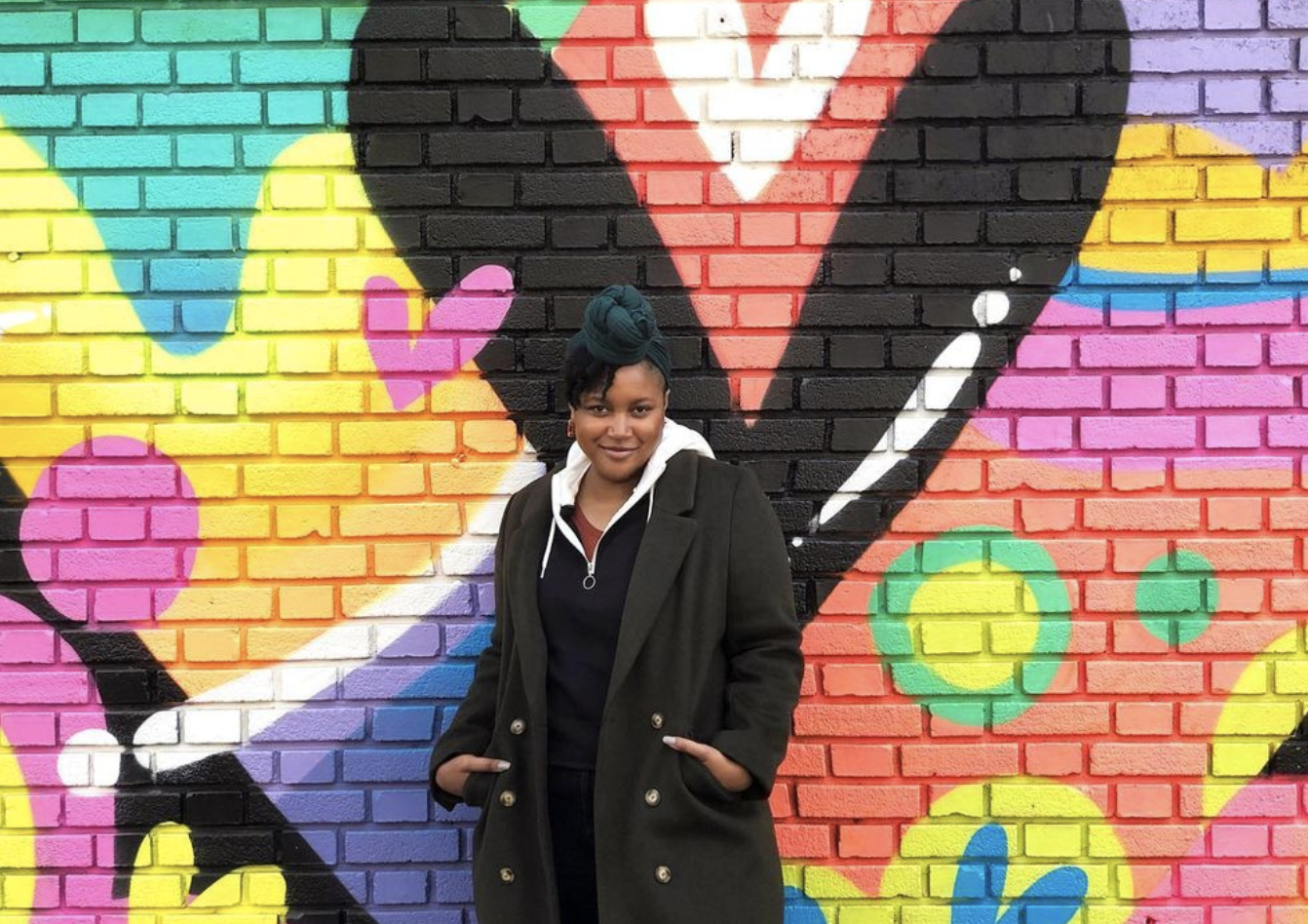
NaBeela is a Greater Chicago-based photographer and journalist writing about what's possible. She's a fierce advocate of the arts and brings people together around social change and accessible education. Read more: nabeelawashington.com
Comments
Two illuminated shark costumes carry a glowing pumpkin lantern during the Berwyn Lantern Parade. | Natalia Madrigal/15 West
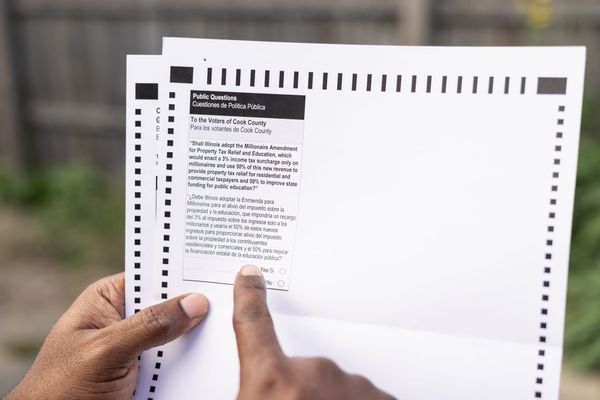
Un votante revisa la pregunta para el público del Condado de Cook que pregunta si es que Illinois debería imponer un suplemento de 3% a los ingresos que pasen $1 millón y dividir el dinero entre un relevo a los impuesto a la propiedad y a la educación pública. | NaBeela Washington/15 West
![Man [Cody Norman] in a vibrant floral shirt, seated, legs crossed against a grey background.](https://storage.ghost.io/c/8c/c0/8cc04b81-01f0-453f-af72-f04e72a8c60c/content/images/2026/06/Cody-Norman.jpg)