Beyond Campaign Promises: What State Representatives Actually Do on the West Side
From school funding to constituent services, state representatives shape policies that directly affect West Side residents, but many people remain unclear about what those officials actually control.
Most Chicagoans can confidently name the president—but far fewer can name their local elected officials.
Who determines whether local schools or clinics receive resources? Who makes decisions about housing and public transit? Who influences public safety in local communities?
Understanding who holds power over laws, budgets, and public services allows residents to better navigate the systems that shape daily life.
A state representative serves in the Illinois House of Representatives, where they represent districts by shaping state legislation and spending.
On Chicago’s West Side, residents regularly confront underfunded schools, housing insecurity, inadequate healthcare, and community violence. Understanding the responsibilities of state representatives and the issues that fall under their control can help residents advocate for their needs and hold officials accountable.
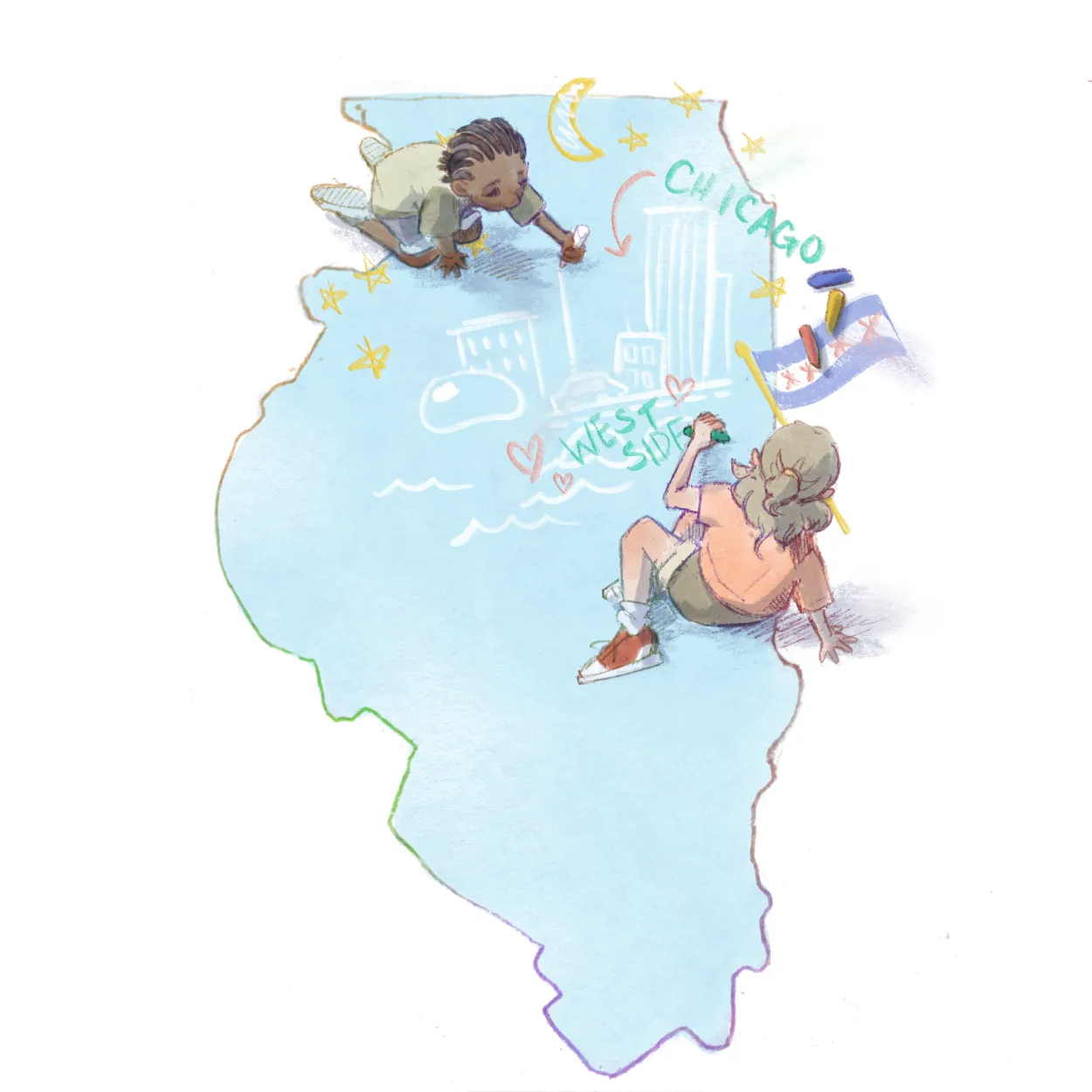
Illustration by Lydia Smithey.
Civic engagement begins with knowledge. Knowing exactly what elected officials can realistically change allows residents to hold them accountable.
Many of the issues residents encounter every day are directly connected to decisions made in Springfield.
For schools on the West Side, funding gaps impact everything from teachers’ salaries to class sizes to the safety of school buildings. These conditions are primarily determined by how funds are allocated through the state budget. State representatives play a key role in shaping and passing that budget.
Illustration by Lydia Smithey.
La Shawn K. Ford, who has served as 8th District representative for nearly two decades, described part of the role this way: “My job is to go to Springfield and pass a budget… to fund education for K-12 and higher ed, public safety, healthcare, and social services.” In addition, the state representative serves as a point of contact between residents and state agencies. “When people need help with the Department of Corrections, the Department of Human Services [or] any state agency, we help them,” said Ford.
Still, many residents remain skeptical of state politics and question whether government decisions result in meaningful change. Campaign promises do not always translate to visible change within communities. Understanding the role of state government allows residents to not only seek constituent services but also challenge officials to follow through on their promises.
State representatives influence whether achievement gaps widen or close. In recent years, Illinois lawmakers have funded tutoring initiatives, introduced updated classroom technology and electronic textbooks, and reformed student expulsion policies to address the school-to-prison pipeline.
In addition, state funding provides grants that make college and trade school more affordable—these decisions directly influence post-graduate opportunities for students.
Illustration by Lydia Smithey.
Access to healthcare is also shaped by state-level decisions. On the West Side, higher rates of chronic illness combined with limited access to sufficient care create ongoing disparities.
State-level health initiatives in Illinois have included investments in HIV prevention and testing, legislation affecting health insurance coverage, and programs designed to expand access to healthy food in underserved communities.
The state government also addresses questions of safety. The Public Safety and Violence Prevention Task Force works to reduce harm and support people reentering society after incarceration. The initiative emphasizes prevention alongside traditional public safety strategies.
Still, understanding the limits of state government is equally important. Ford shared that some residents may not know the difference between state, federal, county, and city responsibilities. Many of the issues that affect residents' daily lives are handled by different levels of government.
Ford described the types of constituent services his office handles, including helping residents navigate suspended driver’s licenses, SNAP benefit issues, and senior care programs. These services were all provided through direct contact—via phone, email, or in person—between the state representative and residents. District representatives can connect residents to federal, city, and county agencies to address problems that are not handled by the state.
It is easier than ever before to connect with elected officials. Town halls physically bring the community together to voice their concerns, but technology allows residents to connect to their representative from anywhere. State representatives maintain email correspondence with residents, publish public statements, use social media accounts to connect with younger audiences, and can often be reached directly by phone.
Elections may change who holds office, but residents have the opportunity to shape local politics through civic engagement and by holding elected officials accountable. Understanding what state representatives can—and cannot—do is one step toward ensuring that political promises translate to material change.
Republish This Story
This story is available for republication under a Creative Commons Attribution-NoDerivatives 4.0 International License. You may republish this article with attribution to the author and 15 West, but you cannot modify the text.
Civic engagement The ways people participate in their communities and government, such as voting, attending public meetings, contacting elected officials, volunteering, or advocating for local issues.
State Representative An elected official who serves in the Illinois House of Representatives, represents a specific legislative district, votes on state laws, and helps shape the state budget.
Constituent Services Help provided by an elected official's office to residents navigating government agencies or resolving issues with state programs and services.
State Budget The annual spending plan that determines how state tax dollars are allocated to programs such as education, healthcare, transportation, and public safety.
Illinois General Assembly Illinois' state legislature, made up of the House of Representatives and Senate, where lawmakers debate and pass state laws.
Springfield The capital of Illinois, where the General Assembly meets and conducts state business.
SNAP The Supplemental Nutrition Assistance Program, a federal food assistance program administered by states that helps eligible households purchase groceries.
Accountability The expectation that elected officials explain their decisions, answer to the public, and can be held responsible for their actions.
Health disparities Preventable differences in health outcomes or access to healthcare experienced by different communities, often influenced by factors such as income, race, neighborhood, or access to medical services.
Nel is a editor and emerging journalist studying at DePaul University.
Comments
El graduado de secundaria de primera generación Forylan Suarez y su familia enfrentaron numerosas barreras sistemáticas para navegar el sistema de educación pública. | Max Herman/Borderless Magazine