Cymande Reemerges with Fresh Momentum and Deep Roots
Ahead of a June 25 stop at Fitzgerald's, bassist Steve Scipio reflects on the band's Caribbean roots, its resurgence through hip-hop sampling, and plans for new music.
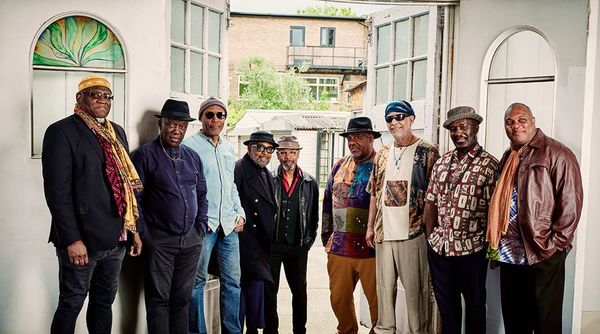
The Black British Funk band, Cymande. | Courtesy of Cymande.
Listen to Steve Scipio of Cymande
0:00
/1046.2302040816326
Even after Cymande stepped off the road in the mid-1970s, their music persisted.
Decades later, the band is back onstage and looking ahead. Cymande brings that momentum to Fitzgerald's on June 25 while sorting through unused material for a forthcoming studio project.
Steve Scipio, Cymande's co-founder and bassist, said the goal remains the same: preserve the original spirit while making music that speaks to today.
Long before the samples and the renewed attention, Scipio and cofounder Patrick Patterson lived just five doors apart in London. Their parents knew each other, and both boys started experimenting with music at an early age. When one came up with an idea, he'd run to the other's house to work it out.
“It was more like a family,” Scipio said.
That closeness became the foundation of Cymande's music. Patrick developed rhythmic ideas on guitar while Scipio answered with bass lines that carried melodies of their own. Most of the band's songs grew from that exchange.
Scipio rejects the idea of bass as merely a support instrument. Influenced in part by the syncopation he heard in Miles Davis records, he believes the bass should express itself. Cymande's grooves reflect that philosophy, with bass lines that do more than anchor the rhythm.
Before Cymande, Scipio and Patterson played together in a jazz group called Metre. Later, they joined Ginger Johnson's African Drummers, experiences that helped shape the African rhythms and jazz influences that became central to Cymande's sound. Those connections eventually led to the six-member lineup and to a meeting with producer John Schroeder, who brought the band into the studio for its debut album, Cymande.
But by the mid-1970s, the group had grown frustrated. Scipio recalled feeling that Black British musicians received less recognition than artists coming from the United States.
“We were just local Black guys, and the mainstream media at the time were not interested in Black British musicians,” he said.
In 1975, the band stepped off the road, expecting only a short break. Instead, Scipio and Patterson built careers as civil lawyers and moved to the Caribbean.
The pause stretched far longer than they imagined.
Decades later, younger artists including Wu-Tang Clan, De La Soul, and The Fugees were “instrumental in the rebirth of the band,” as Scipio described it.
For Scipio, meeting some of the musicians who sampled Cymande's work has been gratifying. He sees today's landscape differently from the one he encountered in the 1970s. Streaming services, YouTube and platforms like TikTok have made it easier for young artists to reach audiences without relying on a handful of gatekeepers.
And as Cymande prepares for another night onstage, Scipio remains grateful for the chance to share the music.
“Whoever listens to this or reads it, I’m hoping that they find the time to come to the show, and we’ll try and have a very enjoyable evening,” he said.
Grab tickets to the show here. Plus, see where the band is headed next.
NaBeela is a Chicago-based journalist writing about what's possible. She's a fierce advocate of the arts and brings people together around literature and culture. Read more: nabeelawashington.com
Comments
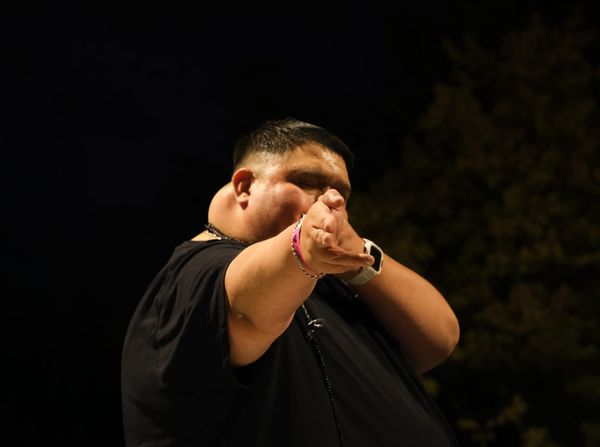
"Dee JayQuality" during his set. | NaBeela Washington/15 West
A crowd gathers on Brookfield Zoo Chicago’s East Mall during a Roaring Nights concert, with the zoo’s Ferris wheel visible. | Provided by Brookfield Zoo Chicago.
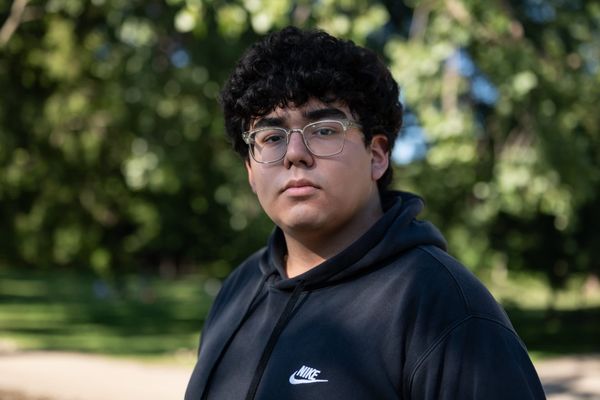
El graduado de secundaria de primera generación Forylan Suarez y su familia enfrentaron numerosas barreras sistemáticas para navegar el sistema de educación pública. | Max Herman/Borderless Magazine