What Happens When We Invest in Young Entrepreneurs Before They Succeed?
From Chicago to Oakland and Washington, D.C., organizations are testing ways to get funding and business support to young entrepreneurs. Their results show what early investment can make possible, and where gaps remain.
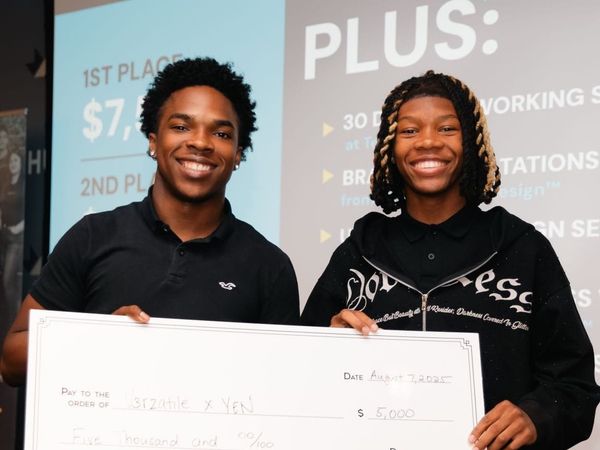
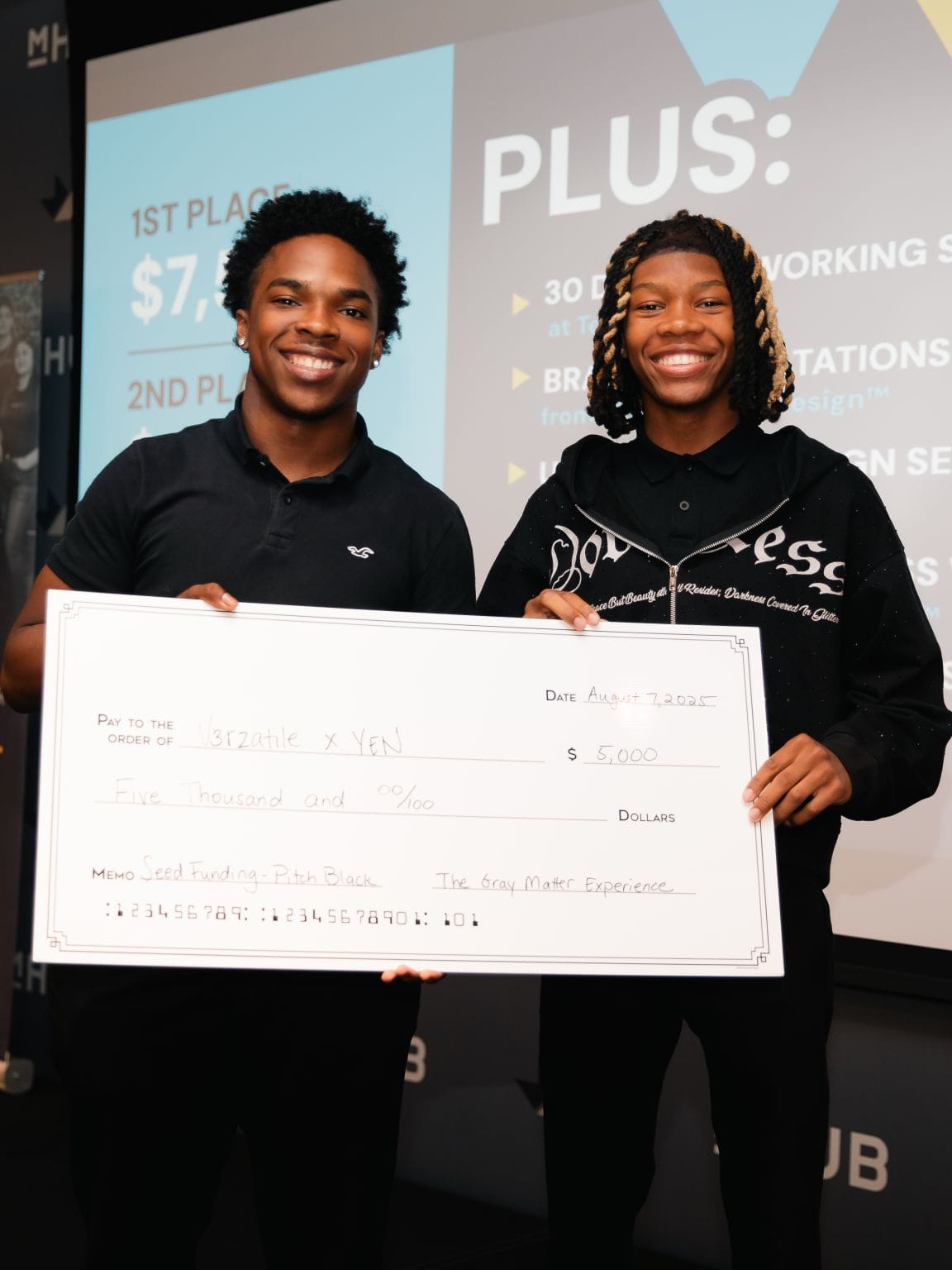
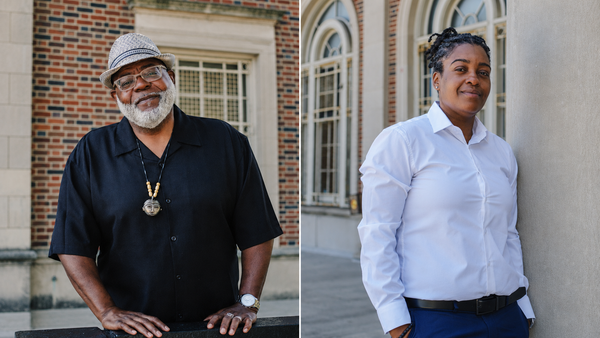
David Ikeemeka [RIGHT] receiving a check for $5,000 during Gray Matter Experience's 2025 "Pitch Black" event. | Provided by Gray Matter Experience.
Britney Robbins watched it happen over and over.
A young person would come toGray Matter Experience with a real business idea, an app, product, or service their neighborhood actually needs. They’d build a plan. Perfect their pitch. And then, they’d hit a wall. "They're not able to bring their ideas to life," Robbins says, "because they can't get access to funding."
Without credit history, collateral, or substantial networks acquired over a lifetime that general financing requires, many simply give up, trading their entrepreneurial visions for a shift at a coffee shop or Sweetgreen just to make ends meet.
Across the country, organizations are experimenting with ways to get funding and business support to young people before they have a track record. In Chicago, Gray Matter is one of them.
David Ikeemeka knows that wall. Before Gray Matter, the young entrepreneur from Oak Park funded his clothing brand, V3RZATILE, almost entirely out of his own pocket, putting every dollar from sales back into the business. Many programs, he said, "required experience, credit history, or resources I simply didn't have."
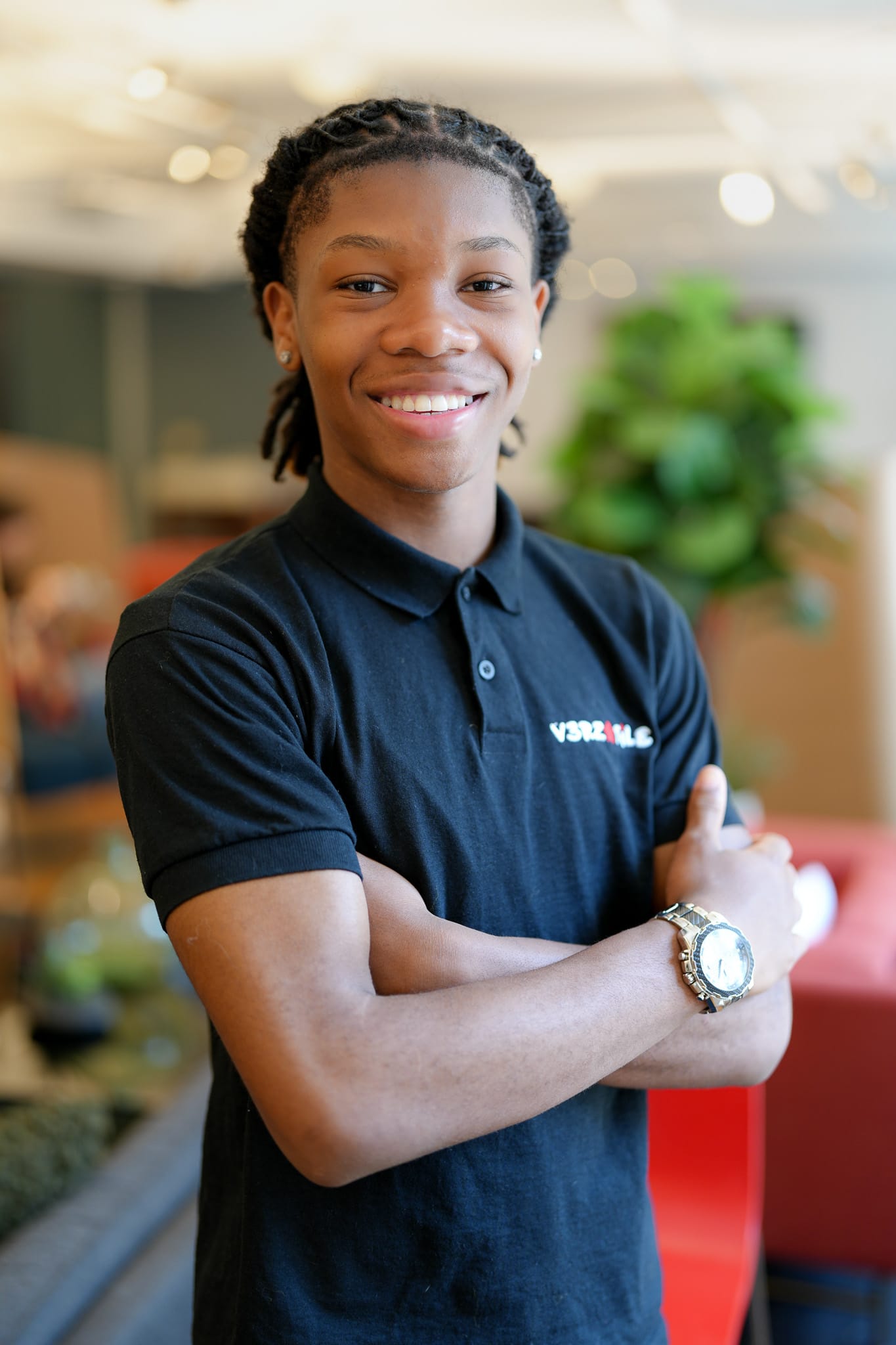
David Ikeemeka, founder and owner of V3RZATILE. | Provided by David Ikeemeka.
"Traditional institutions often focus on what you've already built," Ikeemeka said. "Gray Matter focused on what you were capable of building."
Robbins started Gray Matter a decade ago after working at another nonprofit that taught entrepreneurship to young people. She noticed students came alive when the guest entrepreneurs looked like them. She also saw, after moving to Chicago, how hard it was for Black entrepreneurs to get resources, funding, and networks. Gray Matter was her attempt to get that knowledge to young people earlier.
Today, it reaches about 650 young people a year, around 150 of them from the West Side, by Robbins' estimate. The program is free. Gray Matter covers transportation and food. Under the model Ikeemeka participated in, students met online twice a week and in person every other weekend. They moved through three phases: Idea, where they tested whether their concept was sound; Activate, where they identified their customers and built a prototype; and Accelerate, a six-week summer push to prepare for launch.
That process ended at Pitch Black. First place typically takes home $7,500 and second place $5,000. But the money doesn't arrive as a lump sum. Winners get their funds in stages, only after they incorporate, open a business bank account, and check in with staff on their progress. They also get a year of support with accounting, bookkeeping, graphic design, and coworking space.
Over its first decade, Gray Matter has supported, launched, and/or funded 73 businesses and facilitated 97 internship placements, according to updated figures provided by the organization. It has awarded $122,175 in seed funding and another $112,518.05 in internship payments. Including stipends and scholarships, Gray Matter reports distributing $389,617.05.
The figures show how much support the organization has provided, though they don't distinguish how many of those businesses were launched, funded, or otherwise supported. They also don't establish how many remain operating or generating revenue.
David Ikeemeka [RIGHT] receiving a check for $5,000 during Gray Matter Experience's 2025 "Pitch Black" event. | Provided by Gray Matter Experience.
In 2025, V3RZATILE took second place at Pitch Black. Ikeemeka put the $5,000 into product development, branding, and marketing. "Instead of worrying about how to fund the next move, I was able to focus on execution," he said.
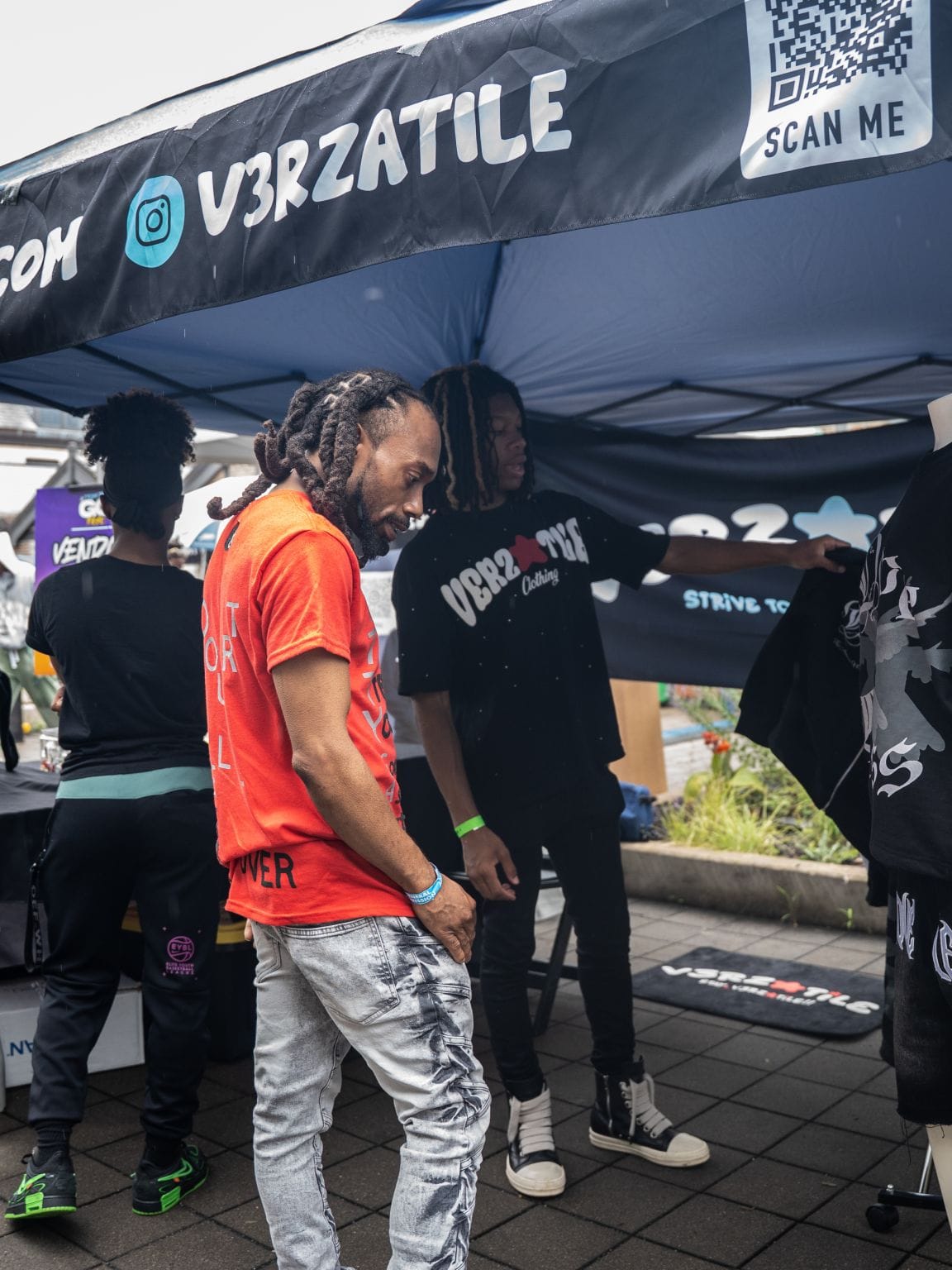
Since then, Ikeemeka has continued growing V3RZATILE, generating between $1,500 and $2,500 in sales through markets and fashion pop-ups, according to Gray Matter. In 2025, he also organized a youth entrepreneurship pop-up on the West Side that brought together 13 vendors and 150 attendees. The event generated more than $5,000 in revenue, according to Gray Matter. He's also building the Youth Entrepreneurs Network (YEN), a nonprofit that blends entrepreneurship with mental health support for other young people.
0:00
/0:16
David on V3RZATILE. | Provided by Gray Matter Experience.
Young adults who age out can join Hustle Hacks, a program for 18- to 24-year-olds that pairs them with business coaches and ends with a market where shoppers vote live to award micro-grants of about $750.
Gray Matter used to track whether its businesses survived. It stopped, Robbins says, because students kept closing successful ventures when they left for college. Now it measures six traits it sees in Black entrepreneurs who persist: positive racial identity, savvy decision-making, innovation, social change agency, positive self-concept, and a motivated mindset.
Gray Matter reports a 17% increase in the entrepreneurial traits it measures, alongside gains of 34% in entrepreneurial skills and 31% in students' ability to navigate professional networks. The organization does not specify on its website how those changes were measured.
"It's not necessarily in how many businesses are started and how many of them are making X amount of money," Robbins says. "It's in how much we have shifted their mindset, in their belief about themselves and their belief about what's possible."
Robbins points to one graduate who came in with an app idea he couldn't afford to build. He turned what he learned into an apprenticeship at Aon, finished his associate degree, and now works there full-time as a data analyst, earning $70,000 a year. Another planned on college until she tore her ACL senior year. She became a hairstylist, went through Hustle Hacks, and built an app for on-demand, at-home hair services. She has won up to $15,000 in pitch competitions, and her drivers are young people looking for extra income.
Other participants have taken their businesses into the community. Dereon Pyles, who received $3,500 at Pitch Black in 2024, runs Operation Young Santa, organizing events that distribute essential supplies to unhoused people on the West Side. Endea Johnson, who participated in Hustle Hacks, received two $750 microgrants at Gray Matter's Young Entrepreneur Market in 2026. She later earned more than $300 and gained over 10 new clients for her clothing brand, Revamped Hazard, at the Juneteenth Freedom Market, according to the organization.
Even students who don't start a business build connections. Gray Matter interns at Chicago French Press, a Black-owned coffee shop, created a drink that made it onto the menu.
Other organizations are trying to close similar gaps. In Oakland, California,United Roots' Youth Impact Hub has offered entrepreneurship training, mentorship, creative services, and access to seed funding for young adults ages 18 to 24. The organization reports supporting more than 100 youth business startups and distributing more than $250,000 to Black, Brown, and Indigenous young people. Its fellowship model includes a pitch event offering access to at least $1,000 in seed funding, along with workspace and help developing business plans. Those self-reported figures don't show how many ventures remained operating, but the approach, like Gray Matter's, pairs financial support with resources to help young people put their ideas into practice.
In Washington, D.C., theYouth Entrepreneur Institute measures another part of that process. Its published 2026 school-year data reports 22 new youth businesses launched and more than $17,600 in revenue generated through student businesses and markets. The organization also tracks confidence, collaboration, and other skills developed through entrepreneurship. While Gray Matter reports a combined total of businesses supported, launched, and funded, the institute separately measures new launches and sales activity. The programs serve different populations and measure different outcomes, making direct comparisons difficult. But both point to a question for organizations investing in young entrepreneurs: How do they measure what happens after a young person receives training or funding?
"We can only do so much," Robbins says.
Only the top finishers at Pitch Black get the larger seed funding. Students who don't win and can't find money elsewhere often shelve their ideas. Robbins has watched strong ideas vanish, only to see an adult launch something nearly identical years later. "Someone else has taken the same idea that this 15-year-old had and turned it into a business that's now sitting in the West Loop," she says.
Her goal is a fund that could invest in any young person's idea, whether or not they've been through Gray Matter. "The truth is, adult businesses fail, right?" she says. "So I don't know that it's so much a matter of age."
David Ikeemeka helping a customer during a V3RZATILE pop-up event. | Provided by Gray Matter Experience.
Starting in November, Gray Matter will offer 30 high school students $1,000 stipends through a new six-month fellowship, where they'll develop business ideas and working prototypes with mentorship and other support. The stipends provide financial support earlier in the process, though larger startup funding remains limited.
AI is lowering one old barrier. About 80% of the first cohort's ideas were apps, Robbins estimates, and most were too expensive to build; now AI can build an app from a prompt. But she warns that without training in how to use these tools, "we'll be left behind again."
For Ikeemeka, the money mattered, but it wasn't where he started. His advice to a young person on the West Side with an idea and no funding: "Start with what you have. Don't let a lack of funding convince you that your idea isn't valuable," he said. "Funding helps you grow, but belief, execution, and persistence are what get you started."
Reporting for this story was supported by the Solutions Journalism Network’s Youth Building & Belonging Fellowship.
Republish This Story
You can republish this story unchanged for noncommercial use with attribution under our
CC BY-NC-ND 4.0 license.
For commercial use, translations, or additional permissions, see our republication guidelines.
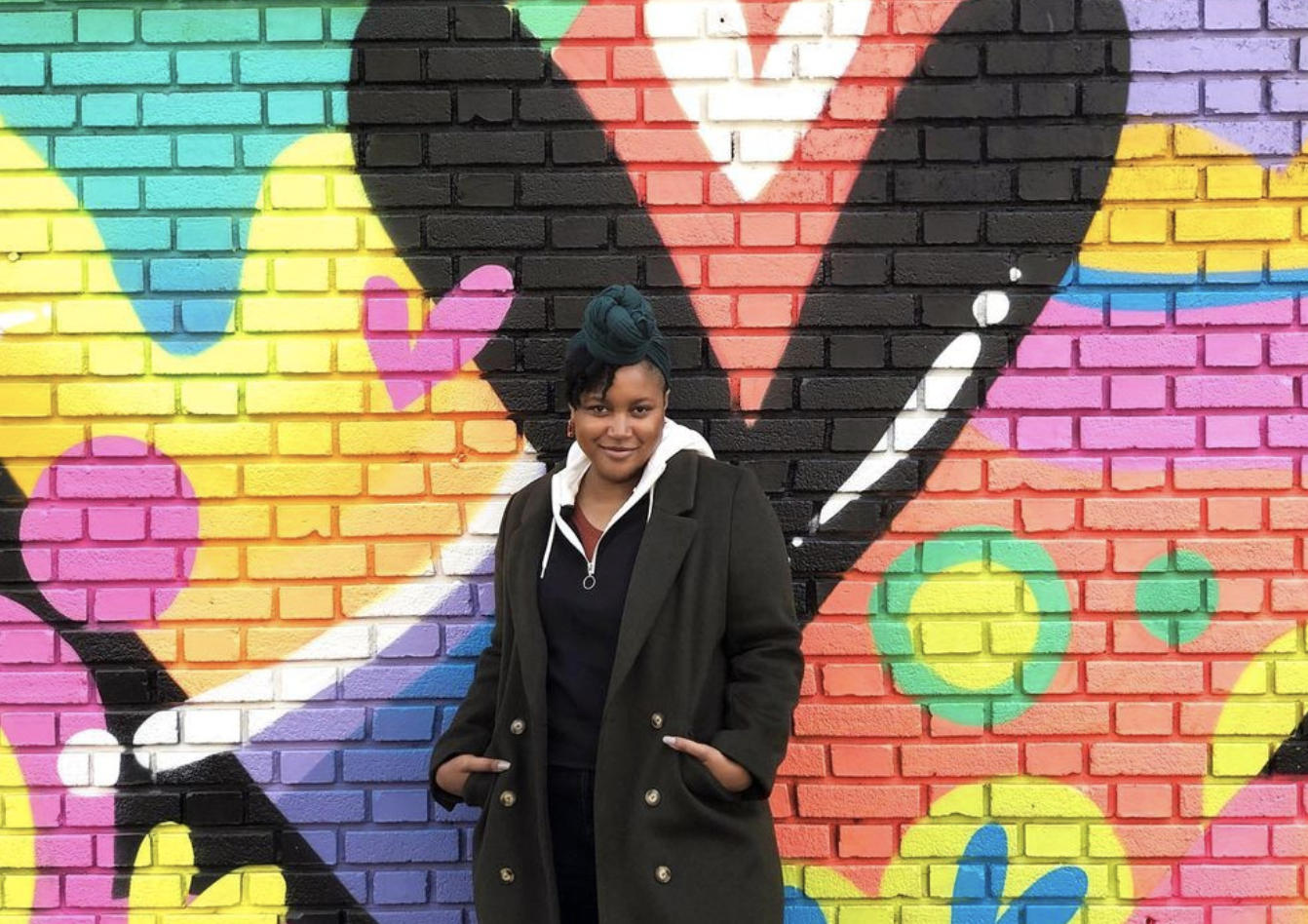
NaBeela is a Greater Chicago-based photographer and journalist writing about what's possible. She's a fierce advocate of the arts and brings people together around social change and accessible education. Read more: nabeelawashington.com
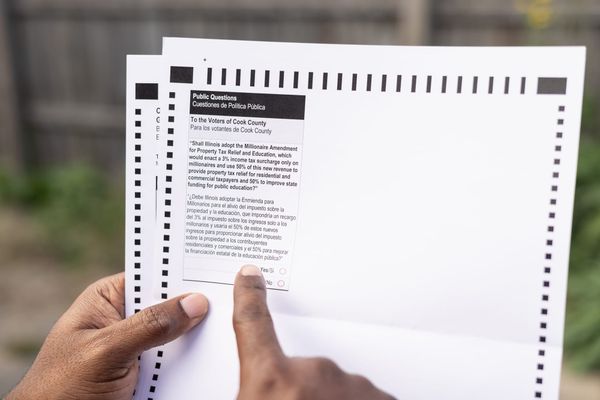
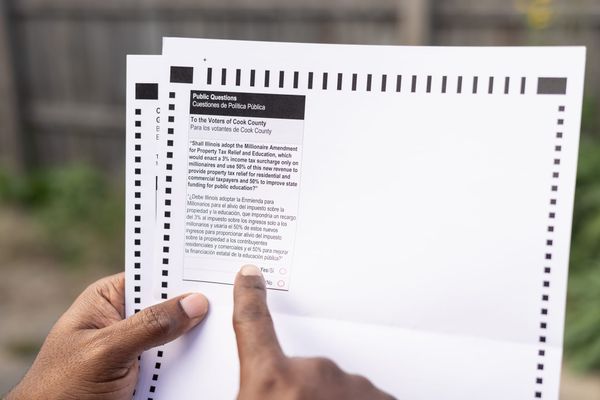
Un votante revisa la pregunta para el público del Condado de Cook que pregunta si es que Illinois debería imponer un suplemento de 3% a los ingresos que pasen $1 millón y dividir el dinero entre un relevo a los impuesto a la propiedad y a la educación pública. | NaBeela Washington/15 West
A voter reviews the Cook County public question asking whether Illinois should impose a 3% surcharge on income above $1 million and divide the revenue between property-tax relief and public education. | NaBeela Washington/15 West