Creative Chicago Reuse Exchange (CCRx) redirects surplus materials to teachers, artists, and community groups while bringing hands-on reuse programs to neighborhoods across Chicago.
Interlocking rhythms pass among people of all ages in the bustling air of Chicago’s Union Park. The instruments? Donated cans, balloons, medicine bottles, beads, and keyboard keys transformed into handmade drums and shakers.
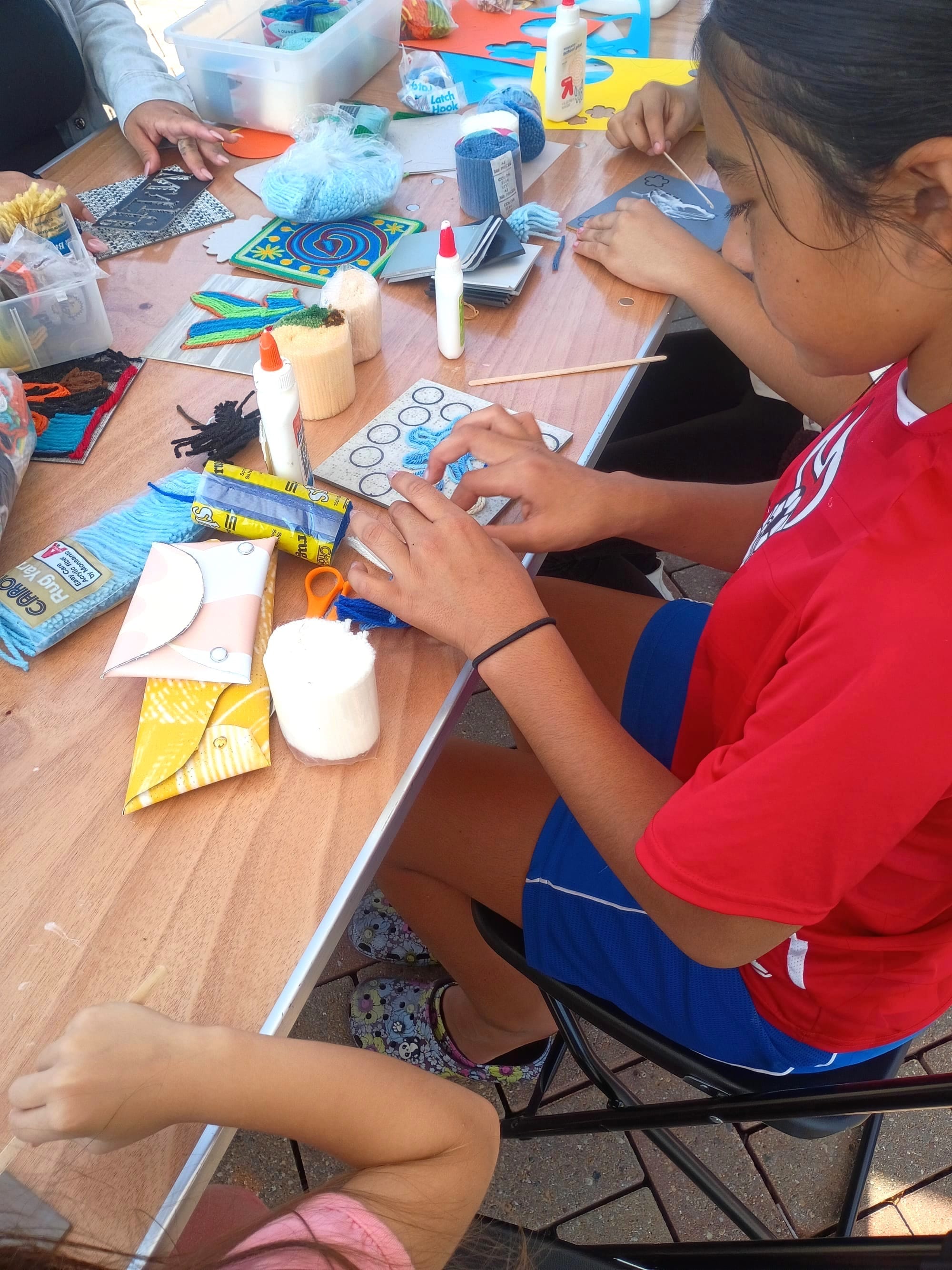
On the West Side of Chicago, CCRx’s Imagination Station brings creative reuse to parks, schools, libraries, museums, and community organizations through hands-on workshops.
Provided by CCRx.
For Nakia Brown, a teaching artist with Imagination Station, “one of the most rewarding parts of teaching is watching people discover their own creative potential.”
Brown said many participants arrive at events like Chicago Park District’s “Night Out in the Parks” unsure of their artistic abilities or whether they can complete a project they started. Brown said small prompts and encouragement can help participants begin experimenting and gain confidence in what they are making.
“Rather than offering the same project everywhere, we design activities that reflect the audience, setting, and goals of each event,” Brown said.
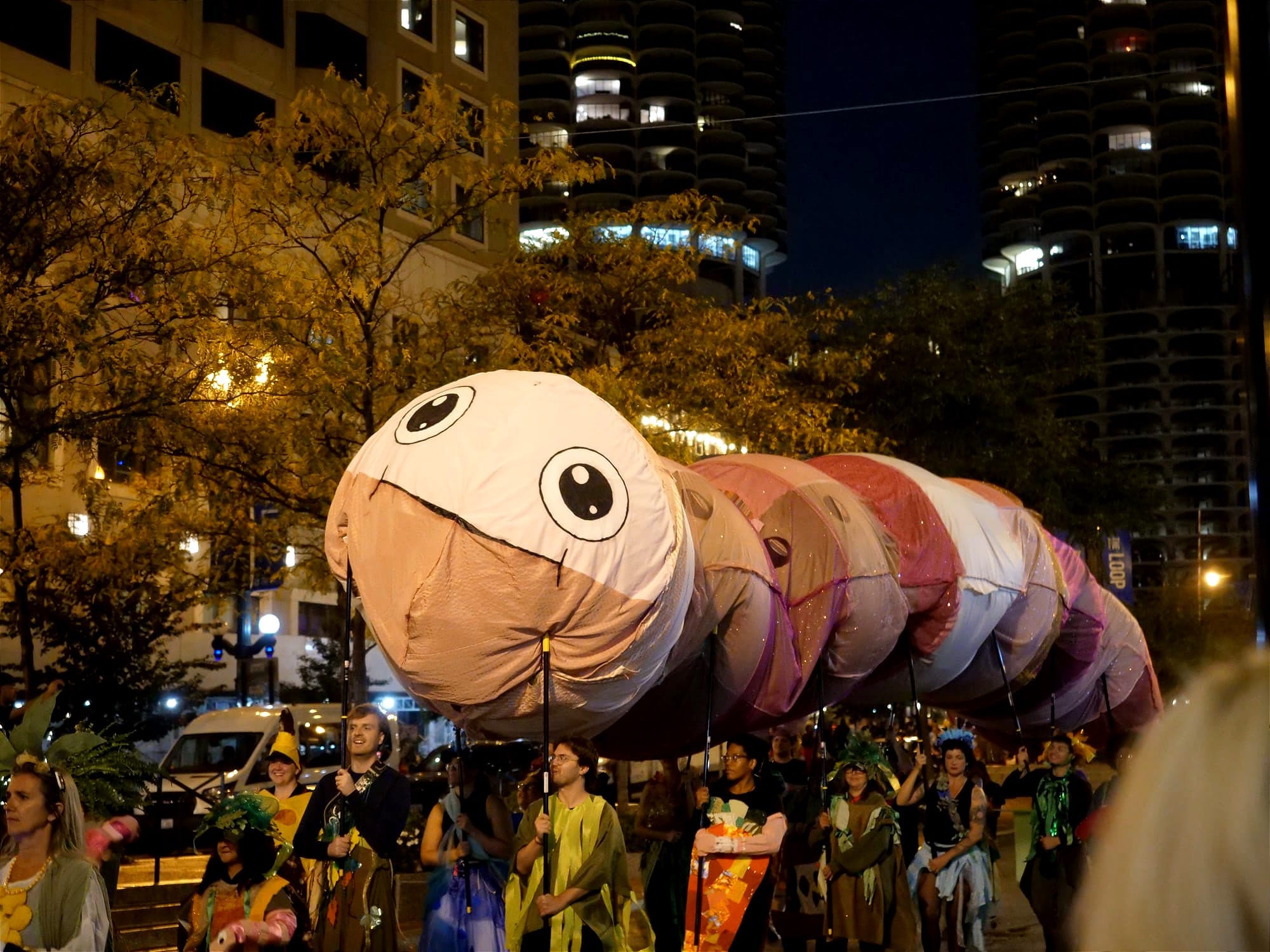
Arts in the Dark caterpillar made using donated materials. | Provided by CCRx.
In North Lawndale, CCRx partnered with A Taste of Lawndale for participants to make “Recyclo-Pouches,” or wallets created from donated vinyl banners. CCRx has also reused materials through collaborations with Opera-Matic, a Humboldt Park public art organization. In the 2023 Arts in the Dark Parade down State Street, CCRx helped bring back a giant 40-foot-long caterpillar puppet made with materials previously donated by Opera-Matic.
The objects in people’s homes go through lifetimes. A tile, used textbook, or shell collected at the beach can carry memories and stories. But eventually, many of those objects are no longer wanted or needed. Electronics are left behind in apartment buildings. Old papers and ephemera are thrown away. Furniture is abandoned along busy streets.
Those discarded objects are part of a much larger waste stream. According to the Global Waste Index 2025, the average person in the U.S. generates an estimated 951 kilograms of municipal waste per year, including 447 kilograms sent to landfills.
Launched in 2017 by artist Barbara Koenen, Creative Chicago Reuse Exchange began with pop-up ‘swap’ events that tested whether Chicago had a need for redistributing unused materials to teachers, nonprofits, artists, and community groups across Chicago. CCRx has since grown into an organization with a warehouse that collects donations imbued with their own history and meanings—unwanted office inventory, secondhand furniture, and deinstalled exhibition materials, including materials from the Chicago Architecture Biennial.
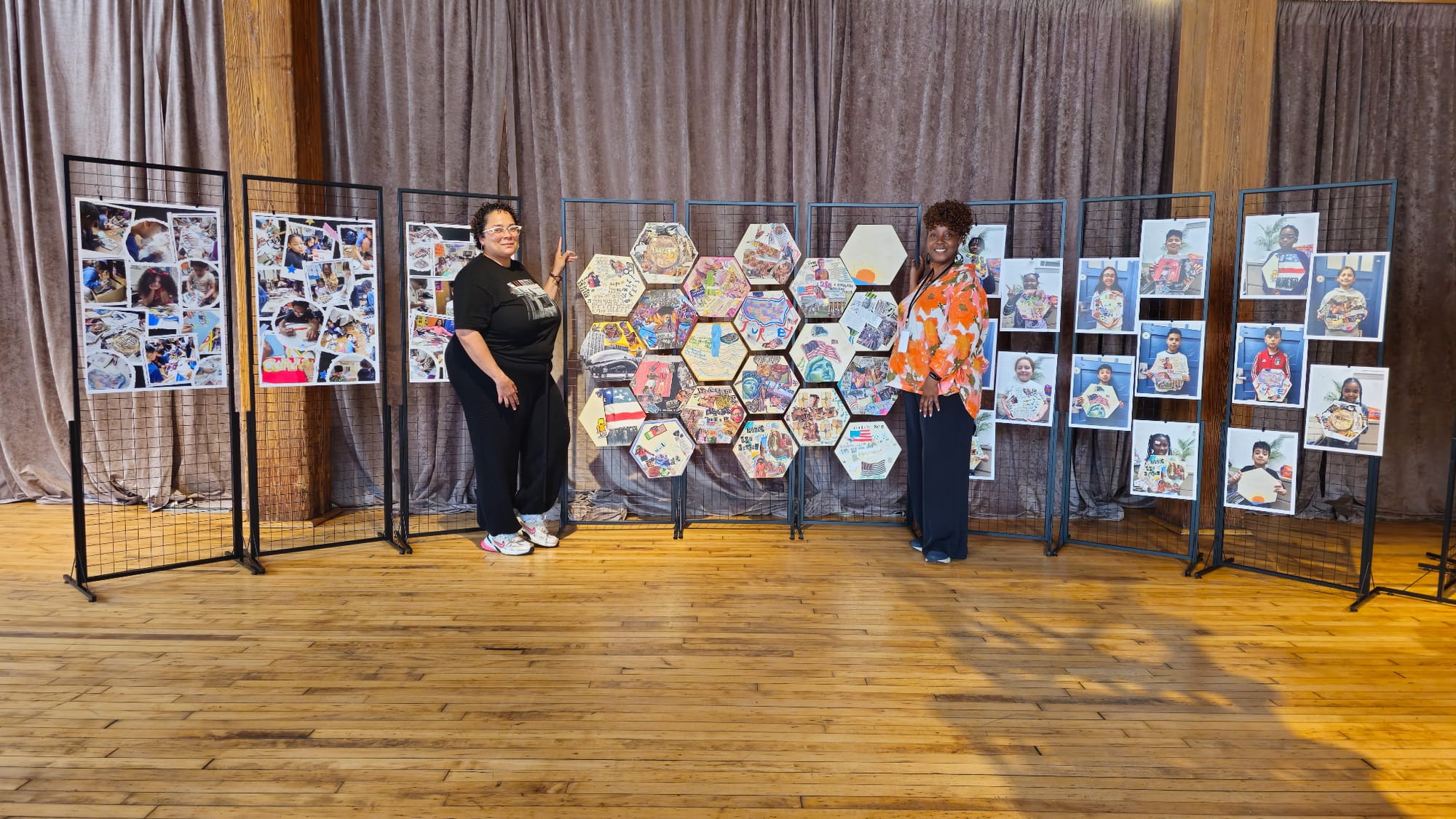
Provided by Gloria I. Rivera.
Interdisciplinary artist and muralist Gloria I. Rivera is one of the artists who uses CCRx materials in community workshops throughout Chicago. Rivera said she first learned about CCRx through the Chicago Park District’s Teens Re-Imagining Art, Community & Environment program.
“I have worked as a contracted artist through [them] a handful of times, and during one of those contracts, they had an agreement with CCRx where we would go and pick up items that we needed for the programming to be provided,” Rivera said. “And from that point forward, it was like, oh wow, yeah, this has to be a go-to for me.”
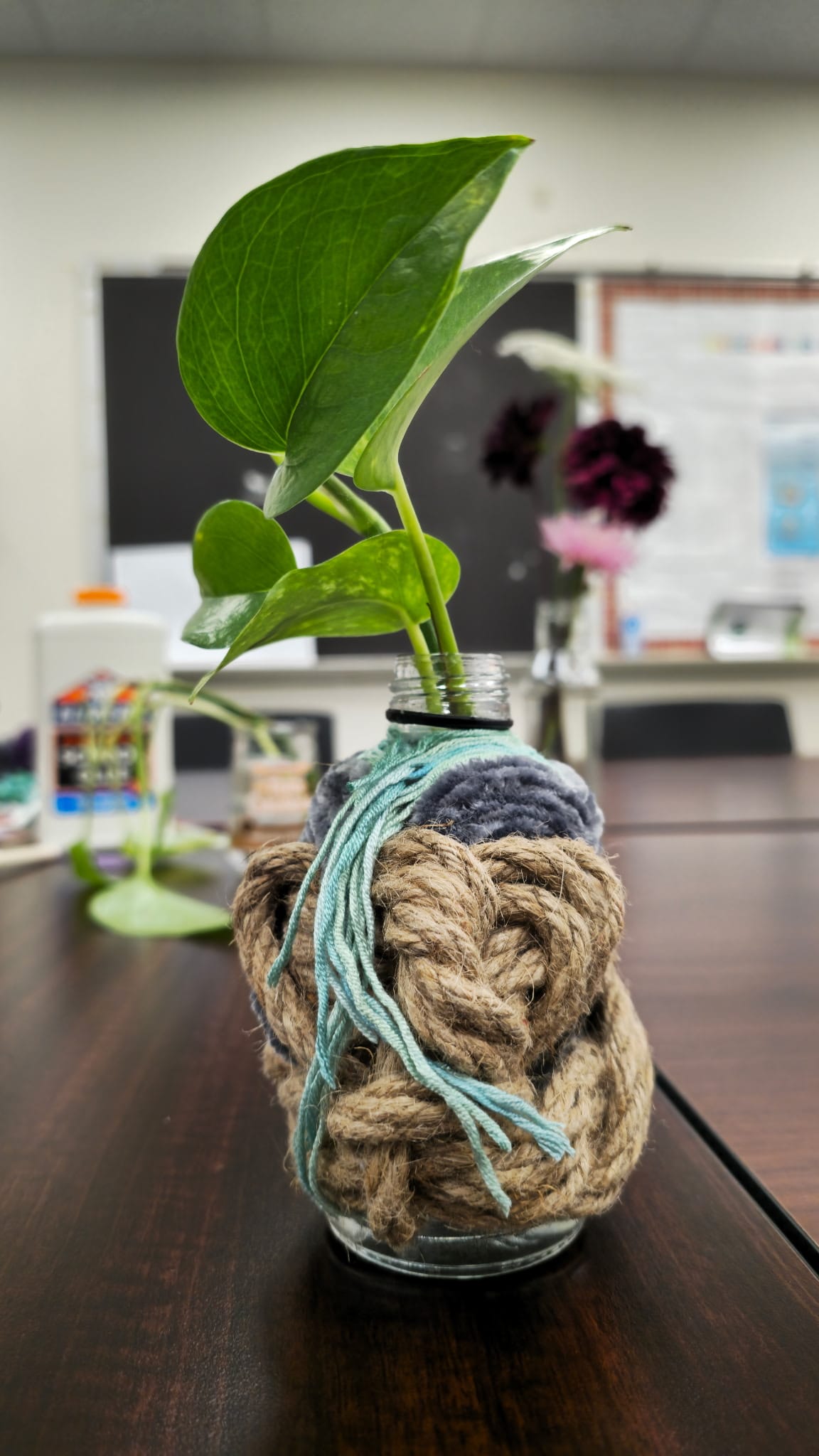
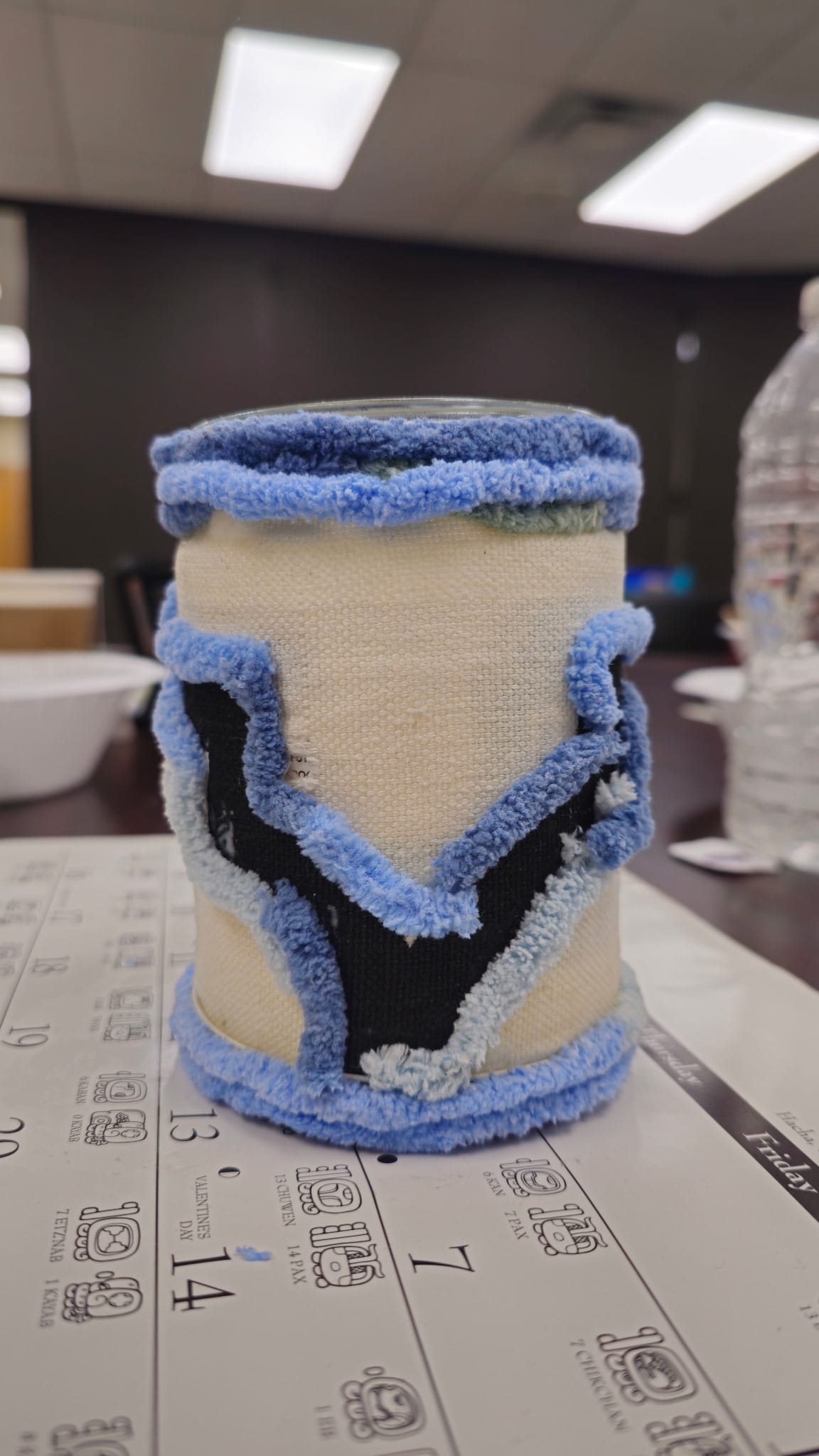
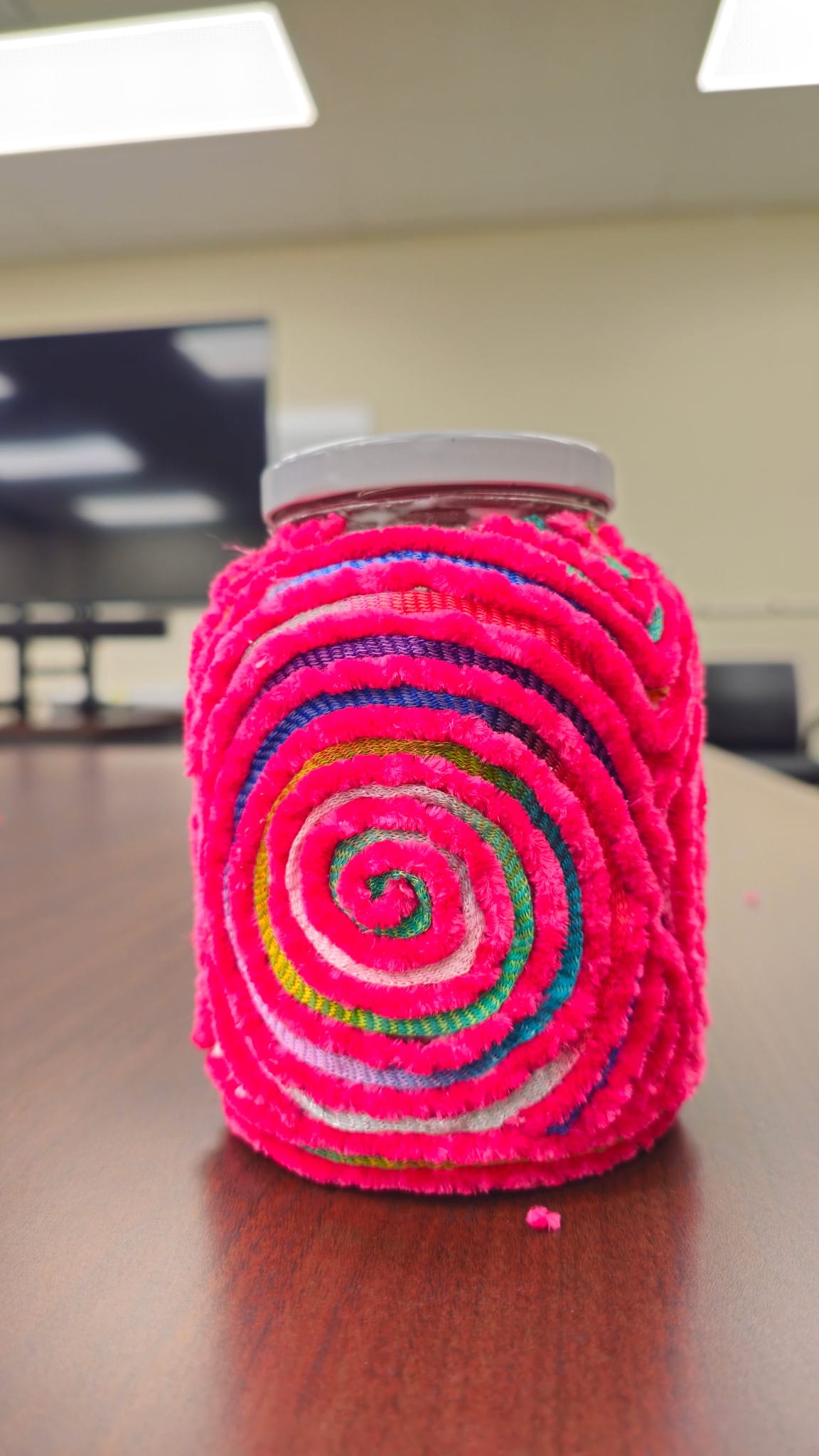
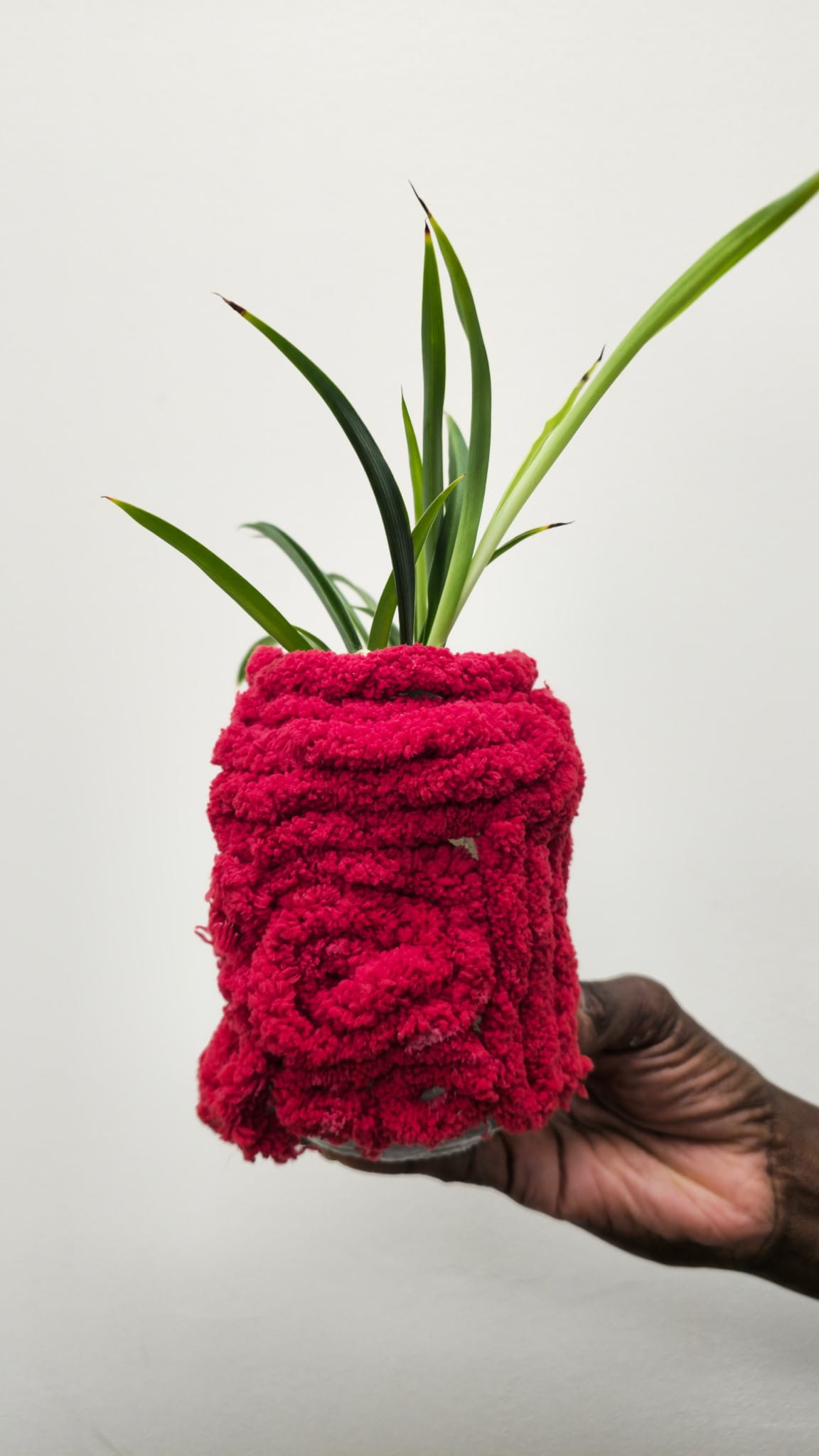
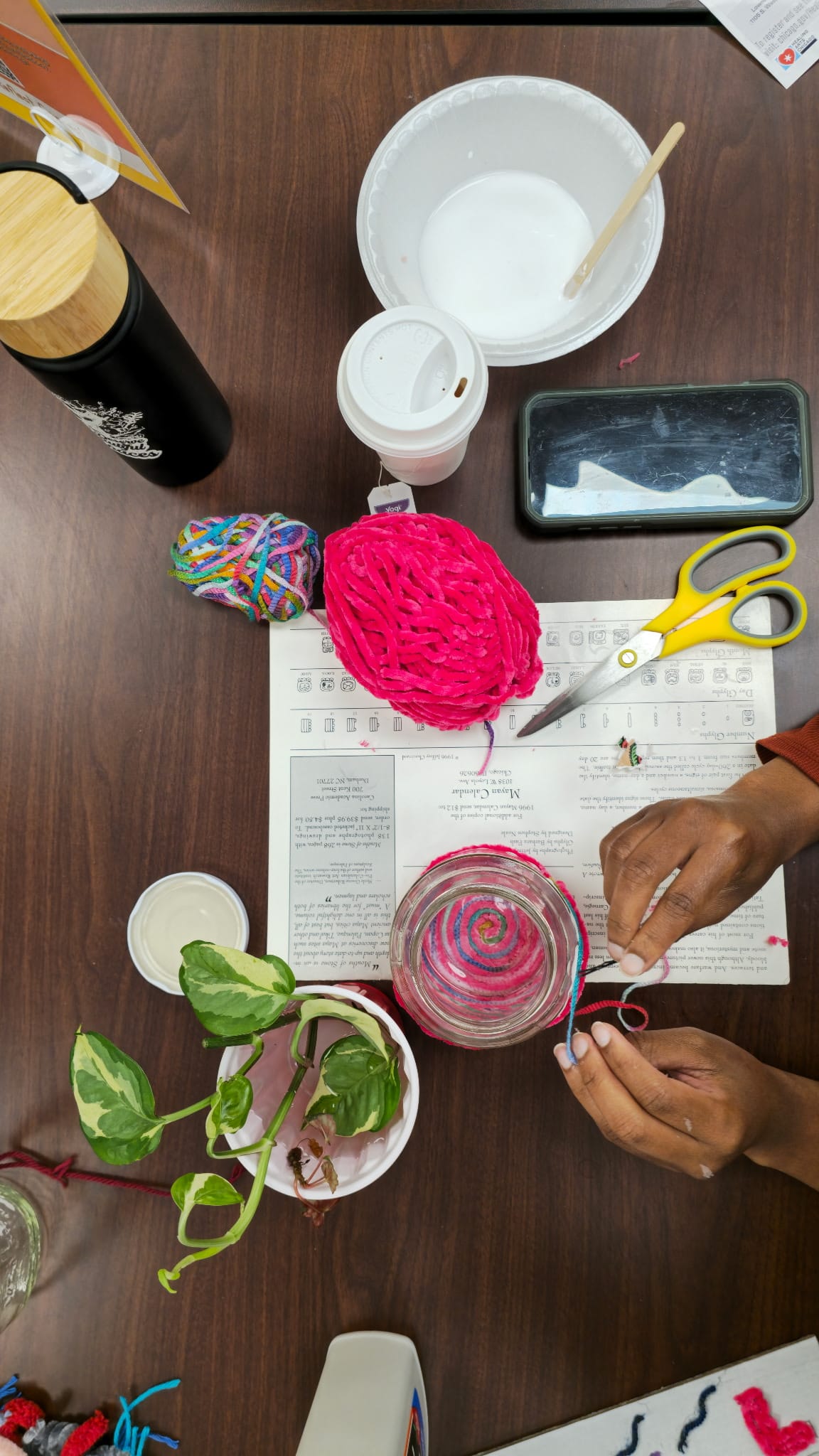
While preparing for a community plant swap with DCASE, Rivera found a new use for glass vessels she had previously overlooked at the CCRx warehouse. The jars could hold plants being propagated in water while also serving as canvases for participants to decorate.
Reused glass jars decorated with yarn. | Provided by Gloria I. Rivera.
Reused glass jar decorated with yarn. | Provided by Gloria I. Rivera.
She said the 30 jars, along with large bundles of yarn and fabric, cost less than $40 at CCRx. Purchasing the same materials new, she estimated, would have cost well over $300.
“Having CCRx has been a godsend because the costs and means to be able to run programming is always one of the biggest issues. The way that CCRx runs the program and the low cost of being able to get materials and supplies from them is amazing and has been very very helpful,” Rivera said.
Provided by Gloria I. Rivera.
CCRx’s mantra is that “trash is just a failure of imagination.” The organization relies on staff, interns, and volunteers to sort those materials and find new uses and recipients for them.
Tyler Roth, warehouse operations manager at CCRx, said, “[CCRx] is about the transformation of objects. Yes, we get shirts at the thrift store that we don't like, but we can crop them. But [transformation] also doesn't just stop at clothing.”
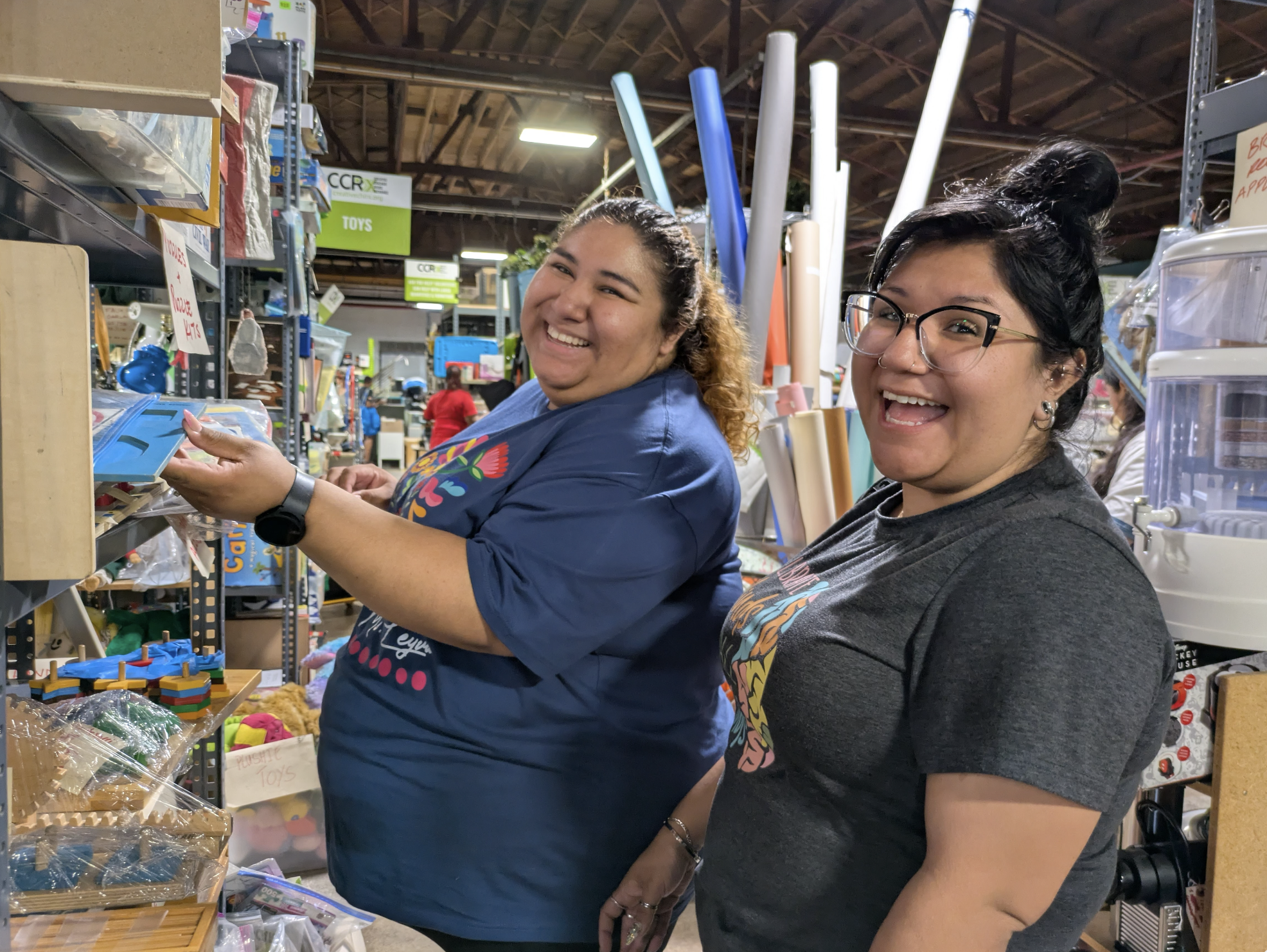
Open three days a week by appointment, Chicagoans who visit the warehouse can fill boxes with materials that can be turned into something new. Volunteers help give some of those materials another purpose. Roth described volunteers binding discarded paper into small journals that visitors can use for notes or as sketchbooks. “Every paperclip [the team] finds, every single piece of paper gets used or recycled appropriately, not just trashed because we're overwhelmed,” Roth said.
Provided by CCRx.
In the longer term, CCRx hopes to expand into a larger depot open five days a week, with a greater emphasis on serving small businesses and artists who need larger quantities of materials. Roth said, “Part of our goal for moving locations is also re-tying in the circular economy of it all.”
One example is the temporary world of film sets. When a local movie studio borrows a large quantity of binders, papers, and desk organizers for a set depicting an abandoned building turned into a police precinct, CCRx plans for these materials to be returned afterward so that they make their way to teachers, classrooms, or other users.
In an age of fast-paced trends and digital consumerism, creative reuse pushes against the everyday impulse to buy things new, often in bulk, before fully knowing whether they are needed or useful. For CCRx, that means encouraging people to first consider what they already have, what can be found secondhand, and what someone else may be ready to pass along.
Creative reuse can be simple: giving, receiving, and redirecting materials before they become waste. As Roth explained, if someone is moving at the end of a lease and cannot take everything with them, the question becomes what can happen to those belongings next. They might be donated, listed online, or passed directly to someone who needs them.
“I would first say that we are all artists. [People] just don't sometimes realize how that creativity unfolds within our life. And if you allow yourself to think outside the box and not be scared to [reach out to] the people, the team members at CCRx, there is more than likely a solution for what you're looking for at a fraction of the cost at CCRx,” Rivera said.
Creative reuse is an exercise in problem-solving, asking people to see possibilities in what might otherwise become waste. A dresser handed from one neighbor or friend to another may seem like an ordinary exchange. But in a circular economy, it means one fewer object has reached the end of its life before it needed to.
Learn more:Creative Chicago Reuse Exchange offers warehouse appointments, workshops, and public events. Readers can find current event and donation information on CCRx’s website.
Republish This Story
This story is available for republication under a Creative Commons Attribution-NoDerivatives 4.0 International License. You may republish this article with attribution to the author and 15 West, but you cannot modify the text.
A voter reviews the Cook County public question asking whether Illinois should impose a 3% surcharge on income above $1 million and divide the revenue between property-tax relief and public education. | NaBeela Washington/15 West